LEGAL INSANITY STANDARDS, AND THE DIGITAL EXPLOITATION OF TRAGEDY
PSYCHIATRIC BATTLE LINES, LEGAL INSANITY STANDARDS, AND THE DIGITAL EXPLOITATION OF TRAGEDY
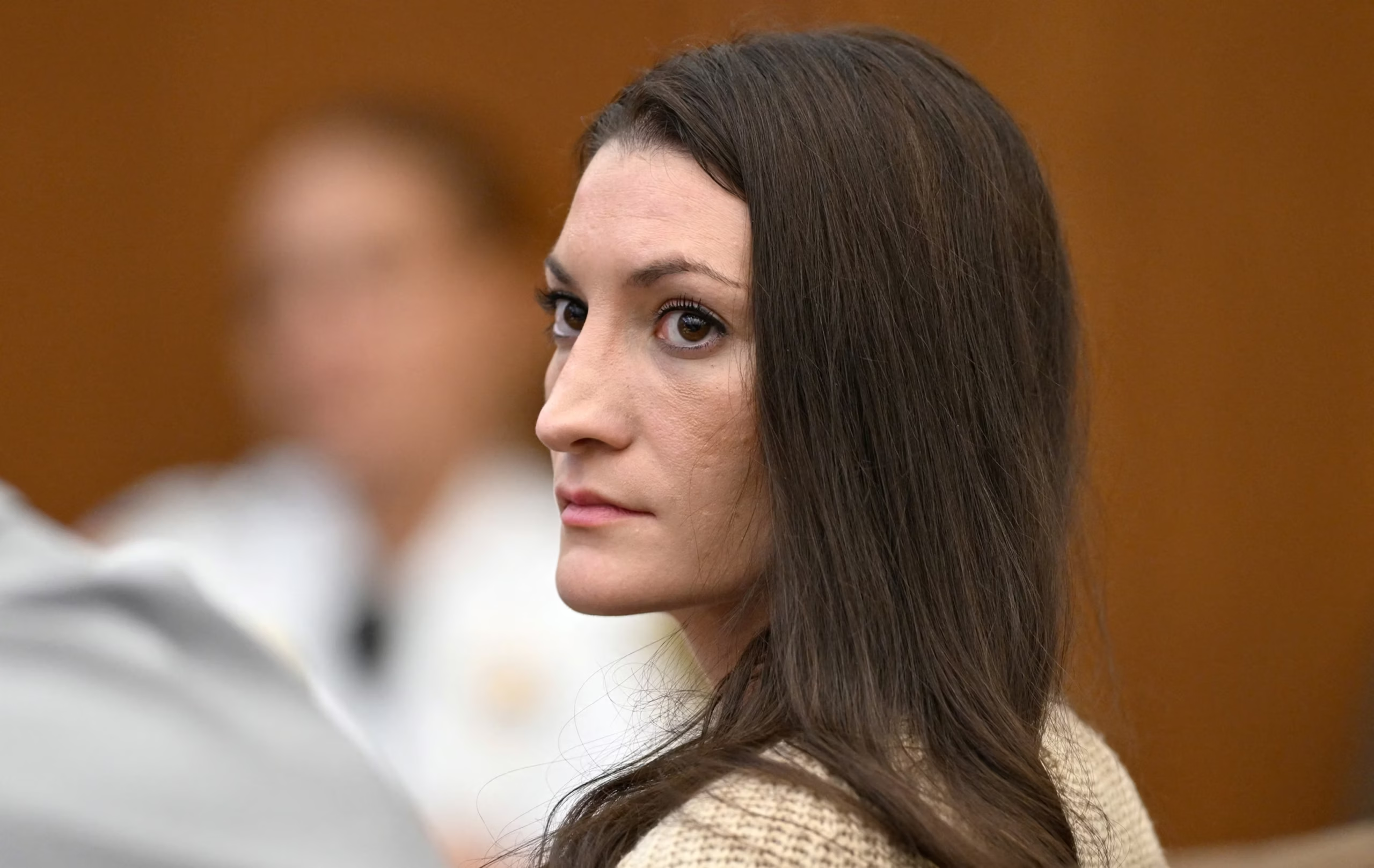
A sensational post rapidly circulating across social media platforms features a dramatic hook designed to grab attention: “PSYCHIATRIC BATTLE EXPLODES AT LINDSAY CLANCY TRIAL! Jurors were left utterly paralyzed when a lead state witness leaked a private medical note revealing she secretly admitted… 👉 CLICK LINK IN COMMENTS FOR FULL DAILY TRIAL COVERAGE!”
While the tragic real-world case of Lindsay Clancy—the Duxbury, Massachusetts mother charged in the January 2023 deaths of her three young children—represents one of the most complex legal and psychiatric proceedings in recent American history, the viral post in question is a manufactured clickbait script engineered to drive ad-arbitrage traffic.
By weaponizing real human tragedy, complex psychiatric terminology, and classic cliffhanger tropes, click-farm operators construct artificial curiosity gaps. Their goal is not to inform the public about Massachusetts criminal procedure or postpartum mental health, but to funnel unsuspecting users through monetized link chains, push-notification traps, and malicious pay-per-click websites.
1. Deconstructing the Viral Hoax: How Click Farms Hijack Real Tragedies
The post targeting readers interested in high-profile criminal trials uses a psychological copywriting blueprint engineered to trigger emotional arousal while manipulating digital algorithms.
                  ANATOMY OF TRIAL SENSATIONALISM CLICKBAIT
                                      │
     ┌────────────────────────────────┼────────────────────────────────┐
     │                                │                                │
     ▼                                ▼                                ▼
[HIGH-DRAMA HOOK]           [FABRICATED CLIFFHANGER]         [THE MONETIZATION LINK]
• "Psychiatric battle explodes" • "Leaked a private medical note" • "👉 CLICK LINK IN COMMENTS"
• "Jurors left paralyzed"     • "Secretly admitted..."         • Drives click-farm revenue
The “Leaked Secret Document” Trope
In real judicial proceedings, evidence is strictly governed by rules of discovery and court admission. A prosecution witness cannot simply “leak” a surprise private note on the stand without prior disclosure to defense counsel. Claiming a secret note was dramatically revealed right before closing arguments relies on Hollywood trial tropes rather than constitutional criminal procedure.
Strategic Emotional Arousal
Phrases like “courtroom reached a boiling point,” “chilling evidence,” and “utterly paralyzed” are designed to override the reader’s critical filters. The text creates an urgent need for resolution, which the post promises to deliver only if the user clicks an external link in the comment section.
2. Fact vs. Fiction: Real Courtroom Reality vs. Viral Clickbait Claims
To understand the gap between sensationalized online posts and actual legal proceedings, the table below contrasts the viral claims against Massachusetts evidentiary standards and forensic psychiatric protocols.
| Viral Clickbait Claim | Actual Massachusetts Legal & Psychiatric Reality | Evidentiary & Procedural Standard |
| “A lead state witness leaked a private medical note revealing a secret admission.” | Fabricated. All medical records used by experts are exchanged during mandatory pre-trial discovery under Mass. R. Crim. P. 14. Unannounced leaks are grounds for immediate mistrial. | Massachusetts Rules of Criminal Procedure & Sixth Amendment Confrontation Clause |
| “State experts proved Major Depressive Disorder did not strip her capacity.” | Distorted. Forensic experts provide opinion testimony; only the jury (the trier of fact) can legally decide whether a defendant met the standard for legal insanity. | Commonwealth v. McHoul (352 Mass. 544) |
| “Command hallucinations automatically prove or disprove legal sanity.” | False. The presence of command hallucinations is a clinical finding, but legal sanity depends on whether the illness deprived the defendant of substantial capacity to appreciate wrongfulness or conform conduct. | American Academy of Psychiatry and the Law (AAPL) Practice Guidelines |
| “Click link in comments for full daily courtroom coverage.” | Malicious Link. Routes users through URL shorteners to ad-arbitrage blogs, scam subscription pop-ups, or malware delivery domains. | Cybersecurity Threat & Telemetry Analysis |
3. The Legal Sanity Battle: Clinical Diagnosis vs. Criminal Responsibility
At the heart of high-profile cases involving severe mental health crises is a fundamental distinction that online clickbait frequently obscures: the difference between a clinical psychiatric diagnosis and legal insanity.
┌───────────────────────────────────────────────────────────────────────────────┐
│                    CLINICAL DIAGNOSIS VS. LEGAL SANITY                        │
├───────────────────────────────────────────────────────────────────────────────┤
│ CLINICAL DIAGNOSIS (DSM-5-TR)        │ LEGAL INSANITY (Mass. McHoul Test)    │
│ • Diagnosed by medical clinicians    │ • Determined exclusively by a jury    │
│ • Focuses on treating symptoms       │ • Focuses on criminal responsibility  │
│ • Examples: Postpartum Psychosis,    │ • Requires meeting two specific legal │
│   Major Depressive Disorder,         │   prongs regarding capacity at the    │
│   Command Hallucinations             │   exact time of the offense           │
└───────────────────────────────────────────────────────────────────────────────┘
The Massachusetts Legal Standard (Commonwealth v. McHoul)
In Massachusetts, legal criminal irresponsibility (the insanity defense) is governed by the McHoul standard, adapted from the Model Penal Code. A defendant is not criminally responsible if, at the time of the conduct, as a result of mental disease or defect, they lacked substantial capacity to either:
-
The Cognitive Prong: Appreciate the criminality or wrongfulness of their conduct; OR
-
The Volitional Prong: Conform their conduct to the requirements of the law.
The Role of Command Hallucinations
In cases involving postpartum psychosis or severe psychotic depression, defense experts often highlight the presence of command hallucinations—auditory or sensory perceptions ordering a person to perform specific acts.
However, under the law, the mere existence of hallucinations does not automatically equal legal insanity. The prosecution’s forensic experts examine whether, despite experiencing severe psychiatric distress, the defendant retained enough cognitive awareness to recognize that their actions were morally and legally wrong, or whether they took steps indicating an understanding of wrongfulness (such as concealment, planning, or statements made immediately after the event).
4. Forensic Evaluation Mechanics: How Experts Build Their Cases
When psychiatric experts clash during the rebuttal phase of a high-profile trial, both sides engage in meticulous forensic reconstruction rather than dramatic courtroom surprises.