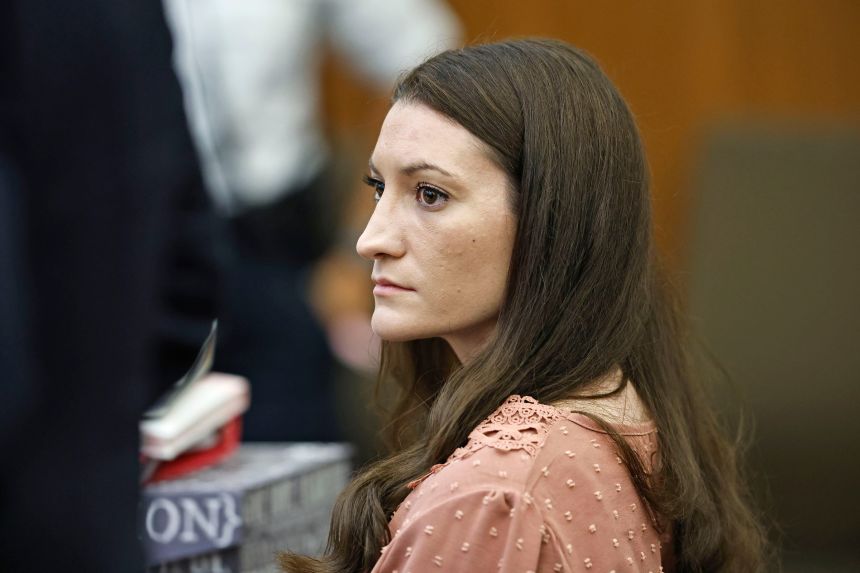
LINDSAY CLANCY’S DIARY ENTRIES EXPOSE THE PERINATAL MENTAL HEALTH CRISIS BEHIND THE TRAGEDY
TRAGIC REVELATIONS IN COURT: LINDSAY CLANCY’S DIARY ENTRIES EXPOSE THE PERINATAL MENTAL HEALTH CRISIS BEHIND THE TRAGEDY
The Courtroom Reading of Personal Journals
During the murder trial of Lindsay Clancy at Plymouth Superior Court in Massachusetts, jurors listened in solemn silence as attorneys read aloud from the private journals and digital notes kept by the former labor and delivery nurse. Clancy, accused in the January 2023 deaths of her three young children—Cora, Dawson, and Callan—sat in court paralyzed from the waist down, a result of leaping from a second-story window in an attempt on her own life following the incident.
The evidentiary presentation of Clancy’s personal journals offered a harrowing look into her declining state of mind in the months leading up to the tragedy. Rather than revealing calculated malice or salacious secrets, as sensationalized online headlines often suggest, the excerpts presented by both defense and prosecution outlined a desperate, chaotic struggle with severe postpartum mental illness, crippling insomnia, and an ever-shifting regimen of prescribed psychiatric medications.
What the Writings Revealed: A Chronicle of Exhaustion and Despair
The jury heard multiple entries written in late 2022 and early 2023, drawn from a physical notebook and the notes app on Clancy’s personal phone. The writings recorded an intense, internal battle against overwhelming anxiety, cognitive impairment, and profound parental guilt.
Key excerpts read in court documented Clancy’s deteriorating psychological stability:
-
Desperation for Relief: In an entry dated November 18, 2022, Clancy wrote, “I’m so desperate to get a mental break from taking care of everyone that my mind is trying to find something physically wrong with me”.
-
Pleas for Recovery: In another journal entry highlighted by defense attorney Kevin Reddington, Clancy plainly stated her desire for help, writing, “I want help. I want to be well”.
-
Cognitive Dysfunction and Guilt: Clancy repeatedly noted experiencing severe “brain fog” and feeling disconnected from her infant son, Callan, and her older children. “I live moment to moment waiting for the next nap time,” she noted, while expressing intense remorse over her inability to breastfeed and constant fear that her infant was becoming overtired.
-
Medication Ambivalence: Digital notes retrieved from her phone recorded her conflict over taking newly prescribed psychiatric drugs: “I’m on the fence about starting a new med or not. I want to feel happy, but it would be nice to feel authentically happy and not fake”.
The entries provided jurors with direct evidence of a mother increasingly overwhelmed by maternal distress, chronic sleep deprivation, and confusion over whether her condition was improving or worsening under clinical care.
The Legal Battle: Premeditation Versus Postpartum Psychosis
The disclosure of Clancy’s journals sits at the center of the competing legal strategies presented by the defense and the prosecution.
The Defense Position
Clancy’s legal team contends that she is not criminally responsible for the deaths of her children due to severe mental disease. Her attorney argues that Clancy was suffering from undiagnosed bipolar disorder complicated by severe postpartum psychosis—a rare and acute psychiatric emergency characterized by delusions, hallucinations, and a complete loss of contact with reality.
The defense presented testimony showing that in the three months prior to January 2023, Clancy was evaluated by numerous clinicians and prescribed a rapid succession of over a dozen psychiatric drugs, including antidepressants, sedatives, and antipsychotics. Defense experts argued that this turbulent medication trial exacerbated her mood instability, ultimately culminating in psychotic command hallucinations—voices telling her to harm her children and herself—on the day of the event.
The Prosecution Position
State prosecutors argue that Clancy acted intentionally and should be held criminally accountable under Massachusetts law. While acknowledging her documented history of anxiety and depression, prosecutors point to her internet search history in the days preceding the event, routine daily scheduling, and interactions with healthcare workers where she did not explicitly disclose active hallucinations or intent to harm her family.
Prosecution witnesses, including forensic psychologists, testified that Clancy understood the wrongfulness of her actions, suggesting that her suicide attempt and actions were driven by severe depression rather than an involuntary, psychotic delusion.
Understanding Postpartum Psychosis and Maternal Mental Healthcare
The tragic details revealed during the trial have reignited national discussions regarding maternal mental health care, medical screening, and the risks associated with perinatal psychiatric disorders.
-
Prevalence and Onset: Postpartum psychosis occurs in approximately 1 to 2 out of every 1,000 births. It typically onsets rapidly within the first few weeks after delivery, though symptoms can emerge later during severe hormonal shifts or sleep disruptions.
-
Clinical Symptoms: Unlike standard postpartum depression or anxiety, postpartum psychosis involves breakages from reality, including paranoid delusions, extreme mania, severe confusion, and auditory or visual hallucinations.
-
Systemic Gaps in Care: Medical malpractice lawsuits filed in connection with the case allege that healthcare systems frequently fail to recognize the warning signs of postpartum psychosis, particularly when patients present with ambiguous or overlapping symptoms of anxiety, severe insomnia, and depression.
Health experts stress that postpartum psychosis is a medical emergency requiring immediate psychiatric hospitalization, intensive monitoring, and specialized clinical care.
Responsible Reporting vs. Digital Sensationalism
In the age of social media, high-profile criminal trials involving family tragedy are frequently co-opted by online content networks using misleading, sensationalized headlines. Phrases claiming that secret notes contained “dark secrets” or “shattering bombshells” mischaracterize the somber nature of legal proceedings and divert attention from the critical medical and legal questions at hand.
Journalistic integrity requires reporting on court proceedings with factual accuracy and context. The reading of Lindsay Clancy’s diary entries did not reveal a hidden criminal plot, but rather documented a tragic timeline of severe mental distress, medical intervention, and a family destroyed by an extraordinary mental health crisis.
Resources for Maternal Mental Health Support
If you or someone you know is struggling with perinatal depression, anxiety, or severe emotional distress, immediate professional help is available:
-
National Maternal Mental Health Hotline (USA): Call or text 1-833-TLC-MAMA (1-833-852-6262) for free, confidential, 24/7 support in English and Spanish.
-
988 Suicide & Crisis Lifeline: Call or text 988 for free, 24/7 support from trained crisis counselors.
-
Postpartum Support International (PSI): Visit postpartum.net or call 1-800-944-4773 for local resources, support groups, and clinical referrals.