BEYOND THE SENSATIONAL HEADLINES: DECONSTRUCTING THE STREAMING SURROUNDING OLIVIA COLMAN
Deconstructing the Clickbait Teaser
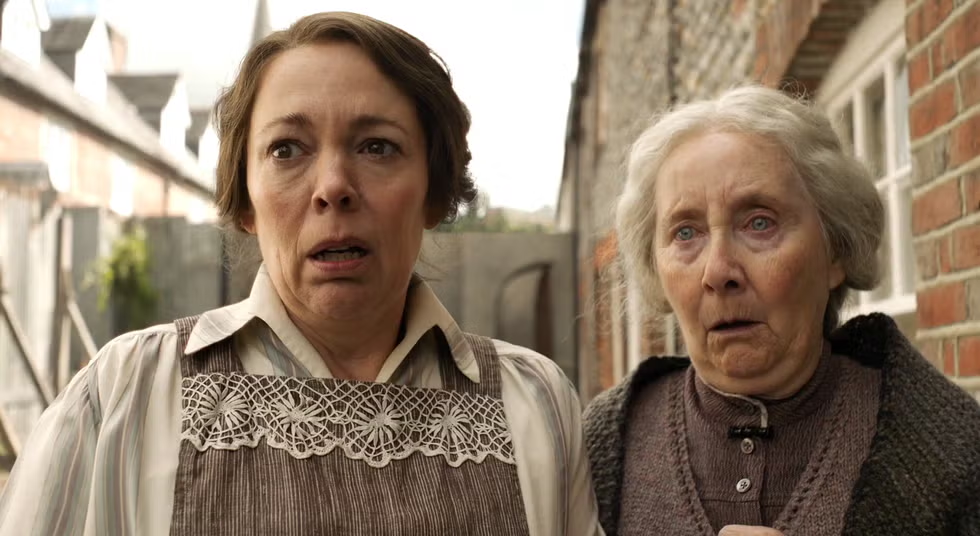
A sensational social media teaser recently flooded digital streaming feeds, breathlessly proclaiming that Academy Award-winner Olivia Colman “delivers a masterclass performance in this dark tale of obsession and crime!” Adorned with warning emojis and dramatic prose, the post described a “desperate struggle to preserve a flawless moral reputation” that “slowly spirals into a bizarre and calculating psychological battle.” It claimed Colman captured “the suffocating fear of a woman trapped beneath relentless social scrutiny,” before escalating to a dramatic cliffhanger: “the twisted and disturbing discovery she examines with trembling hands moments after this scene proves that something far more shocking has been hiding beneath the surface…” The caption concluded with an urgent directive: “WATCH BELOW 👇👇”.
Despite its ominous tone and promises of a twisted horror thriller, this viral teaser is a classic example of streaming clickbait. By taking footage from acclaimed, multi-layered films—most notably the hit period dark comedy Wicked Little Letters or the true-crime drama Landscapers—and wrapping it in hyperbolic horror tropes, digital content mills create a false narrative. There is no secret, gory splatter film starring Olivia Colman on Netflix matching this description. Instead, the post functions as an engagement-farming mechanism designed to trick curious viewers into clicking external links, navigating ad-cluttered landing pages, or subscribing to automated click-farm channels.
Comedy, Scandal, and Fact: The Reality of ‘Wicked Little Letters’
To recognize how clickbait aggregators distort cinematic storytelling, one must look at the actual film most frequently targeted by these posts: the 2023 British period dark comedy Wicked Little Letters, which achieved widespread global popularity after arriving on Netflix.
In the film, Olivia Colman stars alongside Jessie Buckley as Edith Swan, a deeply devout, unmarried woman living in 1920s Littlehampton, England, under the strict, patriarchal thumb of her domineering father. Contrary to the clickbait post’s framing of a blood-soaked crime thriller, the movie is a sharp, profanity-laced mystery based on a bizarre, real-life historical scandal:
-
The “Disturbing Discovery”: The item Edith examines with “trembling hands” in the movie is not a gruesome murder weapon or a sinister occult artifact. It is an anonymous, obscenity-filled “poison-pen” letter sent directly to her home, accusing her in hilarious detail of absurd, immoral acts and addressing her with outrageously colorful profanity.
-
The Historical Truth: The film dramatizes the real 1920 Littlehampton libel case. Edith Swan received dozens of foul-mouthed letters and accused her free-spirited, rowdy Irish neighbor, Rose Gooding (played by Buckley), of sending them. The resulting police investigation and court trial captivated national tabloids, eventually uncovering that the pious, repressed Edith was actually writing the vulgar letters to herself as a desperate subconscious release from her suffocating home life.
-
Tone and Themes: While the story touches on themes of social repression, small-town hypocrisy, and domestic control, its tone is decidedly tragicomic, witty, and satirical—a far cry from the sinister horror show implied by social media teasers.
The Mechanics of Streaming Clickbait and Movie Recaps
The transformation of a witty historical comedy into a “dark tale of obsession and crime” highlights a lucrative business model operating within the digital entertainment ecosystem.
Content aggregators and automated movie-recap channels employ specific psychological and technical tactics to generate viral traffic:
1. Algorithmic Bias Toward Horror and Shock
Data analytics across social media platforms show that posts promising “disturbing discoveries,” “unhinged obsessions,” or “twisted crime” achieve higher click-through rates than posts advertised as period comedies or historical dramas. Content creators routinely reframe non-horror films as terrifying thrillers to maximize immediate engagement.
2. Decontextualizing Dramatic Acting
Olivia Colman is celebrated globally for her expressive physical acting and emotional range. By taking a short video clip of Colman looking panicked, tearful, or shocked—and stripping away the original dialogue and comedic score—clickbait editors easily trick viewers into believing they are watching a terrifying psychological thriller.
3. The “Watch Below” Link Arbitrage
The “WATCH BELOW 👇👇” links embedded in these teasers almost never lead to an official Netflix streaming player. Instead, users are redirected through ad-tracking networks to low-quality blog sites, pirated video loops, or affiliate marketing schemes that collect pay-per-click ad revenue. In some cases, these links prompt users to install questionable browser extensions or disclose personal information.
Preserving Cinematic Nuance in an Era of Algorithmic Noise
The trend of misrepresenting films like Wicked Little Letters points to a broader issue in modern digital culture: the flattening of artistic nuance by algorithms designed for shock value.
Throughout her career—from her Oscar-winning role in The Favourite and her portrayal of Queen Elizabeth II in The Crown to dark dramas like The Lost Daughter and Broadchurch—Olivia Colman has specialized in playing complex, morally ambiguous women operating under intense societal pressure. These stories derive their power from subtle writing, historical context, and character study.
When social media content mills reduce these rich performances to cheap, sensationalized “crime obsession” hooks, they misinform audiences and trivialize the work of filmmakers. Viewers expecting a gory horror movie are disappointed, while audiences who would thoroughly enjoy a witty, historical mystery-comedy are turned away by misleading marketing.
Navigating Digital Entertainment Coverage with Media Literacy
The viral post claiming Olivia Colman stars in a hidden, twisted crime shocker underscores the importance of media literacy when browsing digital entertainment news.
To distinguish genuine film releases from engineered clickbait, audiences should evaluate streaming claims against established sources:
-
Check Official Platform Catalogs: Search Netflix, Amazon Prime, or official studio directories directly rather than relying on third-party social media links.
-
Consult Vetted Review Aggregators: Outlets like Rotten Tomatoes, Metacritic, and accredited film publications provide verified plot summaries, cast lists, and genre classifications.
-
Recognize Engagement Hooks: Be skeptical of posts relying heavily on alarmist emojis, truncated cliffhangers, and urgent “Watch Below” prompts.
Olivia Colman’s body of work speaks for itself through extraordinary artistry and critical acclaim. Enjoying her performances as they were meant to be experienced—grounded in rich storytelling rather than digital deception—remains the best way to support genuine cinema.