ANATOMY OF A ROYAL HOAX: DEBUNKING THE VIRAL “LIFELESS DOLL”
ANATOMY OF A ROYAL HOAX: DEBUNKING THE VIRAL “LIFELESS DOLL” CONSPIRACY THEORY
Deconstructing the “Doll” Headline
A recurring, highly sensationalized clickbait narrative has resurfaced across social media feeds, claiming that Prince Harry and Meghan Markle pulled off a “royal deception” by presenting a “lifeless doll” instead of a real infant to the global press. Promoted with alarm emojis and sensational phrasing, the post alleges that on-scene photographers expressed total disbelief and that newly surfaced “secret backstage footage” reveals what the Royal Family secretly did moments before the photocall.
However, a thorough review of the public record, accredited media archives, and verified press pool reports confirms that these claims are entirely false. The narrative is an engineered fabrication—a mix of fringe online conspiracy theories and algorithmically generated clickbait designed to exploit intense public fascination with the Duke and Duchess of Sussex while driving web traffic to ad-monetized networks.
In reality, no photographer expressed doubt regarding the child’s identity, no secret backstage video exists, and the infant presented to the media was Archie Harrison Mountbatten-Windsor, born safely on May 6, 2019.
The Verified Historic Record: The May 2019 Windsor Photocall
To understand the absurdity of the “doll” conspiracy theory, it is necessary to examine the actual circumstances surrounding the public introduction of Prince Harry and Meghan’s first child.
The Events of May 6–8, 2019
-
The Birth: Archie Harrison Mountbatten-Windsor was born at 5:26 a.m. on May 6, 2019, at the Portland Hospital in London. The official birth certificate, registered in the Royal Borough of Greenwich, lists Harry as the father and Meghan as the mother.
-
The Decision to Bypass Hospital Steps: Unlike Prince William and Catherine, who followed the traditional practice of posing on the steps of St. Mary’s Hospital hours after giving birth, Harry and Meghan chose to keep the birth private initially to allow for rest and family time.
-
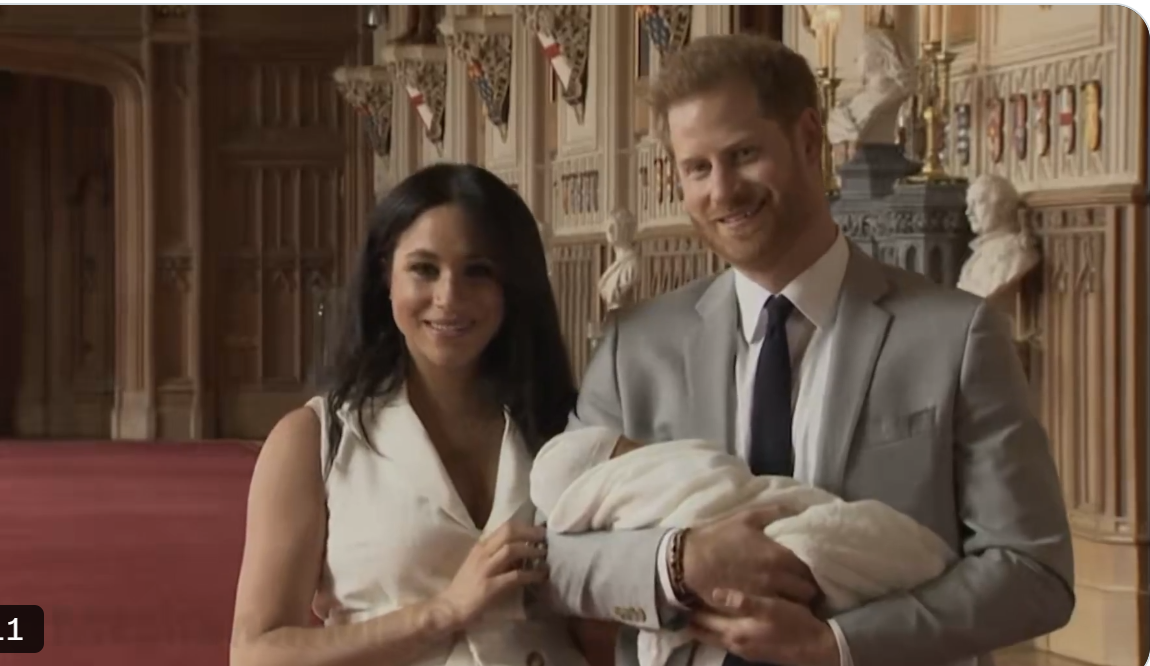
The Photocall at St. George’s Hall: Two days later, on May 8, 2019, the couple held a small, controlled photocall inside St. George’s Hall at Windsor Castle.
Press Pool Verification
The photocall was attended by accredited members of the British press pool, including veteran royal photographer Chris Allerton, camera operators from PA Media, and international broadcasters like CBS. Video feeds broadcast live around the world showed Prince Harry holding the swaddled infant as Meghan spoke briefly with reporters.
At no point during or after the session did any attending photographer, journalist, or broadcast crew member report anything untoward. The claims of “whispered disbelief” among photographers were invented years later by internet commentators.
The Psychology and Mechanics of “Royal Birther” Conspiracies
The “doll” headline is part of a broader, well-documented subculture known informally as the “Markle birther” phenomenon. Since the announcement of Meghan’s first pregnancy in late 2018, fringe internet groups and dedicated anti-Sussex message boards have circulated claims that the Duchess faked her pregnancies, utilized surrogates, or used silicone “reborn dolls” for public appearances.
Conspiracy theorists sustain these claims through several common misinterpretation techniques:
1. Freeze-Frame Analysis
Conspiracy communities frequently capture still frames from video footage of the 2019 Windsor presentation, pointing to the infant’s stillness or wrapped posture as “proof” of an artificial prop. In reality, newborn infants spend up to 18 hours a day sleeping, particularly when tightly swaddled in a quiet indoor hall.
2. Misconstrued Verbal Statements
In May 2019, when a reporter asked who Archie resembled, Prince Harry remarked, “Everyone says that babies change so much over two weeks, so we’re sort of monitoring how this changing process happens…” Online theorists seized on the phrase “two weeks” to claim Harry accidentally revealed the baby was born weeks earlier or that a substitute had been swapped in. In context, Harry was referencing general wisdom about early infant development, but conspiracy forums reframed the quote into a slip-up.
3. Confirmation Bias and Misogyny
Sociological studies analyzing online hate groups note that birther theories surrounding high-profile women—particularly women of color in public life—often stem from deep-seated prejudices. By claiming a public figure’s child is fake, fringe commentators attempt to delegitimize their personal life, motherhood, and official status.
Monetizing Outrage: The Business of Royal Clickbait
While fringe message boards originate these theories, automated content syndicates monetize them on a massive scale.
The digital marketing pipeline behind royal clickbait relies on a simple, profitable formula:
-
High-Arousal Headlines: Headlines incorporating loaded terms like “ROYAL DECEPTION,” “EXPOSING THE STUNT,” and “SECRET BACKSTAGE FOOTAGE” trigger curiosity and outrage.
-
Artificial Urgency: Emojis (🚨, 👉) and cliffhanger endings create a false sense of immediate breaking news, prompting social media users to share the link without verifying the source.
-
Traffic Arbitrage: The attached links redirect users to ad-heavy domain networks filled with pop-up advertisements, survey redirects, or malware traps. Each page view generates pay-per-click revenue for the network operators, who have no connection to legitimate news organizations.
Strengthening Digital Literacy Against Synthetic News
The persistence of the “royal doll” hoax highlights the necessity of media literacy in the digital age. When encountering sensational claims involving high-profile figures or public events, readers can guard against misinformation by following key evaluation steps:
-
Cross-Reference Primary Sources: If a story claims a major scandal or secret exposure has occurred, check established news outlets (such as AP, Reuters, or BBC). Truly historic revelations are reported globally, not exclusively on anonymous Facebook pages or video blogs.
-
Identify Missing Evidence: Look for verifiable quotes, named sources, and primary documentation. Phrases like “explosive claims allege” or “sources whisper” without specific attributions indicate unverified speculation.
-
Examine the URL: Be cautious of posts that force users to click through third-party link shorteners or suspicious web addresses to access basic information.
By applying critical thinking and relying on verified reporting, readers can dismantle digital hoaxes and ensure that public discourse remains grounded in fact.