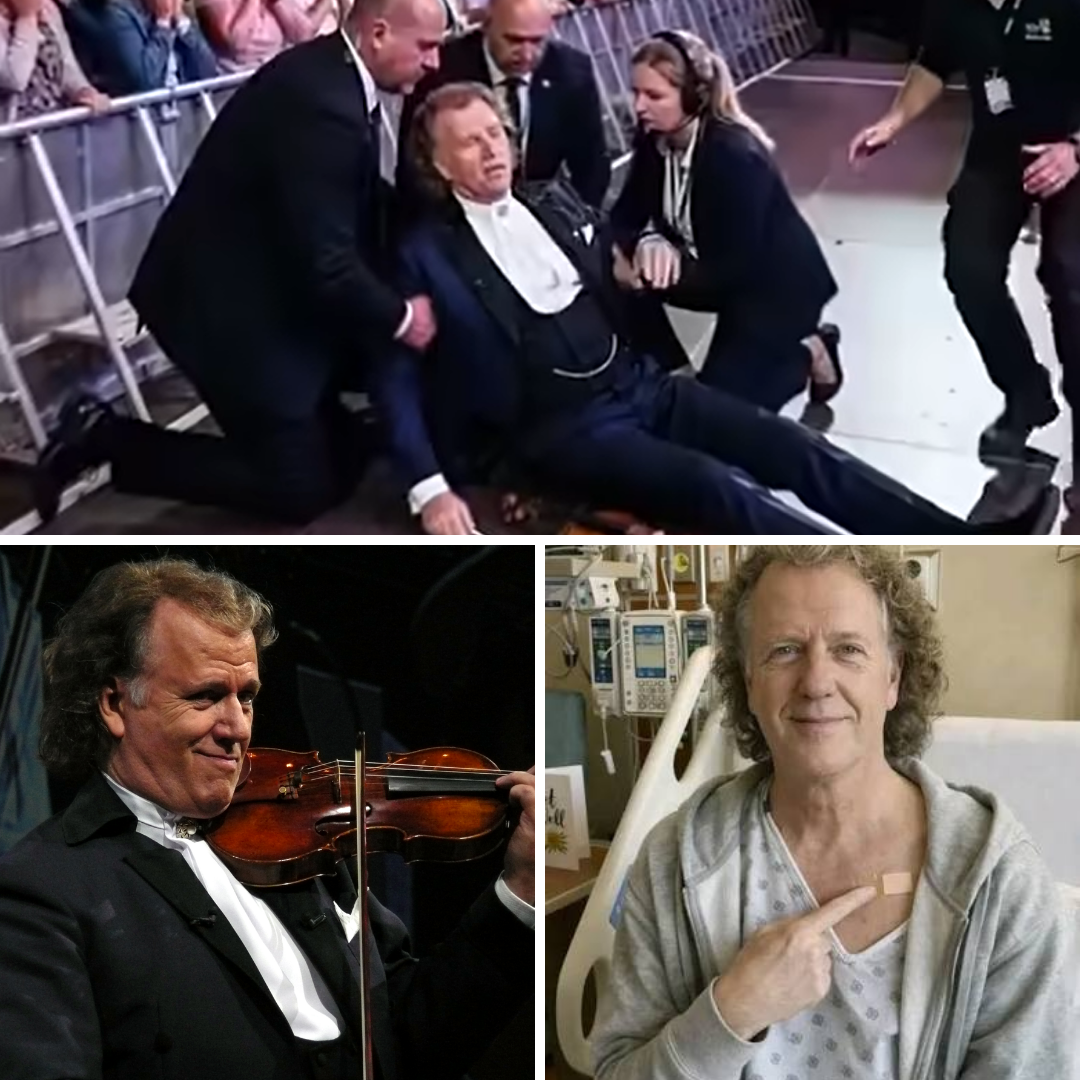
ANATOMY OF A HEALTH HOAX: DEBUNKING THE VIRAL ANDRÉ RIEU “STAGE COLLAPSE”
Deconstructing the “Stage Collapse” Headline
A alarming clickbait post has resurfaced across social media feeds, claiming that world-renowned Dutch violinist and conductor André Rieu collapsed on stage during a live concert. Adorned with red alert emojis and high-drama phrasing, the caption alleges that the “King of Waltz” suffered severe dizziness and a high fever before fainting in front of thousands of horrified fans. It concludes with a familiar cliffhanger, asserting that doctors have issued a “chilling medical update” and directing readers to “Click the link for the latest health update”.
However, an investigation into verified news reports, official statements from Rieu’s management, and concert schedule archives confirms that this story is a complete fabrication. André Rieu did not collapse on stage, he was not rushed to an emergency room, and no “chilling medical update” exists.
The post is part of an ongoing, highly sophisticated network of digital hoaxes designed to exploit emotional investment, manipulate social media algorithms, and direct unsuspecting fans into online advertising traps and cyber-scams.
AI Manipulation and the Targeting of Classical Music Fans
The “stage collapse” narrative targeting André Rieu is not an isolated incident; it represents a growing trend of synthetic media manipulation. In recent years, automated clickbait networks have repeatedly launched fake death, terminal illness, and emergency hospitalization campaigns centered on the 75-year-old maestro.
These digital operations frequently employ sophisticated tools to deceive the public:
-
AI-Generated Visuals: Scammers regularly generate synthetic images depicting Rieu lying in a hospital bed wearing an oxygen mask or framed by dramatic, sorrowful thumbnails.
-
Synthetic Narration: Video versions of these hoaxes often use artificial intelligence voice clones to read emotionally charged, sensationalized scripts that allege secret family tragedies or sudden physical collapses.
-
Exploiting Audience Demographics: Rieu’s global fan base consists largely of older adults who hold a deep, genuine affection for the musician. Scammers deliberately target this demographic, knowing that older social media users are more likely to react with sympathy, share the post, and leave supportive comments.
Pierre Rieu, the conductor’s son and Vice President of Andre Rieu Productions, has publicly spoken out against these malicious campaigns, describing the constant stream of AI-generated hospital photos and fake obituaries as heartbreaking and deeply disruptive to the family and fans alike.
Distorting History: How Scammers Weaponize Real Precedents
To make health hoaxes plausible to casual readers, clickbait creators often take minor historical events and inflate them into life-threatening emergencies.
Over a legendary career spanning more than five decades, André Rieu has maintained an exceptionally rigorous global touring schedule with his Johann Strauss Orchestra. Like any performer, he has occasionally faced real, documented health minor set-backs:
-
The 2010 Vertigo Incident: In 2010, Rieu was forced to postpone a series of concerts after suffering from a severe viral inner ear infection (labyrinthitis), which caused acute dizziness and loss of balance.
-
Occasional Tour Postponements: Over the years, rare tour delays have occurred due to acute laryngitis, flu, or temporary fatigue, all of which were formally announced through official press releases.
Digital scam networks seize upon these real, past occurrences, strip away the dates, and invent exaggerated details—such as “collapsing live on stage” or “fainting backstage”—to create a false sense of immediate catastrophe.
The Dark Funnel: From Clickbait to Financial Exploitation
The underlying motive behind the “stage collapse” headline is strictly financial, operating through a multi-tiered online funnel:
1. Traffic Arbitrage
When a user clicks “👉 Click the link for the latest health update,” they are rarely taken to a legitimate news website. Instead, they are redirected through link shorteners to ad-heavy websites containing pop-up advertisements, deceptive surveys, or affiliate marketing links. Every visitor generates pay-per-click ad revenue for the network operators.
2. Comment Monitoring and Impersonation Scams
The most dangerous element of these health hoaxes begins in the comment section. When concerned fans leave messages offering prayers or well-wishes, scammers identify these individuals as highly sympathetic and vulnerable.
Fake profiles posing as “André Rieu,” his management team, or official fan club representatives then contact these fans directly via private message. These interactions often evolve into advance-fee fraud, fake VIP ticket schemes, or romance scams.
Digital Literacy: Safeguarding Audiences Against Health Hoaxes
The persistence of fake news surrounding public figures highlights the urgent need for digital vigilance when consuming entertainment news online. Fans can protect themselves and others by following established verification guidelines:
-
Verify Through Official Portals: Authentic updates regarding André Rieu’s health, concert schedules, or personal life are exclusively published on his official website (andrerieu.com) and his verified social media accounts bearing official verification badges.
-
Recognize Formatting Red Flags: Headlines characterized by excessive alarm emojis (🚨), all-caps dramatic terms (“BREAKING,” “CHILLING UPDATE”), and cliffhanger calls to action (“Click the link”) are engineered for engagement arbitrage, not journalism.
-
Report Synthetic and Fraudulent Posts: Social media users should active report posts featuring fake AI-generated hospital imagery or false health claims to platform moderators to help curtail the spread of misinformation.
André Rieu continues to perform actively around the world, bringing joy to millions through his music. By rejecting sensationalized clickbait and relying on verified sources, fans can ensure that the focus remains on his extraordinary musical legacy.