One City Became the Center of the Music World: The Day Live Aid Made History
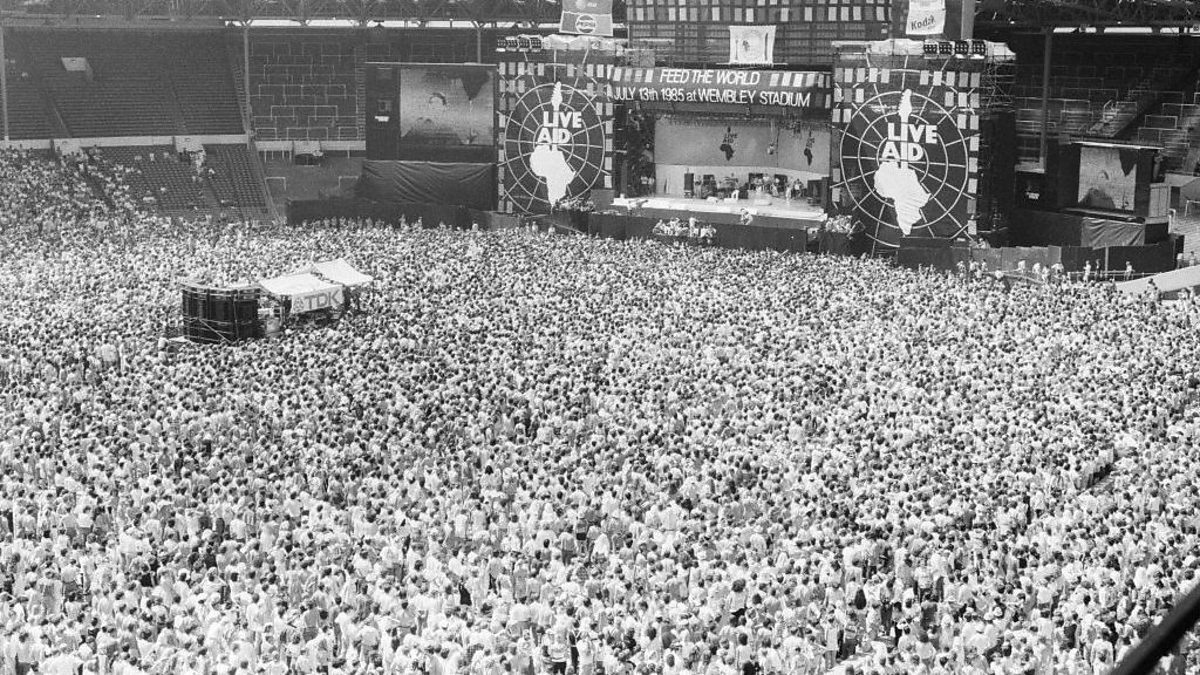
On July 13, 1985, the world paused. Wembley Stadium in London and JFK Stadium in Philadelphia became the beating heart of global music as Live Aid unfolded — an unprecedented 16-hour charity concert that united legends, mobilized millions, and raised awareness (and funds) for the devastating famine in Ethiopia. What started as an ambitious idea from Bob Geldof and Midge Ure turned into one of the most iconic events in music history. Nearly 100,000 people packed the venues, while an estimated 1.9 to 2 billion viewers — roughly 40% of the world’s population at the time — tuned in across 150 countries.
The stage was set against a backdrop of unimaginable human suffering. In 1984, harrowing footage from Ethiopia, broadcast by the BBC, showed starving children and families in crisis. Bob Geldof, frontman of The Boomtown Rats, was deeply moved. He and Midge Ure co-wrote “Do They Know It’s Christmas?” under the Band Aid banner, which became a massive hit. But Geldof wanted more. He envisioned a live event that would harness the power of rock and pop to drive real change. The result was Live Aid: a marathon of music, emotion, and solidarity that transcended borders.
The Scale Was Breathtaking
Wembley Stadium swelled with around 72,000 fans, while Philadelphia’s JFK Stadium hosted nearly 90,000. The lineup read like a who’s who of 1980s music royalty: Queen, U2, David Bowie, Elton John, Madonna, The Who, Led Zeppelin (in a partial reunion), Paul McCartney, and dozens more. Performers shuttled between stages, with Phil Collins famously jetting across the Atlantic to play both venues — a logistical feat that captured the day’s frantic energy.
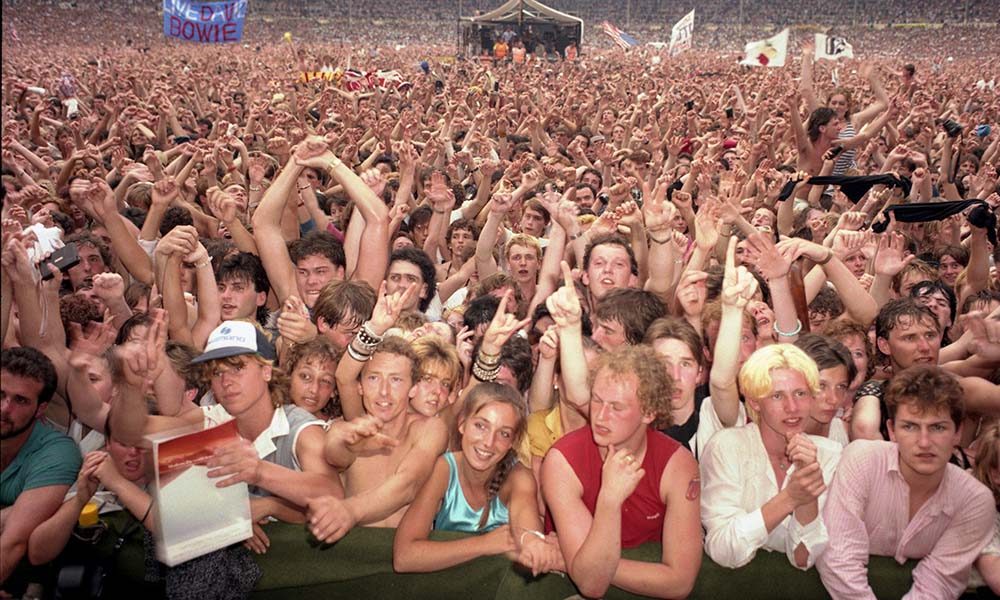
The atmosphere crackled with anticipation. Flags from around the world waved in the crowds, and the air hummed with anthems of hope. Organizers faced immense technical challenges: syncing two massive outdoor stages via satellite, managing sound for enormous audiences, and ensuring the broadcast reached every corner of the globe. Yet somehow, it all came together.
The Moment That Stood Above All: Queen’s Unforgettable Set
As the sun beat down on Wembley, many legendary performances lit up the day. U2 delivered a passionate rendition of “Bad” that stretched into an improvisational masterpiece, cementing their global breakthrough. David Bowie and Mick Jagger’s transatlantic duet of “Dancing in the Street” became a pop culture staple. But one set eclipsed them all.
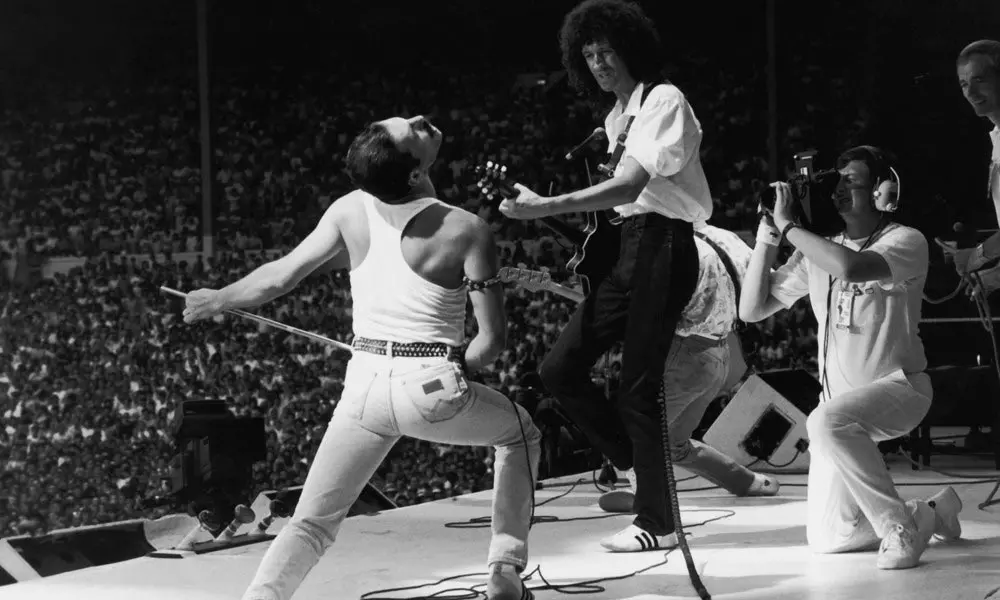
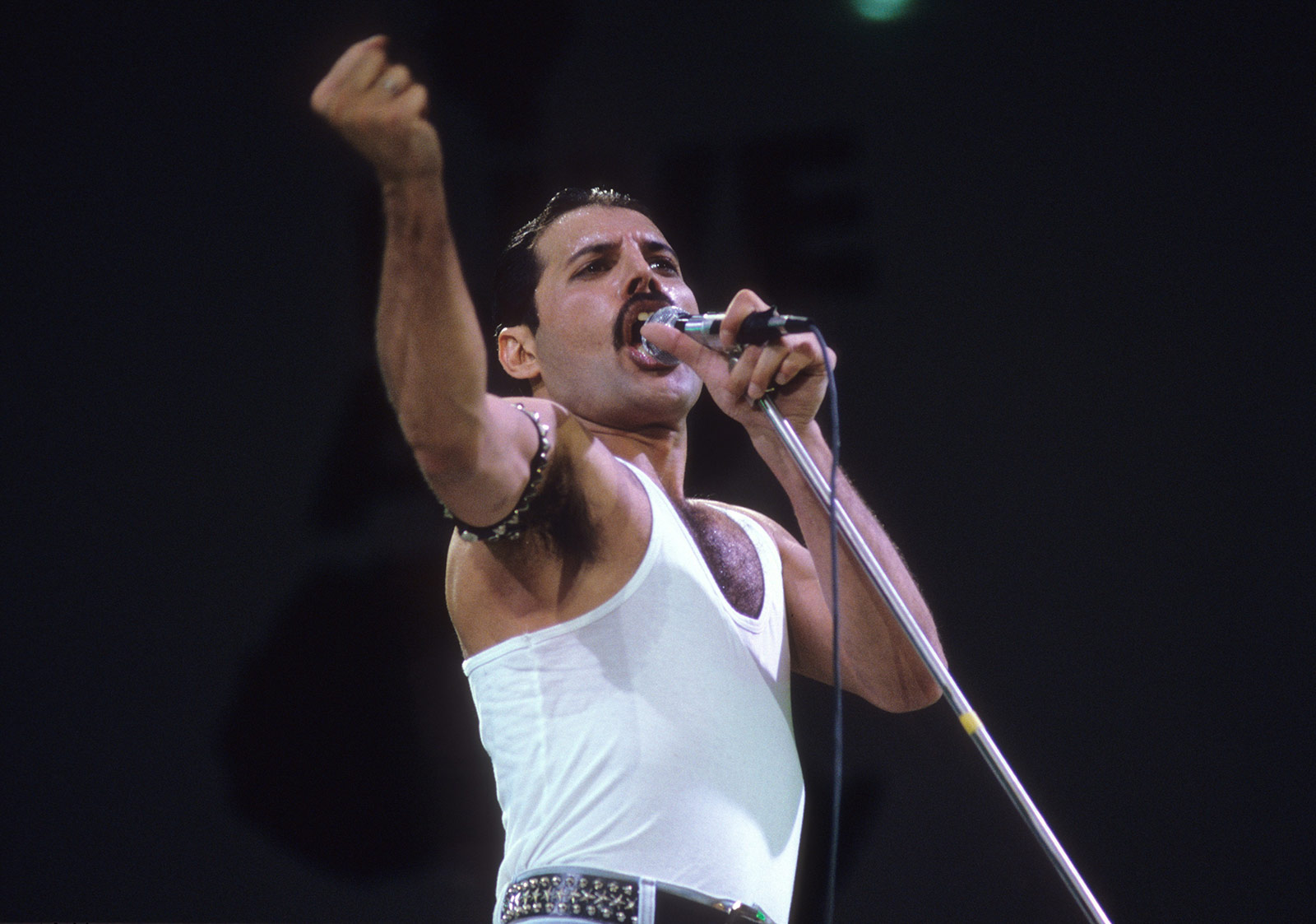
Queen took the stage around 6 PM London time for a tight 20-minute slot. Freddie Mercury, in his iconic white tank top and jeans, strode out with unmatched charisma. What followed was pure magic: a blistering medley of “Bohemian Rhapsody,” “Radio Ga Ga,” “Hammer to Fall,” and “We Are the Champions.” Freddie commanded the crowd like no one else, leading a sea of 72,000 people in synchronized clapping during “Radio Ga Ga.” His voice soared, his stage presence electrified, and the band’s tight execution turned the performance into rock history’s gold standard.
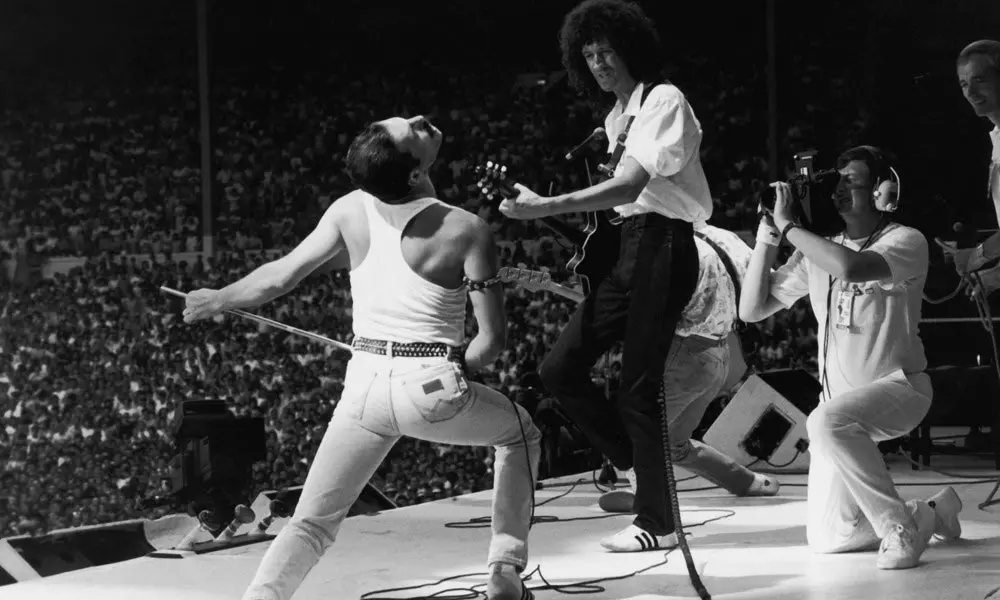
Many call it the greatest live performance of all time. In just 20 minutes, Queen didn’t just play — they owned the moment, the stadium, and the worldwide audience. Even today, decades later, clips of Freddie’s fist-pumping energy and the crowd’s roar continue to inspire new generations.
The Final Hours and Lasting Impact
As the concert stretched into the evening, emotions ran high. Paul McCartney led a rendition of “Let It Be,” and the all-star finale of “Do They Know It’s Christmas?” brought artists together in a powerful, if slightly chaotic, sing-along. Technical glitches occurred — microphones failed, and some acts faced timing issues — but the spirit prevailed.
The event raised over $125 million in pledges that day (equivalent to more than $350 million today). Funds went directly to famine relief efforts, saving countless lives. Live Aid proved music’s unparalleled ability to unite humanity for a cause greater than entertainment.

Forty-one years on, Live Aid’s legacy endures. It inspired later events like Live 8 and remains a benchmark for charity concerts. Fans revisit footage annually, sharing memories of how one day in 1985 showed the world what happens when artists and audiences stand together. The “unforgettable moment” — Freddie Mercury and Queen’s triumph — continues to overshadow much of that historic day, reminding us why people still talk about Live Aid with awe.
In an era of short attention spans and digital fragmentation, Live Aid stands as a testament to collective power. One stage, two cities, a planet watching — and music that changed lives. It wasn’t just a concert. It was a movement.