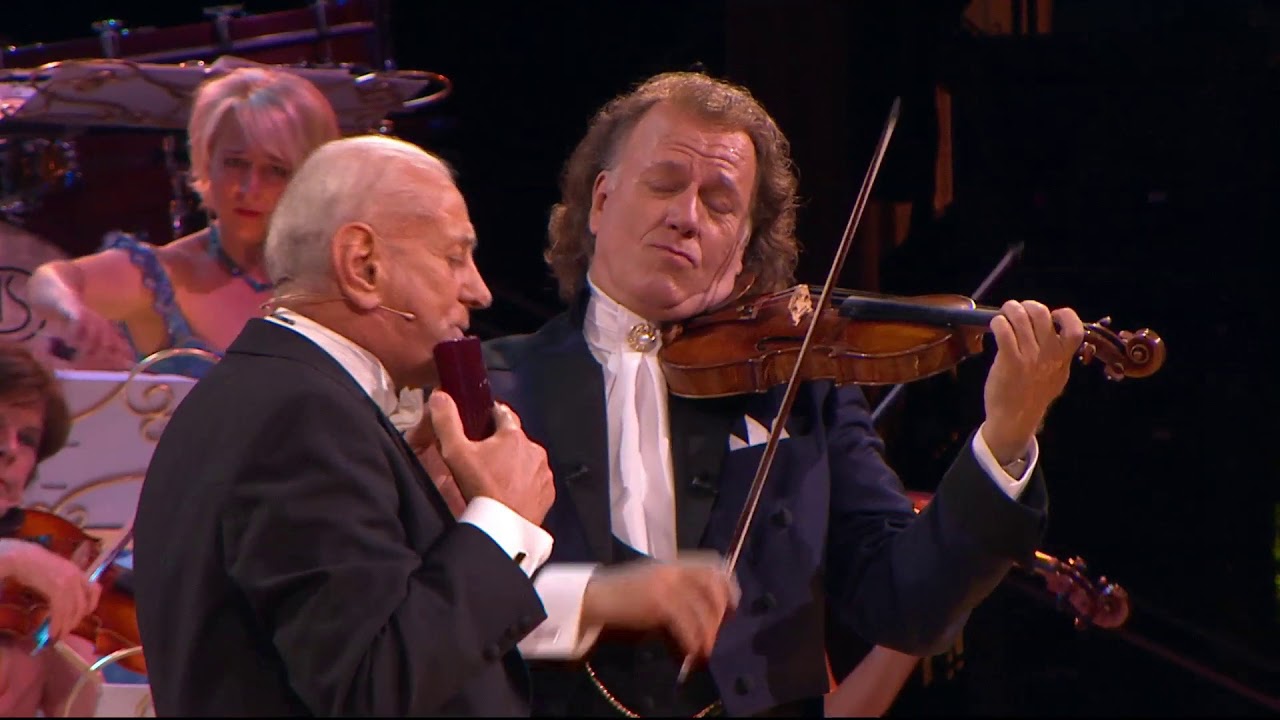
The 76-Year-Old Who Still Dances the Waltz Like a Man Half His Age: Inside André Rieu’s Extraordinary Health Secret
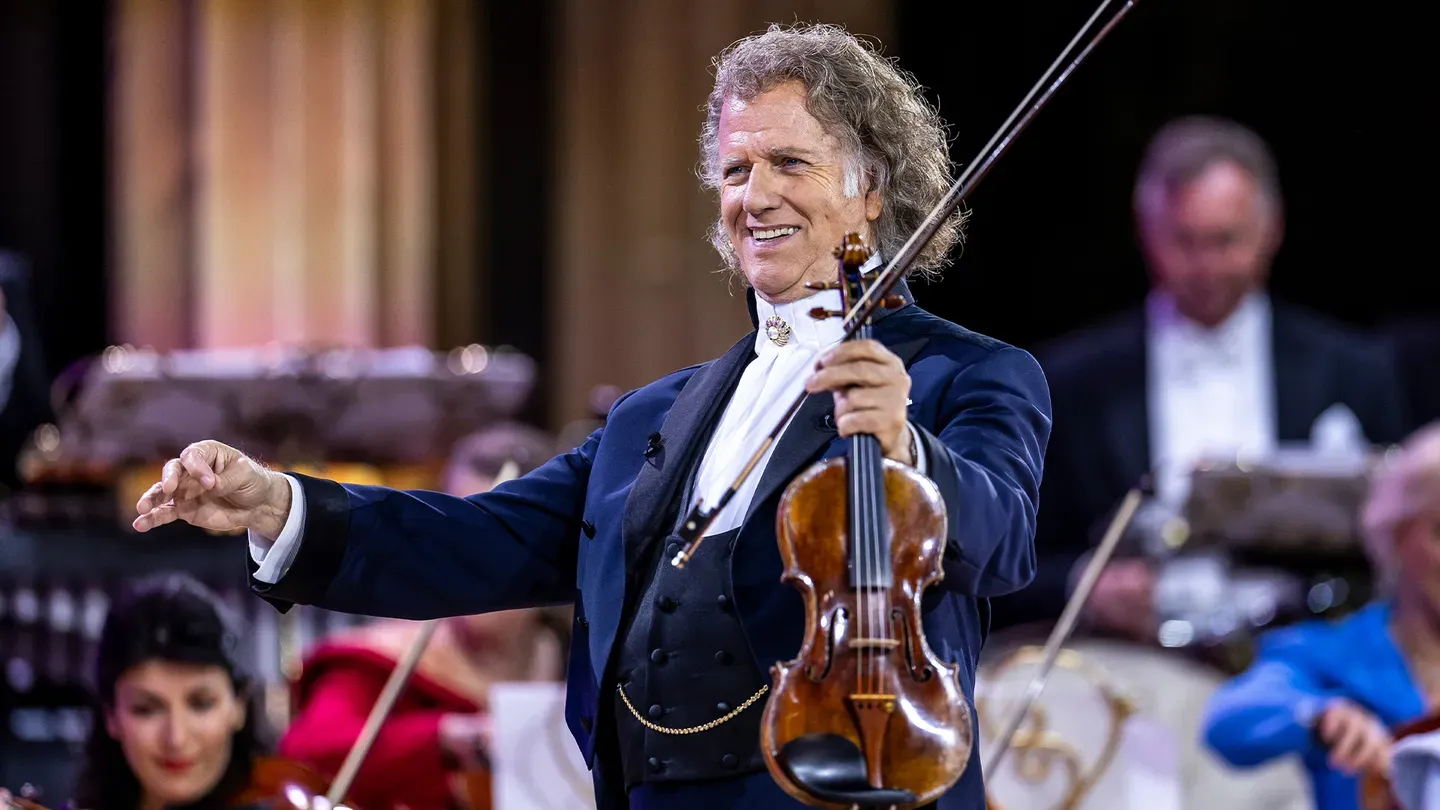
At an age when most people are slowing down, retiring, or carefully measuring their steps, André Rieu is still commanding stages for more than three hours at a stretch. He holds a 17th-century Stradivarius, leads a 60-piece orchestra, dances the waltz with visible joy, and leaves stadiums of 20,000 to 40,000 people emotionally exhausted. The Dutch violinist and conductor, born on 1 October 1949, turned 76 in 2025. Yet the man known as the King of Waltz continues to tour the world with the energy of someone decades younger.
Doctors have advised him to reduce his schedule. Family members have expressed concern. Colleagues in the classical world have raised eyebrows. But Rieu has other plans. He has publicly declared his intention to keep performing well into his eighties and beyond — and, with characteristic optimism, has even joked about living to 140. The secret to his remarkable stamina is neither a miracle supplement nor an exclusive medical treatment. It is a disciplined, almost obsessive commitment to physical conditioning, clean living, and an unshakable belief in the healing power of music itself.
The Physical Demands of Being André Rieu
A typical André Rieu concert is not a polite evening of seated listening. It is a full-body athletic event. For roughly three hours the violinist stands, plays, conducts, interacts with the audience, moves across the stage, and frequently dances. The emotional intensity is equally demanding. He must stay fully present, reading the energy of tens of thousands of people while delivering note-perfect performances night after night.
In a normal year he performs around 90 concerts. Some seasons have seen him appear in more than 90 shows across five continents. The travel alone — long flights, time-zone changes, successive one-night stands — would exhaust most younger artists. Add the pressure of leading the largest private orchestra in the world, overseeing elaborate stage productions, and carrying the emotional weight of an audience that expects joy, tears, and transcendence, and the physical toll becomes clear.
Rieu has compared the job to being a professional athlete. “Giving about 90 concerts every year is comparable with being an athlete,” he has said. The comparison is accurate. Few classical musicians in history have sustained this level of output into their mid-seventies.
Wake-Up Calls and Hard Lessons
Rieu’s current discipline did not appear overnight. It was forged by necessity. On two separate occasions earlier in his career he was forced to cancel multiple concerts for health reasons. The most serious episode involved a debilitating balance disorder caused by a viral infection. For four months he was largely confined to bed, experiencing intense vertigo. Everything around him seemed to spin. The forced rest was, in his own words, “hell.”
The experience became a profound wake-up call. Rieu realised he had been overloading himself — taking on too many responsibilities, pushing too hard, and neglecting recovery. A second series of cancellations years later reinforced the lesson. Since then he has treated his body with the seriousness of an elite sportsman.
“I had to change something,” he later reflected. The change was comprehensive.
The Daily Ritual That Keeps Him Standing
The cornerstone of Rieu’s regime is strength training. When he is at home in Maastricht, and even while on tour, he begins most days with approximately 90 minutes of resistance work under the guidance of his personal trainer, Ruud. The sessions include power lifting, kettlebells, and targeted exercises designed to preserve muscle mass — something that naturally declines with age.
He travels with the trainer. The man is part of the permanent touring entourage, just as essential as the stage crew or the sound engineers. Rieu has said that the trainer “always comes with me.” The investment is deliberate. Without maintained strength, three-hour performances would become impossible.
Sleep is another non-negotiable. On tour Rieu sleeps whenever and wherever he can — often for large portions of the day. Concerts demand total output; recovery must be equally serious. “On tour I sleep almost the whole day,” he has explained. “I have to, because during a concert I give everything for three hours.”
Diet completes the triangle. Rieu does not smoke. He stopped drinking alcohol after his trainer pointed out that it interferes with muscle recovery. At home he cooks much of his own food, using organic vegetables grown in the garden of the historic castle he shares with his wife Marjorie. Fish appears regularly; red meat is limited. On the road the orchestra travels with its own chefs, who prepare fresh, healthy meals daily for the entire company. Five smaller meals a day help maintain steady energy without heaviness.
The results are visible. At 76, Rieu still moves with lightness and spark. His posture remains upright. His smile is genuine. The violin still seems an extension of his body rather than a burden.
Music as Medicine
Beyond the weights and the vegetables lies something less measurable but equally powerful: the music itself. Rieu has repeatedly described performance as his therapy. “Music is my therapy,” he has said. “A waltz a day keeps the doctor away.” Scientific research supports the idea that both playing and listening to music can reduce stress hormones, elevate mood, and even influence cardiovascular health. For Rieu the effect is compounded by the reciprocal energy of the audience. The joy he gives returns to him as fuel.
He has spoken of the almost addictive happiness that follows a successful concert. The problem, he admits with a laugh, is that the high makes it difficult to fall asleep afterward. Yet even that restlessness is preferable to the emptiness of not performing.
His positive mindset is legendary. Rieu insists on seeing the glass as half full. He wants to keep working because there is still so much music left to share and so many people left to move. Retirement holds no appeal. “I will never retire,” he has declared. The three days a year he and Marjorie spend in Rome are his only real holiday. The rest of the time he is either preparing, performing, or recovering in order to perform again.
A Touring Machine Built for Longevity
The entire Rieu organisation is structured around sustainability. A dedicated tour doctor travels with the company. Prevention is prioritised. Hotels are checked for proximity to good medical facilities. The catering team ensures consistent nutrition. Fitness facilities are used not only by the maestro but by many orchestra members who have adopted similar habits. Rieu’s discipline has become contagious.
The physical demands remain high, but the support system around him is sophisticated. Where earlier in his career he risked burnout through sheer willpower, he now manages energy with professional precision.
Looking Ahead
As André Rieu continues to fill arenas and outdoor squares from Maastricht to Melbourne, Abu Dhabi to London, the question is no longer whether he can keep going. The evidence is already on stage every night. The more interesting question is how long the phenomenon can last.
Rieu himself seems uninterested in limits. He trains, eats carefully, sleeps strategically, and draws energy from the very act of making music. Doctors may counsel caution. Family may worry. But the man with the Stradivarius has made his choice clear: as long as the body cooperates and the audiences keep coming, the King of Waltz will keep dancing.
In an era obsessed with youth and novelty, André Rieu offers a different model of vitality — one built on discipline, joy, and an unrelenting love of the work itself. At 76 he is not merely surviving on stage. He is still thriving, still surprising, and still making thousands of people feel younger for a few magical hours.
The secret, it turns out, is both simple and profound. Take care of the body. Feed it well. Rest it properly. Then give everything you have to the thing that makes you feel most alive. For André Rieu, that thing has always been the waltz — and the waltz, it seems, is giving back.

Whether he reaches 140 or not, one fact is already certain: few performers of any genre have demonstrated such sustained physical and emotional resilience so late in a career. The next time you watch him lift the violin and smile at a roaring crowd, remember the 90-minute training sessions, the carefully chosen meals, and the quiet determination that make the spectacle possible. The music may sound effortless. The health that sustains it is anything but.