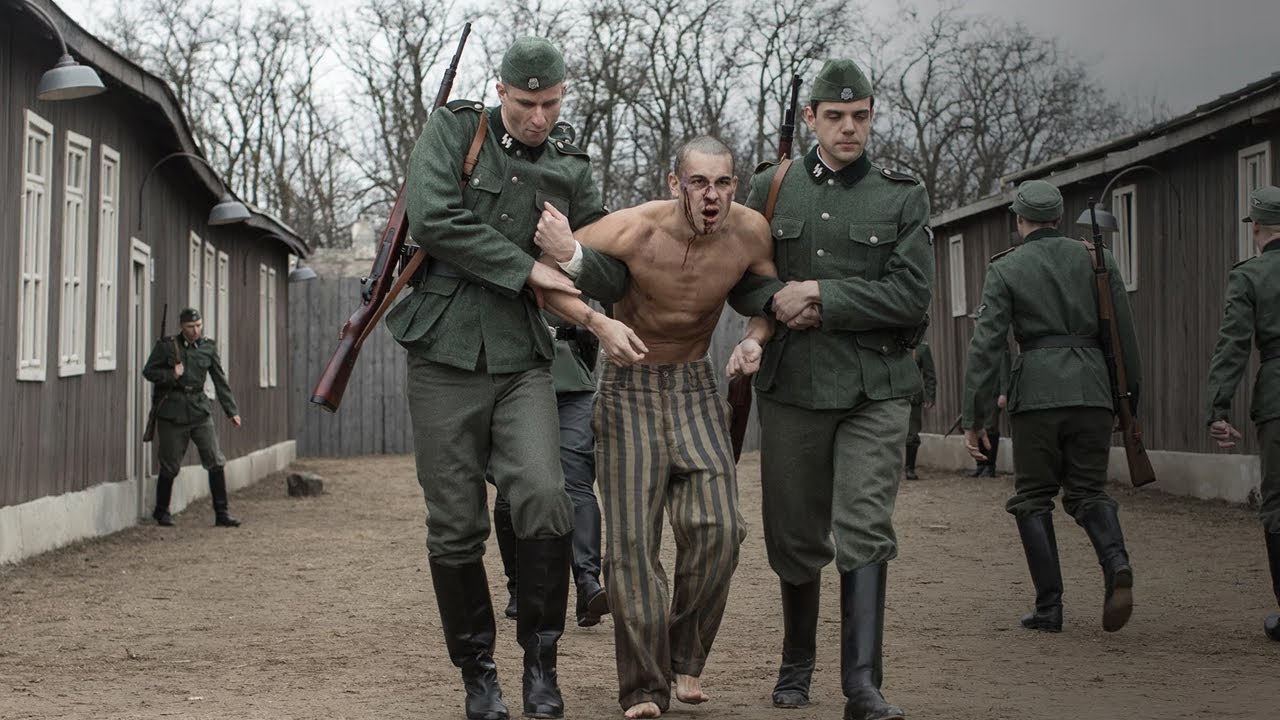
Shadows of Mauthausen: The Heart-Pounding True Story Behind Netflix’s Moving Holocaust Drama
In the vast archive of WWII cinema, few stories capture the sheer peril of resistance quite like The Photographer of Mauthausen (El fotógrafo de Mauthausen). Streaming on Netflix, this haunting Spanish historical drama revisits one of the most remarkable, terrifying, and historically vital acts of defiance ever carried out inside a Nazi concentration camp.
Directed by Mar Targarona and starring Mario Casas in a career-defining performance, the film brings to life the unbelievable true story of Francesc Boix, a Catalan communist and Spanish Republican exile who was imprisoned in the Mauthausen concentration camp in Austria. Tasked with working in the camp’s photo lab under the strict supervision of the SS, Boix realized he was holding the visual proof of Nazi war crimes—and made the extraordinary decision to risk his life to save it.
The Dark Mechanics of the Photo Lab
Mauthausen was classified as a Category III camp—a “Grade III” facility designed for the “unreformable political enemies” of the Third Reich. It was infamous for its brutal labor regime, particularly the notorious “Stairs of Death,” where prisoners were forced to carry 100-pound granite blocks up 186 uneven stone steps until they collapsed from exhaustion or were murdered by SS guards.
Because Mauthausen was visited by high-ranking Nazi officials, including Heinrich Himmler and Albert Speer, the SS maintained a detailed photographic laboratory (Erkennungsdienst) to record official visits, inmate identification headshots, and documented “accidental deaths” or suicides.
As a skilled photographer, Francesc Boix was assigned to assist the SS officer in charge of the lab, Paul Ricken. Ricken, an amateur artist who possessed a chilling, detached fascination with death, viewed his assignments through an aesthetic lens, taking meticulously framed photographs of deceased inmates, mass executions, and camp infrastructure. Boix quickly recognized that these negatives were not mere administrative records; they were definitive, undeniable evidence of systemic extermination.
The Mission: Stealing Proof of the Unthinkable
By late 1944, as the Allied forces began closing in on the European fronts, the SS high command issued strict orders to destroy all camp records, registers, and photographic negatives. The Nazi regime understood that defeat was imminent, and they were determined to erase every trace of their atrocities from the historical record.
Realizing that the physical proof of genocide was about to be burned, Boix and a clandestine network of Spanish inmates within the camp’s underground resistance launched a harrowing counter-operation. At immense personal risk, Boix began secretly hoarding key negatives, hiding them in darkroom crannies, inside double-bottomed storage boxes, and under floorboards.
Every second spent in the photo lab was a tightrope walk over an abyss. Discovery meant immediate torture and execution by the SS. Yet, Boix managed to steal and duplicate thousands of negatives capturing the bleak reality of Mauthausen: the desperate faces of prisoners, forced labor abuses, gas chamber casualties, and, crucially, high-ranking Nazi leaders touring the facility alongside smiling camp officers.
Smuggling History Beyond the Barbed Wire
Preserving the negatives inside the camp was only half the battle. As the war drew to its final months and the camp fell into chaos, the risk of total destruction mounted. Boix and his fellow conspirators realized that to guarantee the survival of the evidence, the negatives had to leave Mauthausen entirely.
The escape route for the photographs relied on an extraordinarily dangerous smuggling network involving the camp’s Poschacher commando—a small group of young Spanish inmates who were permitted to leave the camp perimeter daily to work at a nearby quarry owned by a local contractor.
Among these courageous young men was Jacinto Cortés, who, alongside his peers, managed to conceal packets of developed negatives inside their clothing during work details. Outside the barbed wire, they established contact with Anna Pointner, a brave local Austrian woman who lived near the quarry. Despite the constant threat of Gestapo raids and neighborhood informants, Pointner agreed to hide the stolen negatives inside the stone wall surrounding her garden.
For months, thousands of photographic negatives lay buried in the quiet Austrian countryside, waiting for the day the shadow of the Reich would finally lift.
The Nuremberg Testimonies and Unerasable Legacy
When the United States Army liberated Mauthausen in May 1945, Francesc Boix retrieved his camera, stepped out of captivity, and immediately began photographing the liberation and the desperate state of his fellow survivors. Shortly thereafter, the buried negatives were retrieved from Anna Pointner’s garden wall—nearly 2,000 intact photographs documenting the true horror of Mauthausen.
Boix’s bravery had profound historical consequences. In 1946, he was called as a witness at the International Military Tribunal in Nuremberg—the only Spanish citizen to testify at the historic trials.
During his testimony, the prosecution presented Boix’s saved photographs as key physical evidence. When high-ranking Nazi defendants, including Albert Speer and Ernst Kaltenbrunner, attempted to deny their knowledge of or presence at concentration camps, the prosecution produced high-resolution photographs taken by the SS and saved by Boix, clearly showing the defendants touring Mauthausen alongside camp commanders. The visual proof was absolute; the lies crumbled on the global stage.
A Cinematic Tribute to Indomitable Courage
The Photographer of Mauthausen stands as a masterclass in tension, historical accuracy, and moral weight. Mario Casas delivers a deeply moving performance, undergoing a dramatic physical transformation to convey the sheer physical degradation and unyielding psychological resilience of Francesc Boix.
The film serves as a vital reminder of the different forms resistance can take. While some fought with weapons, Boix and his comrades fought with truth. They understood that totalitarian regimes rely not only on physical violence, but on the erasure of memory. By risking everything to preserve those tiny strips of celluloid, a group of starving prisoners ensured that the world could never deny what happened behind those stone walls.
Now streaming on Netflix, this gripping, deeply emotional drama honors a hero whose courage ensured that the victims of Mauthausen were never forgotten, and that justice had the evidence it needed to hold the guilty accountable.