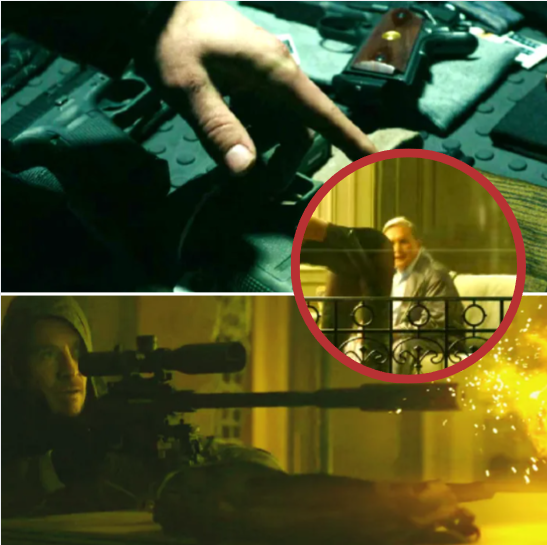
Netflix’s ‘Perfect’ R-Rated Thriller Exposes a System You Can’t Escape
In the vast, often saturated landscape of streaming content, Netflix has frequently struggled to find a consistent identity for its original action cinema. While big-budget spectacles like The Gray Man or Red Notice aimed for blockbuster heights, they often lacked the visceral, grounded soul that defines the genre’s true classics. Enter Jeremy Saulnier’s Rebel Ridge. Released to critical acclaim, this R-rated thriller doesn’t just provide adrenaline; it restores a sense of tactical realism and moral weight to the action genre.
Starring Aaron Pierre in a star-making performance, Rebel Ridge is a masterclass in “slow-burn” tension. It is a film that understands that the most impactful violence isn’t always the loudest—it’s the most inevitable. By blending the DNA of 1980s lone-hero westerns with modern sociopolitical critiques of the American legal system, Saulnier has created what many are calling the “perfect” R-rated action movie for the digital age.

I. The Genesis of Tension: Plot and Premise
At its core, Rebel Ridge follows a deceptively simple premise, reminiscent of First Blood. Terry Richmond (Aaron Pierre), a former Marine, is cycling toward the small town of Shelby Springs with a life-or-death mission: he needs to post bail for his cousin before he is transferred to a state prison where his life is in danger.
However, Terry’s journey is violently interrupted when he is rammed off the road by two local police officers. What follows is a harrowing introduction to “civil asset forfeiture”—a real-world legal loophole that allows police to seize cash and property without charging the owner with a crime. The police take Terry’s life savings, effectively sentencing his cousin to death by bureaucracy.
Unlike many action protagonists who immediately resort to gunplay, Terry begins his journey by trying to work within the system. He visits the police station, speaks calmly, and attempts to negotiate. This “polite” confrontation creates a suffocating level of tension. The audience knows Terry is a “human weapon,” but the film forces us to wait, making the eventual explosion of action far more satisfying.
II. The Aaron Pierre Factor: A New Kind of Action Star
One cannot discuss the success of Rebel Ridge without centering on Aaron Pierre. Originally, the role was slated for John Boyega, but Pierre’s late-stage casting proved to be a stroke of genius. Pierre possesses a physical presence that is both intimidating and incredibly disciplined.
The “Stillness” of a Warrior Pierre plays Terry Richmond with a “coiled spring” energy. He doesn’t waste movements or words. In an era of quippy, Marvel-esque heroes, Terry is a throwback to the stoic protagonists of Jean-Pierre Melville or early Clint Eastwood. His eyes convey a tactical assessment of every room he enters. When he finally does engage in combat, it isn’t flashy; it is efficient, non-lethal (mostly), and terrifyingly fast.
The Moral Compass What makes Terry Richmond compelling is his restraint. As an expert in non-lethal hand-to-hand combat, he chooses not to kill, even when the corrupt officers deserve it. This choice elevates the film from a standard revenge flick to a sophisticated thriller about the “rules of engagement.” It challenges the audience to ask: How do you fight a corrupt system without becoming the monster they claim you are?
III. The Antagonist: Don Johnson and the Banality of Evil
Every great hero needs a formidable foil, and Don Johnson delivers a career-best performance as Chief Sandy Burnne. Johnson avoids the “cartoon villain” tropes. He doesn’t play Burnne as a psychopath, but as a pragmatic, smug bureaucrat who truly believes he is the hero of his own story.
Burnne represents a specific kind of systemic rot—the kind that hides behind “policy” and “budgetary needs.” The chemistry between Pierre and Johnson is electric, built on a foundation of mutual respect for each other’s capabilities and a total lack of moral common ground. The dialogue-heavy scenes in the police station are as intense as any car chase because the stakes are purely psychological.
IV. Jeremy Saulnier’s Directorial Precision
Jeremy Saulnier has built a reputation on “survivalist” cinema, with previous hits like Blue Ruin and Green Room. In Rebel Ridge, he brings that same gritty, “lived-in” feeling to a larger canvas.
Visual Storytelling Saulnier, who often serves as his own cinematographer or editor, uses a “clean” visual style. There is no “shaky cam” here. Every punch, every tactical maneuver, and every legal document is shown with total clarity. This transparency allows the audience to follow Terry’s logic. When he dismantles a rifle or uses a smoke grenade, we see the how and the why.
The R-Rating: Impact Over Gore While the film is R-rated, it doesn’t rely on mindless gore. The rating is used to give the world a sense of “consequence.” When violence happens, it hurts. The sound design—the crunch of gravel, the heavy thud of a body hitting the floor—adds a layer of realism that PG-13 action movies simply cannot replicate.
V. Themes: Civil Forfeiture and Systemic Injustice
What elevates Rebel Ridge above a standard Netflix “content” piece is its biting social commentary. The film shines a glaring light on Civil Asset Forfeiture, a practice often criticized as “policing for profit.”
By making the “villain” a legal loophole, Saulnier makes the threat feel universal. This isn’t just about one “bad apple” cop; it’s about a system designed to exploit the vulnerable. Terry isn’t just fighting men; he’s fighting a machine that has paved over the lives of the town’s citizens for years.
The film also touches upon:
-
Veteran Alienation: How society trains men for war and then discards them or treats them as threats when they return home.
-
Small-Town Corruption: The “Shelby Springs” setting feels like a microcosm of forgotten America, where the law is whatever the person with the badge says it is.
-
Allyship: The character of Summer McBride (AnnaSophia Robb), a court clerk who risks everything to help Terry, provides a necessary human heart to the story, showing that systemic change requires internal and external pressure.
VI. The Action: Tactical Realism
The third act of Rebel Ridge is where the film truly earns its “action masterpiece” title. Avoiding the over-the-top explosions of the John Wick series, Saulnier opts for “tactical realism.”
Terry’s use of non-lethal weaponry—beanbag rounds, tear gas, and grappling techniques—is a refreshing change of pace. It turns the finale into a high-stakes chess match. Each move Terry makes is designed to minimize loss of life while maximizing the exposure of the truth. It is “Action with an IQ,” proving that you don’t need a thousand-round gunfight to keep an audience on the edge of their seats.

VII. Why ‘Rebel Ridge’ Matters for Netflix
For years, Netflix’s strategy was “quantity over quality.” Rebel Ridge represents a shift toward “Prestige Action.” It is a film that demands your full attention, rewarding viewers who pay attention to legal jargon and character motivations.
Its success (hitting #1 worldwide) proves that there is a massive appetite for adult-oriented, intelligently written thrillers. It doesn’t treat the audience like children. It assumes we can follow a complex plot about municipal funding while still enjoying a well-executed takedown.
VIII. Critical Reception and Cultural Impact
Upon its release, Rebel Ridge garnered a staggering 96% on Rotten Tomatoes. Critics praised it for being “the movie Jack Reacher fans have been waiting for,” while also noting its deeper philosophical questions.
It has sparked discussions online about the legality of police seizures and the portrayal of Black veterans in cinema. By grounding the “super-soldier” trope in a very real, very ugly American reality, Saulnier has created a film that lingers in the mind long after the credits roll.
Conclusion: A Modern Classic
Rebel Ridge is more than just a “good Netflix movie.” It is a testament to the power of genre filmmaking when handled with care, intelligence, and a clear point of view. Through Aaron Pierre’s commanding performance and Jeremy Saulnier’s razor-sharp direction, it transcends its “action” label to become a gripping drama about the cost of integrity.
In the final analysis, Rebel Ridge is “perfect” because it understands its own boundaries. It is lean, mean, and incredibly focused. It reminds us that justice isn’t always about winning—it’s about making sure the truth can no longer be ignored. For anyone seeking a thriller that balances brains and brawn, Rebel Ridge is the gold standard for 2024 and beyond.