
Andy Roddick Declares “Eala Mania” a Movement: Why the Filipino Star Is Changing Tennis Forever
In the high-stakes world of professional tennis, few things capture the imagination quite like a genuine cultural phenomenon. This week, former World No. 1 and US Open champion Andy Roddick delivered a passionate, unfiltered endorsement of Filipino rising star Alexandra Eala that has sent shockwaves through the tennis community. Speaking on his popular podcast Served with Andy Roddick, the American legend coined—and enthusiastically embraced—the term “Eala Mania,” describing the 21-year-old’s remarkable ascent not merely as a feel-good story, but as a full-blown movement that is reshaping the sport’s global landscape.
Roddick’s comments come in the immediate aftermath of Eala’s history-making run at the 2026 Wimbledon Championships. The left-handed Philippine sensation, seeded No. 29, stormed into the fourth round—the first player from her nation to reach the second week of a Grand Slam in the Open Era. Along the way she produced one of the most memorable upsets of the fortnight, dethroning defending champion and world No. 3 Iga Swiatek 7-6(11-9), 6-2 on Centre Court in a display of fearless shot-making and ice-cool temperament that left the tennis world gasping.
But it is not only the results that have captivated Roddick and millions of new fans. It is the sheer scale of the emotional connection Eala has forged with supporters back home in the Philippines and across the Filipino diaspora. Watch parties packed arenas and public squares for her fourth-round clash. Social media exploded with national pride. And in Roddick’s eyes, that organic explosion of passion is pure gold for a sport that constantly seeks new audiences.
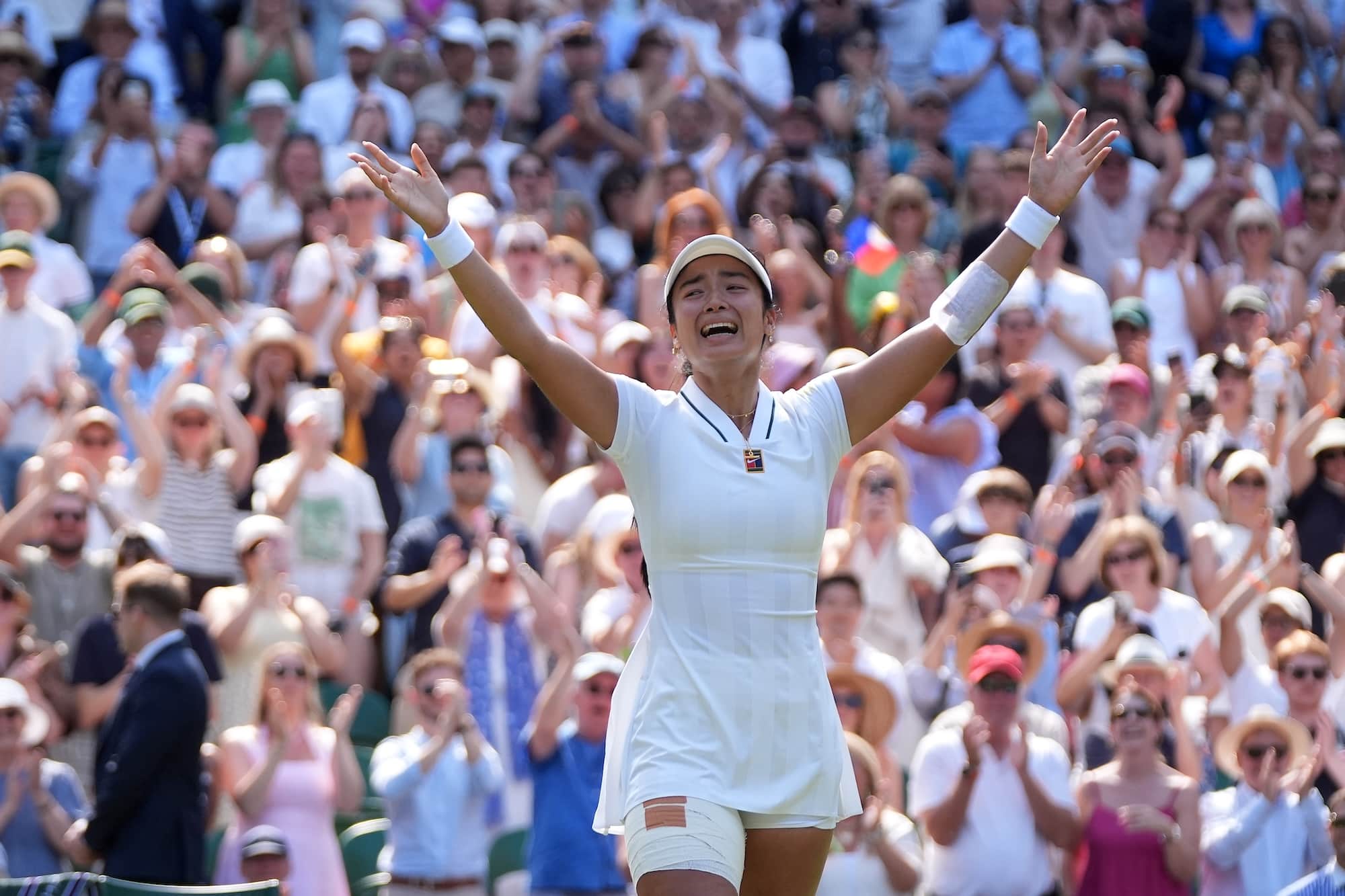
Alexandra Eala celebrates her historic third-round victory over defending champion Iga Swiatek on Centre Court at Wimbledon 2026. The win made her the first Filipino to reach the second week of a Grand Slam.
“I Am Here for Eala Mania” — Roddick’s Full-Throated Defense
On the latest episode of Served, Roddick did not hold back. His voice rose with genuine excitement as he addressed both the spectacle and the inevitable backlash that accompanies any sudden rise to prominence.
“Eala-mania is fun! I’m sorry, when you have watch parties in arenas around your country for a fourth-round match, I’m in. Imagine, wherever you live, whatever the biggest venue is closest to you, imagine having watch parties for a fourth-round match at Wimbledon, and having no room. I am here for Eala-mania, it’s great for tennis!”
Roddick went further, taking direct aim at online critics who have begun to grumble that media coverage of Eala is excessive or that her story is being overhyped. His response was characteristically blunt and memorable.
“I don’t want to hear any of that B——, like, ‘I don’t care, stop talking…’ No! This is a movement she is singlehandedly creating, a movement of a sect of tennis fandom that largely didn’t exist a couple of years ago. Thank you!”
The former champion’s words have been widely shared across social platforms, with Filipino fans flooding comment sections with gratitude and heart emojis. For a tennis community that has long sought greater diversity and fresh narratives, Roddick’s endorsement carries significant weight. As a player who himself once carried American tennis hopes through the Federer-Nadal-Djokovic era, Roddick understands better than most the power of a charismatic athlete who can expand the sport’s reach.
.png)
Andy Roddick on the set of his podcast Served with Andy Roddick, where he delivered his passionate defense of “Eala Mania” and hailed the Filipino star’s impact on the sport.
From Feel-Good Story to Legitimate Contender
Roddick was careful to distinguish between the early novelty of Eala’s breakthrough and the substance of her current level. He recalled her stunning run at the 2025 Miami Open, where as a wild card she defeated then-world No. 5 Madison Keys and world No. 2 Iga Swiatek en route to the semifinals—the first Filipino player ever to reach that stage at a WTA 1000 event. That performance catapulted her into the Top 100 and announced her arrival on the biggest stages.
“Listen, it was a fun story when she broke out in Miami, we wanted more of it,” Roddick said. “She’s top 30, beating players at majors, it went from a fun story to a very real story and a phenomenon. We should all grab it, embrace it, love it, shake it, be thankful for it… She is singlehandedly bringing more fans into tennis in a very committed and passionate way.”
Indeed, the numbers back him up. Eala entered Wimbledon ranked a career-high No. 29. Her run to the fourth round, which ended in a hard-fought three-set loss to Italy’s Jasmine Paolini (4-6, 6-4, 3-6), pushed her even higher in the live rankings. In just over 18 months she has transformed from a promising junior (she was the 2022 junior world No. 2) into a bona fide Top 30 player with multiple Top 10 scalps—including two career victories over Swiatek.
Her 2025 season alone was historic: first WTA 125 title in Guadalajara, runner-up finish at Eastbourne on grass, first Filipino to win a Grand Slam main-draw singles match (at the US Open), and a year-end ranking of No. 50. The 2026 campaign has only accelerated the momentum. She captured the Lexus Birmingham Open title on grass earlier this summer and arrived at the All England Club with genuine belief she could make deep runs on the surface.
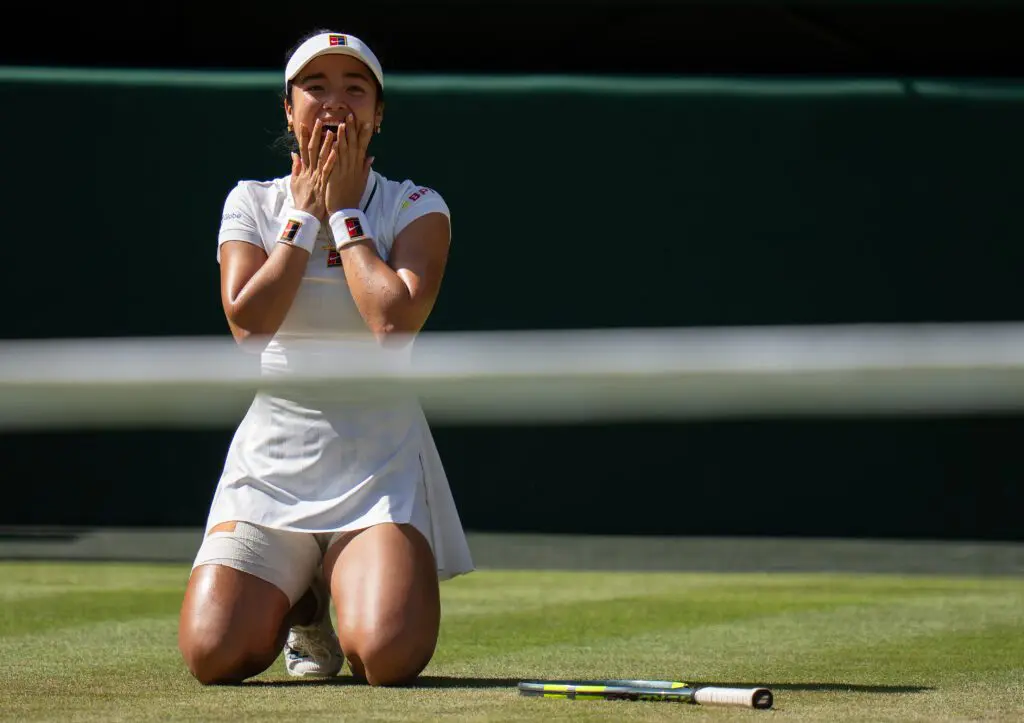
Overwhelmed with emotion, Eala drops to her knees after sealing the straight-sets victory over Iga Swiatek. Moments like these have fueled the passionate “Eala Mania” sweeping the Philippines and the global tennis community.
The Power of Representation and National Pride
What makes Eala’s story uniquely powerful is the context from which she has emerged. The Philippines has never before produced a Top 100 player in the Open Era, let alone a Top 30 contender capable of beating the best in the world on the sport’s most hallowed grass. Tennis infrastructure in the archipelago remains limited compared to traditional powerhouses. Eala herself left home at a young age to train at the Rafa Nadal Academy in Mallorca, Spain, under the guidance of coach Joan Bosh. Her success is therefore not just personal—it is national validation on a global stage.
When she walks onto court, she carries the hopes of more than 110 million Filipinos and a vast overseas community. The Philippine flag has become a regular sight in the stands at her matches. Social media hashtags trend for days. Local brands scramble for endorsement deals. And, as Roddick noted with delight, entire arenas fill up for public viewings of her matches—even when she is playing in a different time zone.
This level of engagement is rare in tennis. While stars like Serena Williams, Roger Federer, and Novak Djokovic have commanded massive followings, few players from non-traditional tennis nations have generated such instantaneous, nationwide fervor so early in their careers. Comparisons have been drawn to Naomi Osaka’s impact on Japanese tennis or Leylah Fernandez’s run that galvanized Canada, but the sheer scale of the Philippine population and the intensity of its sports culture give Eala’s movement a different dimension.
Roddick’s insistence that this is “a movement she is singlehandedly creating” resonates deeply. In an era when tennis governing bodies invest heavily in growth initiatives, Eala is delivering organic, authentic expansion without a single marketing campaign. She is simply winning matches and winning hearts.
A New Era of Parity — and Opportunity
Roddick also used the opportunity to discuss the broader state of women’s tennis, arguing that the tour currently enjoys a healthy level of parity that creates openings for players like Eala to break through. With Aryna Sabalenka exiting recent majors earlier than expected and no single player dominating the conversation heading into the US OpenAndy Roddick Declares “Eala Mania” a Movement: Why the Filipino Star Is Changing Tennis Forever
Former World No. 1 hails Alexandra Eala’s historic Wimbledon run and the passionate fan base she has single-handedly created, calling it “great for tennis” and shutting down critics who claim she receives too much attention.
By Tennis Desk Staff | July 21, 2026 | London / Manila
In the high-stakes world of professional tennis, few things capture the imagination quite like a genuine cultural phenomenon. This week, former World No. 1 and US Open champion Andy Roddick delivered a passionate, unfiltered endorsement of Filipino rising star Alexandra Eala that has sent shockwaves through the tennis community. Speaking on his popular podcast Served with Andy Roddick, the American legend coined—and enthusiastically embraced—the term “Eala Mania,” describing the 21-year-old’s remarkable ascent not merely as a feel-good story, but as a full-blown movement that is reshaping the sport’s global landscape.
Roddick’s comments come in the immediate aftermath of Eala’s history-making run at the 2026 Wimbledon Championships. The left-handed Philippine sensation, seeded No. 29, stormed into the fourth round—the first player from her nation to reach the second week of a Grand Slam in the Open Era. Along the way she produced one of the most memorable upsets of the fortnight, dethroning defending champion and world No. 3 Iga Swiatek 7-6(11-9), 6-2 on Centre Court in a display of fearless shot-making and ice-cool temperament that left the tennis world gasping.
But it is not only the results that have captivated Roddick and millions of new fans. It is the sheer scale of the emotional connection Eala has forged with supporters back home in the Philippines and across the Filipino diaspora. Watch parties packed arenas and public squares for her fourth-round clash. Social media exploded with national pride. And in Roddick’s eyes, that organic explosion of passion is pure gold for a sport that constantly seeks new audiences.
Alexandra Eala celebrates her historic third-round victory over defending champion Iga Swiatek on Centre Court at Wimbledon 2026. The win made her the first Filipino to reach the second week of a Grand Slam.
“I Am Here for Eala Mania” — Roddick’s Full-Throated Defense
On the latest episode of Served, Roddick did not hold back. His voice rose with genuine excitement as he addressed both the spectacle and the inevitable backlash that accompanies any sudden rise to prominence.
“Eala-mania is fun! I’m sorry, when you have watch parties in arenas around your country for a fourth-round match, I’m in. Imagine, wherever you live, whatever the biggest venue is closest to you, imagine having watch parties for a fourth-round match at Wimbledon, and having no room. I am here for Eala-mania, it’s great for tennis!”
Roddick went further, taking direct aim at online critics who have begun to grumble that media coverage of Eala is excessive or that her story is being overhyped. His response was characteristically blunt and memorable.
“I don’t want to hear any of that B——, like, ‘I don’t care, stop talking…’ No! This is a movement she is singlehandedly creating, a movement of a sect of tennis fandom that largely didn’t exist a couple of years ago. Thank you!”
The former champion’s words have been widely shared across social platforms, with Filipino fans flooding comment sections with gratitude and heart emojis. For a tennis community that has long sought greater diversity and fresh narratives, Roddick’s endorsement carries significant weight. As a player who himself once carried American tennis hopes through the Federer-Nadal-Djokovic era, Roddick understands better than most the power of a charismatic athlete who can expand the sport’s reach.
Andy Roddick on the set of his podcast Served with Andy Roddick, where he delivered his passionate defense of “Eala Mania” and hailed the Filipino star’s impact on the sport.
From Feel-Good Story to Legitimate Contender
Roddick was careful to distinguish between the early novelty of Eala’s breakthrough and the substance of her current level. He recalled her stunning run at the 2025 Miami Open, where as a wild card she defeated then-world No. 5 Madison Keys and world No. 2 Iga Swiatek en route to the semifinals—the first Filipino player ever to reach that stage at a WTA 1000 event. That performance catapulted her into the Top 100 and announced her arrival on the biggest stages.
“Listen, it was a fun story when she broke out in Miami, we wanted more of it,” Roddick said. “She’s top 30, beating players at majors, it went from a fun story to a very real story and a phenomenon. We should all grab it, embrace it, love it, shake it, be thankful for it… She is singlehandedly bringing more fans into tennis in a very committed and passionate way.”
Indeed, the numbers back him up. Eala entered Wimbledon ranked a career-high No. 29. Her run to the fourth round, which ended in a hard-fought three-set loss to Italy’s Jasmine Paolini (4-6, 6-4, 3-6), pushed her even higher in the live rankings. In just over 18 months she has transformed from a promising junior (she was the 2022 junior world No. 2) into a bona fide Top 30 player with multiple Top 10 scalps—including two career victories over Swiatek.
Her 2025 season alone was historic: first WTA 125 title in Guadalajara, runner-up finish at Eastbourne on grass, first Filipino to win a Grand Slam main-draw singles match (at the US Open), and a year-end ranking of No. 50. The 2026 campaign has only accelerated the momentum. She captured the Lexus Birmingham Open title on grass earlier this summer and arrived at the All England Club with genuine belief she could make deep runs on the surface.
Overwhelmed with emotion, Eala drops to her knees after sealing the straight-sets victory over Iga Swiatek. Moments like these have fueled the passionate “Eala Mania” sweeping the Philippines and the global tennis community.
The Power of Representation and National Pride
What makes Eala’s story uniquely powerful is the context from which she has emerged. The Philippines has never before produced a Top 100 player in the Open Era, let alone a Top 30 contender capable of beating the best in the world on the sport’s most hallowed grass. Tennis infrastructure in the archipelago remains limited compared to traditional powerhouses. Eala herself left home at a young age to train at the Rafa Nadal Academy in Mallorca, Spain, under the guidance of coach Joan Bosh. Her success is therefore not just personal—it is national validation on a global stage.
When she walks onto court, she carries the hopes of more than 110 million Filipinos and a vast overseas community. The Philippine flag has become a regular sight in the stands at her matches. Social media hashtags trend for days. Local brands scramble for endorsement deals. And, as Roddick noted with delight, entire arenas fill up for public viewings of her matches—even when she is playing in a different time zone.
This level of engagement is rare in tennis. While stars like Serena Williams, Roger Federer, and Novak Djokovic have commanded massive followings, few players from non-traditional tennis nations have generated such instantaneous, nationwide fervor so early in their careers. Comparisons have been drawn to Naomi Osaka’s impact on Japanese tennis or Leylah Fernandez’s run that galvanized Canada, but the sheer scale of the Philippine population and the intensity of its sports culture give Eala’s movement a different dimension.
Roddick’s insistence that this is “a movement she is singlehandedly creating” resonates deeply. In an era when tennis governing bodies invest heavily in growth initiatives, Eala is delivering organic, authentic expansion without a single marketing campaign. She is simply winning matches and winning hearts.
A New Era of Parity — and Opportunity
Roddick also used the opportunity to discuss the broader state of women’s tennis, arguing that the tour currently enjoys a healthy level of parity that creates openings for players like Eala to break through. With Aryna Sabalenka exiting recent majors earlier than expected and no single player dominating the conversation heading into the US Open, the field feels wide open.
“On the women’s side, I think parity rules at this point,” Roddick observed. “Especially with Sabalenka all of a sudden exiting a couple of Grand Slams early… I don’t think anyone goes, ‘I am the clear-cut favourite at the US Open.’ You’re talking about Coco [Gauff], as she’s looking forward, as Sabalenka is looking forward, as Rybakina’s looking forward, as Iga is looking forward, there is not a lot of momentum to be had from the top three, four, five players in the world… It’s fun!”
That parity, Roddick suggested, is precisely why moments like Eala’s Wimbledon run matter so much. When the hierarchy is less rigid, new faces can seize the spotlight and keep it. Eala’s ability to take out a multiple-time major champion on Centre Court is no longer a one-off fairy tale; it is evidence that she belongs among the elite and that the door is open for her—and others—to challenge for the biggest titles.

Alexandra Eala in full flight during a hard-court battle. Her aggressive lefty game, heavy topspin, and fearless mentality have made her one of the most exciting young players on the WTA Tour.
What Comes Next for Eala and the Movement
Eala returns home to the Philippines as a national hero. The welcome she received after Wimbledon was described by local media as “fit for a champion,” complete with throngs of fans at the airport and continuous coverage across television and digital platforms. Yet those closest to her emphasize that the 21-year-old remains grounded, focused on incremental improvement rather than the hype.
Her next targets are clear: continue climbing the rankings toward the Top 20, defend and build upon her grass-court success, and make deeper runs at the remaining majors. With limited points to defend for the rest of 2026, analysts believe a Top-20 finish is within reach if she maintains her current trajectory. Some optimistic voices even whisper about a potential Top-10 breakthrough before the year is out—though Eala herself has been characteristically measured in her public comments.
For Roddick and many longtime observers of the game, the most exciting aspect is not any single ranking milestone but the sustained energy Eala generates. “She is singlehandedly bringing more fans into tennis in a very committed and passionate way,” he repeated. In a sport that sometimes struggles with declining casual viewership in certain markets, that kind of organic growth is invaluable.
Critics who dismiss the coverage as overblown miss the larger point, Roddick argued. This is not manufactured hype; it is a genuine cultural moment. When a fourth-round match at Wimbledon can fill arenas halfway around the world with cheering fans, something special is happening. Tennis should not apologize for celebrating it—it should amplify it.
A Movement Bigger Than One Player
In the end, Andy Roddick’s fiery defense of “Eala Mania” is about more than one talented young woman from Quezon City. It is about the power of sport to inspire, to unite, and to create new communities of passion. It is about representation breaching barriers that once seemed impenetrable. And it is about the simple joy of watching a player who plays with freedom, fights with heart, and carries an entire nation on her shoulders without appearing burdened by the weight.
As the tennis calendar turns toward the North American hard-court swing and the US Open, all eyes will be on whether Eala can convert this summer’s momentum into even greater achievements. But regardless of the next result, the movement she has ignited shows no signs of slowing. Watch parties will continue. Flags will keep waving. And Andy Roddick, for one, will keep talking about it—loudly, proudly, and without apology.
“I am here for Eala Mania,” the former champion declared. “It’s great for tennis.” Judging by the frenzy that has followed his words, millions of fans—old and brand new—feel exactly the same way.