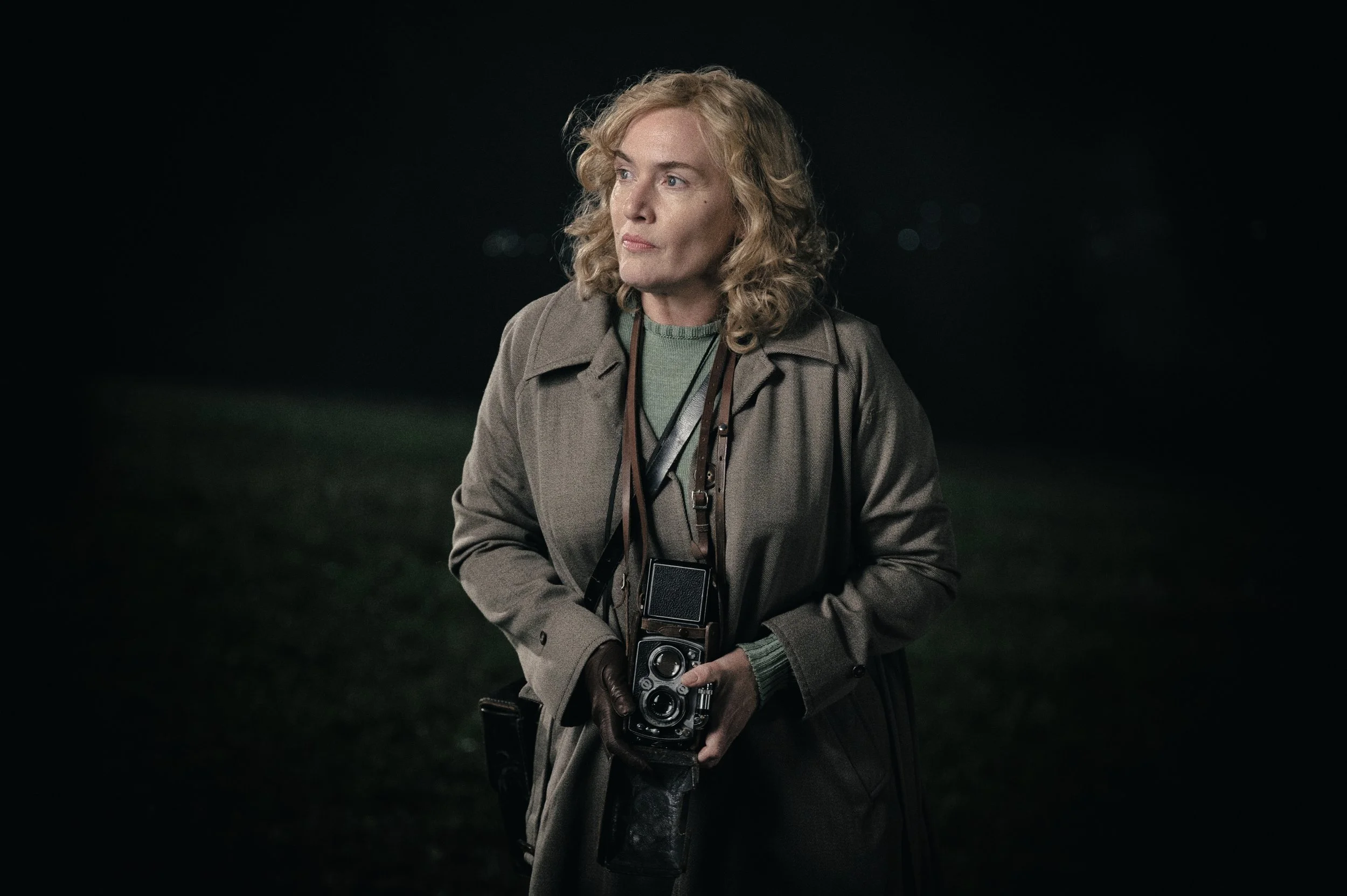
THE HIGH-STAKES HISTORICAL DRAMA ON NETFLIX EXPOSING THE UNFILTERED TRUTH OF WAR!
A camera held tightly in worn hands, a resolute gaze amid the darkness of World War II, and an unflinching determination to document history. On NETFLIX, Kate Winslet delivers an iconic, magnetic performance as a fearless fashion model turned war correspondent who risks everything on the frontlines. Navigating dangerous battlefields and societal skepticism, she captures the painful, human reality behind the conflict. The intense, atmospheric bravery captured in this exact moment proves that seeing is not the same as looking away — and that Lee is a film about the cost of refusing to look away.
Lee is the 2023 biographical war drama directed by Ellen Kuras in her feature debut, adapted from Antony Penrose’s book The Lives of Lee Miller. Winslet stars as Elizabeth “Lee” Miller, the American model, Surrealist muse, and photographer who forced her way onto the battlefields of Europe and brought back images that polite magazines were not always ready to print. The film is not a cradle-to-grave recitation. It concentrates on the years when Miller left the sunlit circle of artists in France, followed love to London, and then insisted that a woman’s camera belonged as close to the fighting as any man’s.
The framing device is a 1977 interview. An older Lee, still sharp and still unwilling to be managed, sits across from a young journalist and answers questions she would rather not answer. From that room the film drops backward into 1937: wine, argument, bodies, and the easy cruelty of people who believe art will outlast politics. Miller meets Roland Penrose, played by Alexander Skarsgård, and the attraction is immediate because neither of them is interested in being flattered. War arrives anyway. London under the Blitz gives her work for British Vogue. Editor Audrey Withers, played with steel and affection by Andrea Riseborough, wants pictures of women keeping the home front alive. Miller wants the front.
That hunger is the film’s engine. British authorities were reluctant to accredit women near combat. Miller pushed until the American entry into the war opened a door. She went forward with Life photographer David Scherman, played by Andy Samberg in a surprisingly grounded dramatic turn. Together they photograph Saint-Malo, the first wartime use of napalm, the liberation of Paris, and then the camps. Buchenwald and Dachau are not treated as a single shocking insert. They are the point the story has been traveling toward: the moment when the camera stops being a tool of style and becomes a record no one can later claim they did not know.
Winslet’s performance is the reason the film holds together even when the biopic structure feels familiar. She plays Miller as abrasive, funny, thirsty, and privately wrecked. The glamour of the early scenes is not nostalgia. It is the life Miller is leaving, and Winslet lets you feel the irritation of a woman who has already been looked at too much and now wants to do the looking. On the road she is dirty, exhausted, and still quicker than the men around her. In the later interview scenes she is a woman who survived by drinking and by refusing to narrate her own damage. When the film finally lets her speak about a childhood trauma, Winslet does not turn it into a speech. She makes it sound like something that has been sitting in the room for decades, waiting for someone rude enough to ask.
The supporting cast gives the portrait edges. Marion Cotillard’s Solange d’Ayen carries the war’s civilian wreckage with devastating quiet. Noémie Merlant and the Surrealist circle remind us that Miller’s eye was trained in a world that prized shock as art before shock became evidence. Josh O’Connor’s interviewer is patient in a way that becomes, by the end, something more intimate than journalism. The film’s late reveal — that the conversation is not quite what it first appears to be — is less a twist than a statement about memory, sons, and the photographs that stay hidden in an attic until the person who made them is gone.
Kuras, a celebrated cinematographer, understands why Miller’s images still cut. The film recreates several of them and then, in the credits, sets the reconstructions beside the originals. That choice is both homage and argument. Lee wants you to leave the movie and look at the real work: the bath in Hitler’s tub, the piled dead, the ordinary faces of people who had already been through the unthinkable. The famous bathtub photograph is not played as a stunt. It is a collision of revenge, journalism, and Miller’s old life as a body in front of a lens. She had been the subject. Now she occupies the tyrant’s private space and makes the camera do the accusing.
The film is rated R for disturbing images, language, and nudity, and it earns that rating without lingering for spectacle. The camps are shown because Miller showed them. Censorship becomes a second battlefield. Pictures that might distress a tired public are delayed or rejected. Miller’s fury in those scenes is not only professional. It is the rage of someone who has already paid the price of seeing and will not accept that the public should be protected from the same knowledge.
Critics were divided in a way that is useful. Many found the structure conventional — the flashbacks, the interview, the greatest-hits itinerary of a remarkable life. Almost all agreed that Winslet elevates the material. Rotten Tomatoes settled in the high sixties; Metacritic in the low sixties. The consensus line is fair: her performance is gripping enough to carry a film that sometimes walks the well-worn path of the prestige biopic. That is not damning. It is a description of what Lee is. It is a vehicle built so that a complicated woman can be seen at full scale.
Winslet also produced the film and spent years forcing it into existence. Financing wobbled. At one point she paid the company herself to keep production moving. That stubbornness matches the character. Miller was not waiting for permission, and neither, apparently, was the actress playing her.
What the caption calls “the intense, atmospheric bravery captured in this exact moment” is the film’s true subject. A woman holds a camera in a place she is not supposed to be. The light is bad. The danger is not theoretical. Someone will later decide whether the picture is too much for the magazine. Miller takes it anyway. Lee argues that the taking is the moral act, and that the later silence — the drinking, the withheld stories, the attic full of negatives — is what happens when a person has seen more than language can hold.
On NETFLIX, the film arrives as a historical drama with the texture of reportage. It is not a documentary, and it does not pretend the conversations in 1977 are transcripts. It is a constructed portrait that keeps circling one idea: the difference between being looked at and choosing what the world must look at. Miller began as a face on a page. She ended as one of the few women accredited to photograph the American war in Europe, and as the author of images that still refuse to soften.
The grand claim of war cinema is that it can make the past present. Lee is more modest and more severe. It says the past was already present the moment the shutter clicked, and that the real scandal is how long it took for some of those pictures to be believed. Winslet never lets Miller become a saint of witness. She remains difficult, hungry, and incomplete. That incompleteness is honest. The photographs are the finished work. The woman who made them is not.
If you come to Lee for a tidy lesson about courage, you will find something rougher. Courage here looks like a woman who will not stay in the studio, who will not accept that fashion is the only subject allowed to her sex, and who keeps walking toward the thing that will ruin her sleep. The camera in worn hands is not a metaphor. It is the instrument. The resolute gaze is not branding. It is the job. And the unfiltered truth of war, as this film understands it, is not only what happened to soldiers and prisoners. It is what happened to the person who insisted on standing close enough to prove it.
Lee does not close the file on Lee Miller. It opens the archive and leaves you there, with the original photographs waiting after the credits, and with Winslet’s face still holding the expression of someone who has already seen the next frame. That is the moment the caption points toward. That is the film. On NETFLIX, it is waiting for anyone willing to look as hard as she did.