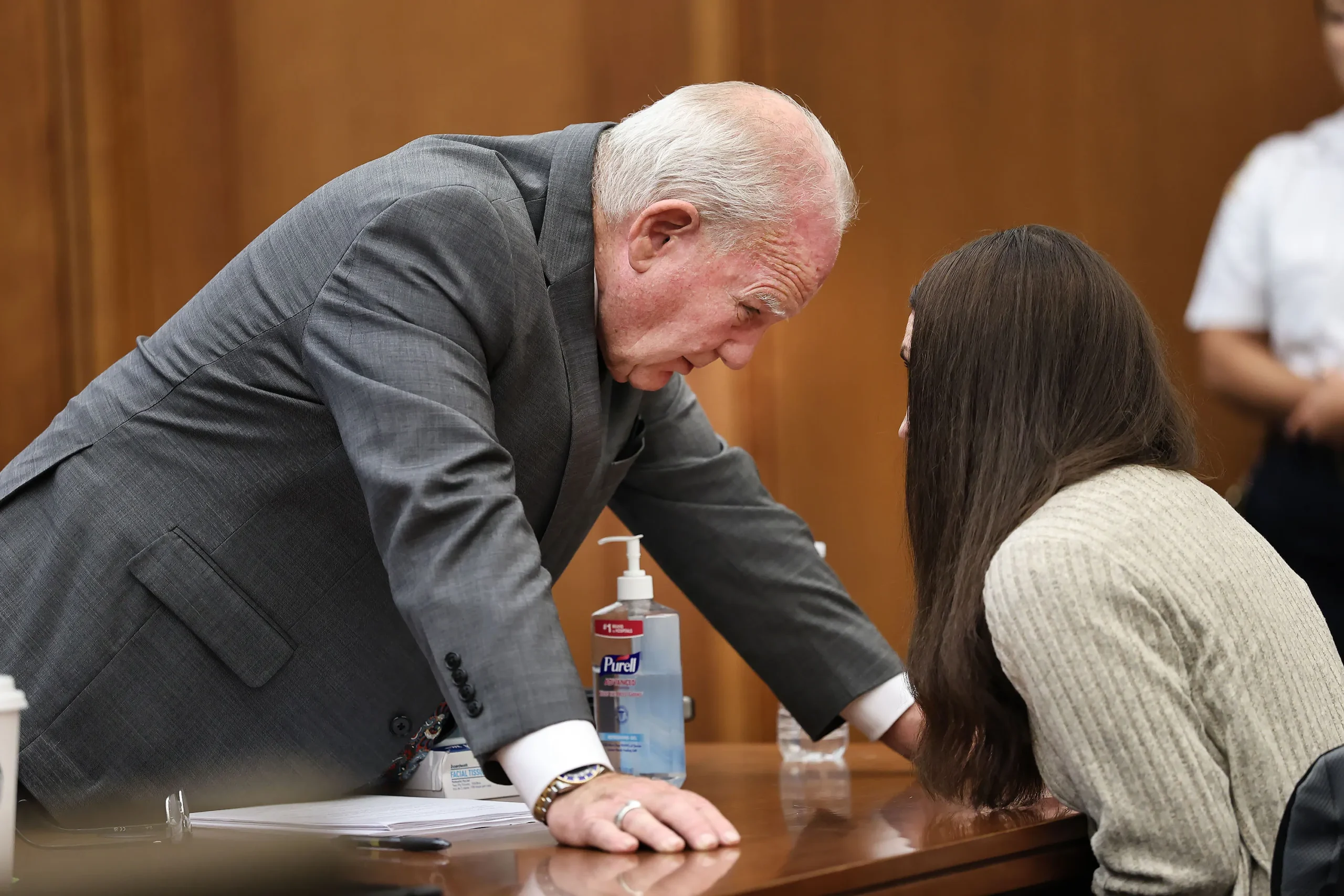
Legal Standards of Admission and the Mechanics of Misinformation: Analyzing Verbal Evidence in the Lindsay Clancy Prosecution
In high-profile criminal prosecutions involving severe maternal mental health crises, the public narrative is frequently dominated by sensationalized headlines that misrepresent courtroom procedure and evidentiary rules. In the prosecution of Lindsay Clancy—the former Duxbury, Massachusetts labor and delivery nurse facing charges in connection with the tragic January 2023 deaths of her three children—online platforms have continually generated fabricated claims regarding sudden courtroom breakdowns, explosive outbursts, or secret confessions. Among the most widely circulated hoaxes are viral headlines asserting that Clancy delivered a “chilling seven-word confession” under pressure from her own defense attorney, Kevin Reddington, fundamentally altering the trajectory of the investigation.
An examination of official transcripts from Plymouth Superior Court, statutory Massachusetts criminal procedure, and the rules governing attorney-client privilege exposes these claims as digital inventions. Far from a case-shattering secret, the actual verbal statements made by Clancy have been part of the official court record since early discovery, serving not as sudden confessions of criminal intent, but as the foundation for complex forensic psychiatric evaluations regarding legal sanity.
The Reality of Pretrial Admissions versus Viral Fabrication
The premise that a defendant would be subjected to intense pressure by their own legal counsel to utter a dramatic confession in open court reflects a fundamental misunderstanding of American criminal jurisprudence. Under the Sixth Amendment and established rules of professional conduct, a defense attorney’s ethical duty is to provide zealous representation, protect constitutional rights, and maintain attorney-client privilege. Defense counsel does not cross-examine or interrogate their own client in a courtroom setting to elicit incriminating disclosures.
In the Clancy proceedings, defense attorney Kevin Reddington has maintained a clear, consistent legal posture from the initial bail hearings in Plymouth District Court through ongoing pretrial motions in Plymouth Superior Court. Rather than attempting to extract confessions, Reddington’s litigation strategy has focused on presenting documented medical evidence illustrating that Clancy was suffering from acute postpartum psychosis, severe depression, and involuntary intoxication resulting from complex, rapidly adjusted psychiatric pharmaceutical regimens.
The viral headlines claiming a “seven-word confession” rely on a well-known formula in digital clickbait publishing:
-
Numeric Precision Gimmicks: Assigning a specific number to a phrase (“seven-word statement”) creates a false sense of granular detail, inducing readers to seek out the specific quote.
-
Manufactured Inter-Defense Conflict: Falsely framing the defense attorney as an adversary pushing the defendant to break down creates artificial courtroom drama.
-
The Suspense Cliffhanger: Leaving the actual words unstated compels users to click external links designed to generate programmatic advertising revenue.
Authenticated Disclosures and the Forensic Record
While internet campaigns invent theatrical courtroom confessions, the genuine verbal disclosures made by Lindsay Clancy have been meticulously documented by law enforcement and medical personnel. These authenticated statements, introduced during pretrial hearings, form a crucial part of the evidentiary record evaluated by both prosecution and defense experts:
-
Statements to Emergency Responders: Initial, low-pitched remarks made by Clancy to attending paramedics and hospital staff immediately following her fall from a second-story window on January 24, 2023, during which she made brief, disinhibited references to hearing voices and experiencing a catastrophic mental breakdown.
-
Recorded Telephonic Communications: Subsequent phone conversations between Clancy and her husband, Patrick Clancy, while she was receiving medical care at Brigham and Women’s Hospital, during which she expressed profound grief, disorientation, and remorse.
-
Clinical Intake Disclosures: Detailed statements provided to forensic psychiatrists during formal court-ordered evaluations, documenting her internal psychological state, intrusive thoughts, and emotional struggles in the months preceding the tragedy.
Throughout these documented exchanges, Clancy’s statements have been analyzed not as sudden admissions of premeditated crime, but as clinical data points reflecting her psychological state at the time of the event.
The McHoul Standard: Why Admissions Do Not Determine Criminal Guilt
To understand why a purported “confession” does not “shatter” a case centered on psychiatric illness, one must examine the governing legal standard for legal insanity in Massachusetts. Under the landmark precedent Commonwealth v. McHoul, the core legal issue in a defense of criminal irresponsibility is not whether the defendant committed the physical acts in question, but whether they possessed the mental capacity required for legal accountability.
The McHoul standard establishes a two-pronged test: a defendant is not criminally responsible if, at the time of the conduct, as a result of a mental disease or defect, they lacked substantial capacity either to:
-
Appreciate the criminality or moral wrongfulness of their conduct, or
-
Conform their conduct to the requirements of the law.
In prosecutions where the defense mounts a legal insanity argument, the physical causation of the act is generally conceded by both parties. Therefore, statements acknowledging that the event occurred do not function as dramatic courtroom revelations. Instead, the legal fight centers entirely on diagnostic classification:
“In a case governed by the McHoul standard, a defendant acknowledging their actions is not a prosecution triumph; it is the starting point of the psychiatric inquiry,” explains a veteran Massachusetts trial attorney. “The legal battle is not about what happened, but why it happened—specifically, whether severe psychosis, command hallucinations, or involuntary drug intoxication destroyed the defendant’s capacity to perceive moral wrongfulness or control their actions.”
The Conflict Between Prosecution and Defense Interpretations
The central dynamic in Plymouth Superior Court remains the sharp divergence between the psychiatric conclusions drawn by defense experts and those submitted by state prosecutors led by Assistant District Attorney Jennifer Sprague.
The defense contends that Clancy’s verbal disclosures—including her statements about hearing voices and feeling an uncontrollable urge—provide clear, contemporary proof of acute postpartum psychosis. Defense experts argue that these expressions demonstrate a total break from reality, during which executive functioning was compromised by neurobiological dysfunction and adverse pharmaceutical reactions.
Conversely, state prosecutors utilize the same verbal record to argue for criminal responsibility. Prosecution experts contend that Clancy’s coherent communication prior to the incident—such as placing phone orders to local businesses—and her subsequent expressions of remorse indicate that her cognitive faculties remained operational. The state asserts that these statements prove she understood the wrongfulness of her actions, fitting the criteria for severe postpartum depression rather than legal insanity.
Preserving Judicial Integrity Against Digital Distortion
The proliferation of manufactured confessions and viral hoaxes highlights the persistent challenge posed by unregulated digital media during high-profile trials. When sensationalized headlines circulate across social feeds, they risk misinforming the public and confusing prospective jurors regarding the true nature of courtroom evidence.
Presiding judicial officers in Massachusetts routinely manage these risks by issuing protective orders over sensitive discovery materials and enforcing strict rules regarding extrajudicial statements by counsel. By ensuring that evidence is evaluated through authenticated stenographic records, medical filings, and sworn expert testimony, the court protects the trial process from external sensationalism.
Conclusion and Scientific Reality
The prosecution of Lindsay Clancy stands as a deeply complex legal and clinical matter that requires careful, fact-based evaluation. The persistent emergence of clickbait claims promising “shocking confessions” reflects the profit-driven mechanics of online content networks rather than the reality of Plymouth Superior Court.
By evaluating the case through authenticated court filings and statutory legal principles, the factual record remains clear: there was no sudden seven-word breakdown, no attorney-driven interrogation, and no secret confession. The judicial system continues to move forward through structured, evidence-based proceedings, seeking a resolution grounded in medical science, statutory law, and objective justice.