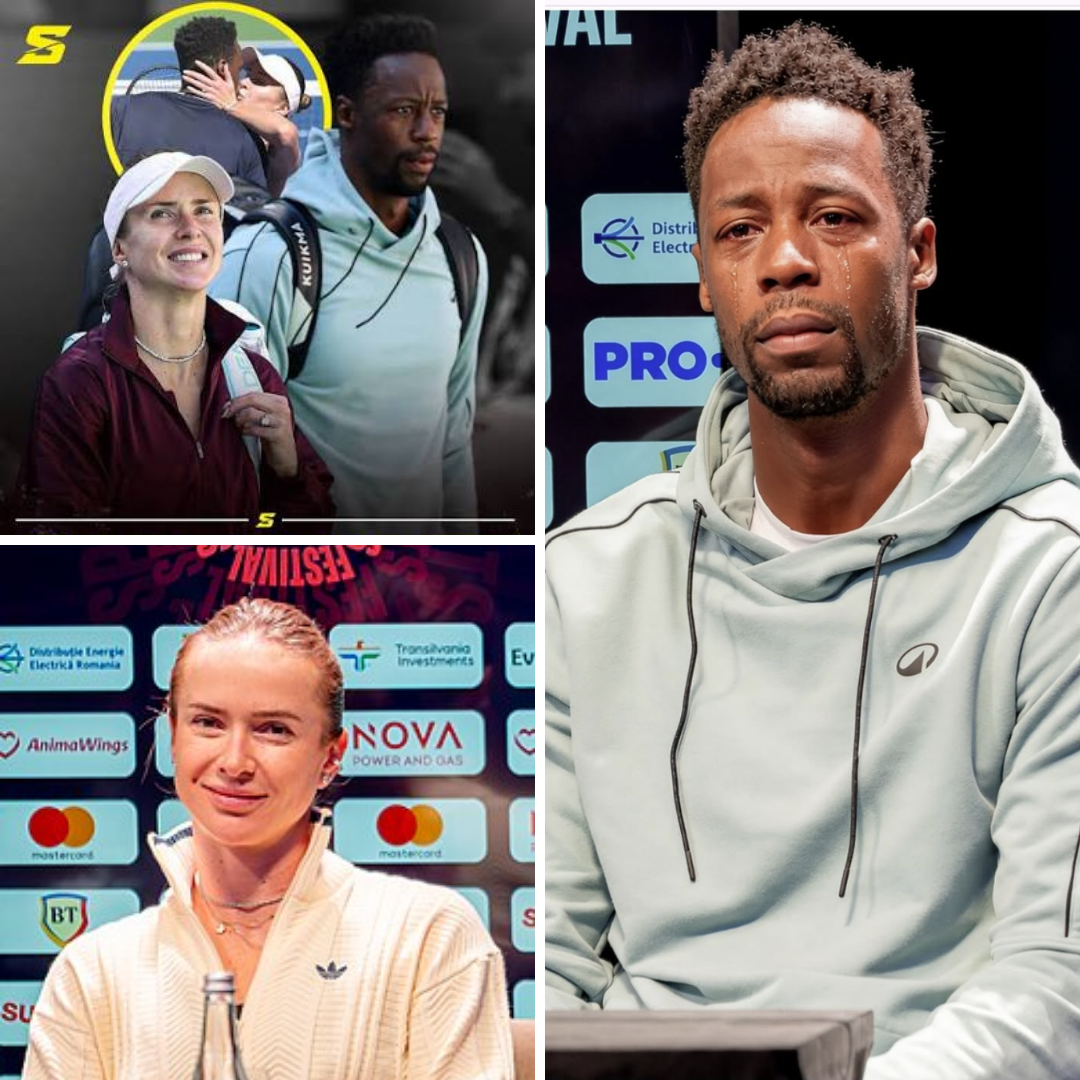
DECONSTRUCTING THE FABRICATED TRAGEDY SURROUNDING GAËL MONFILS AND ELINA SVITOLINA
Deconstructing the Sensational Clickbait Teaser
A alarmist headline recently surfaced across digital feeds, claiming a “Heartbreaking Update: 15 minutes ago.” Accompanied by emotional framing, the teaser alleged that French tennis star Gaël Monfils “unexpectedly broke down in tears during an interview about his wife, Elina Svitolina” before making a “devastating announcement” that cut off abruptly with an unfinished sentence: “his wife has… See more.”
A thorough verification across official Association of Tennis Professionals (ATP) press releases, Women’s Tennis Association (WTA) medical updates, and accredited sports archives confirms that this story is entirely fabricated. Elina Svitolina has suffered no tragic medical emergency, personal disaster, or life-altering event. Both Svitolina and Monfils are healthy, active, and currently competing on the professional tennis tour.
This post represents a textbook example of “tragedy-baiting”—an aggressive engagement-farming tactic used by digital content aggregators. By hijacking real footage of an athlete’s past emotional moments, distorting the context, and fabricating a false sense of immediate catastrophe, online content mills manipulate social media algorithms to harvest clicks, drive web traffic to ad-monetized landing pages, and profit from manufactured grief.
The Factual Record: Emotional Tributes, US Open Fairytales, and Family Life
To understand how clickbait creators manipulate real-world events, one must examine the actual origin of Monfils’ tearful interviews and his relationship with Svitolina.
Monfils has indeed broken down in tears during on-camera interviews, but those moments were born of gratitude, love, and the emotional weight of his farewell season in professional tennis—not tragedy:
-
The Roland Garros Farewell Tribute: During his final French Open appearance at Paris, Monfils was given a special retirement ceremony on Philippe-Chatrier court. Speaking directly to Svitolina in front of thousands of fans, a tearful Monfils publicly thanked her for being his rock, stating: “Without her, I might not even still be here tonight… You have always known how to support me, and above all, you have given me the most beautiful gift in the world through our daughter.”
-
The Historic US Open Mixed-Doubles Run: At the US Open in Flushing Meadows, the married couple thrilled the sports world by taking a wild-card entry into the mixed-doubles draw. Reaching the semifinals together—including a thrilling victory over top-ranked doubles specialists Henry Patten and Kateřina Siniaková—Monfils became visibly emotional when describing what it meant to play alongside his wife during his final year on tour, noting that the memories would stay with their daughter, Skai, forever.
-
Support During Past Crisis: Monfils has also spoken emotionally in past press conferences regarding the stress his family faced during the outbreak of the war in Svitolina’s native Ukraine, detailing how he strove to support her through tears and heartbreak.
Clickbait content mills regularly take archived video clips from these deeply personal, wholesome moments, strip away the original audio, and pair them with dramatic captions claiming a “devastating announcement 15 minutes ago.”
The Blueprint of “Tragedy-Baiting” in Digital Media
The rapid spread of false illness and death rumors surrounding public figures highlights an unethical business model operating within modern social media ecosystems.
Content aggregators employ a specific, highly refined structure to execute tragedy scams:
1. Manufactured Immediate Urgency
By starting the headline with “15 minutes ago” or “BREAKING NEWS,” creators trigger an immediate fear of missing out (FOMO) and exploit human empathy. Readers are conditioned to react instantly to sudden medical updates involving beloved public figures.
2. The Truncated Cliffhanger (“… See more”)
Phrases that cut off in mid-sentence (“his wife has…”) construct an artificial information gap. The brain naturally seeks closure, prompting the user to click the embedded link to complete the thought.
3. Traffic Arbitrage and Malicious Redirects
The links appended to these teasers almost never direct users to legitimate news reports. Instead, they route traffic through ad-tracking networks to low-quality blogs, click-farm video loops, or affiliate marketing schemes that generate pay-per-click ad revenue. In severe cases, these links lead to malicious software downloads or phishing pages designed to steal personal user data.
The Human Impact of Algorithmic Deception
While content creators treat fabricated headlines as victimless engagement hacks, false reporting of personal tragedies inflicts genuine harm on athletes, their families, and the general public.
When algorithmically amplified posts claiming an athlete’s spouse has suffered a “devastating event” go viral, it creates immediate panic among extended family members, friends, and fans who see the headlines on their social media feeds. It forces public figures like Monfils and Svitolina—who already balance high-pressure athletic careers with raising a young child—to periodically address false rumors and clarify their personal well-being to the media.
Furthermore, the constant exposure to fake tragedies desensitizes digital audiences, diluting public trust in genuine news reporting and undermining legitimate coverage of athlete health and safety.
Navigating Social Media Scams with Critical Media Literacy
The viral post alleging a sudden, heartbreaking announcement from Gaël Monfils underscores the ongoing need for media literacy in the digital age.
To avoid falling victim to manufactured tragedy clickbait, readers should apply key verification principles:
-
Verify the Source: Official medical updates, personal announcements, or career changes regarding ATP and WTA players are distributed through verified sports news outlets, official tour press offices, or the athletes’ verified social media handles.
-
Beware of Artificial Urgency: Legitimate news organizations do not rely on generic phrases like “15 minutes ago” without including verifiable dates, locations, and press conference transcripts.
-
Inspect the Link Destination: Avoid clicking links that promise dramatic revelations hidden behind a “See more” or “Read full story in comments” prompt.
Gaël Monfils and Elina Svitolina’s journey continues to be one of the most celebrated stories in modern tennis. Their legacy is defined by athletic excellence, mutual devotion, and lasting family memories on court—not by the sensationalized fabrications of internet clickbait.