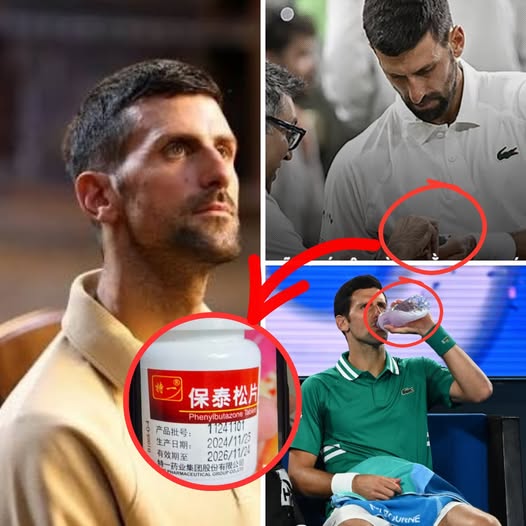
ANATOMY OF A MEDICAL HOAX: DECONSTRUCTING THE VIRAL CLICKBAIT SURROUNDING NOVAK DJOKOVIC
Deconstructing the Clickbait Teaser
An alarmist notification recently popped up across digital sports feeds, proclaiming a “SAD UPDATE” regarding 24-time Grand Slam champion Novak Djokovic. Adorned with warning emojis and high-strung punctuation, the viral post breathlessly claimed that Djokovic “JUST TESTED POSITIVE FOR…” before cutting off abruptly with an unfinished sentence and a truncated “See more:” link.
The intentional omission of what Djokovic allegedly tested positive for—whether a respiratory virus, a banned substance, or a routine medical check—was engineered to provoke immediate anxiety among tennis fans. However, a rigorous check across official International Tennis Integrity Agency (ITIA) registers, World Anti-Doping Agency (WADA) disclosures, and USTA media briefings confirms that the post is a complete digital hoax. Djokovic has tested positive for nothing, remains in peak physical condition, and is actively competing as the fourth seed at the 2026 US Open in New York.
This viral post represents a classic exercise in algorithmic “tragedy-baiting.” By leveraging truncated sentences and manufacturing an artificial medical crisis right on the eve of a major Grand Slam tournament, digital content mills exploit user empathy to manipulate social media recommendation engines, farm page views, and monetize web traffic through ad-heavy click farms.
Historical Echoes: The Origin of Health Misinformation Around Djokovic
To understand why Novak Djokovic is so frequently targeted by health-related clickbait, one must examine his unique position in modern sports culture and the historical events that content aggregators routinely weaponize.
Throughout his career, Djokovic has been at the center of several high-profile public health debates:
-
The 2020 Adria Tour Incident: In June 2020, during the height of the global pandemic, Djokovic organized the charity Adria Tour exhibition series in the Balkans. Following the event, Djokovic and several other top players tested positive for COVID-19, triggering intense international media coverage and public scrutiny.
-
The 2022 Australian Open Visa Saga: In January 2022, Djokovic was detained and ultimately deported from Australia due to his COVID-19 vaccination status, resulting in a protracted legal battle that dominated global news headlines.
Content farms frequently take old news clips, headlines, or images from 2020 and 2022, strip away their dates and context, and re-publish them with deceptive present-tense captions like “JUST TESTED POSITIVE.” To casual fans scrolling through social media feeds, these recycled stories appear to be breaking news, creating widespread confusion on the eve of major tournaments.
The Economics of Medical “Rage-Bait” in Sports Media
The proliferation of deceptive medical headlines targeting elite athletes like Djokovic is driven by a lucrative digital publishing model that prioritizes engagement over truth.
Digital content mills employ a systematic psychological strategy when crafting health-based clickbait:
1. The Open-Loop Cliffhanger
By withholding the crucial piece of information—leaving “JUST TESTED POSITIVE FOR…” uncompleted—the post creates an immediate psychological need for closure. Readers naturally click the “See more” link to find out whether the athlete tested positive for a performance-enhancing drug, an illness, or something benign.
2. The Shock Factor of “Sad Update”
Tagging posts with emotional descriptors like “Sad Update” or “Tragic News” triggers an immediate protective reaction from fans and curiosity from critics. Social media algorithms prioritize posts with high immediate interaction rates, driving the fabricated story to millions of feeds.
3. Redirect Arbitrage
The destination links attached to these teasers almost never mention a positive test result. Instead, they route users through ad-tracking networks to low-quality blogs, crypto-scam landing pages, or automated video streams designed to collect pay-per-click ad revenue.
The 2026 US Open Reality: Djokovic’s Quest for History
Far from suffering a medical setback, Novak Djokovic’s actual reality at Flushing Meadows is centered on historic athletic ambition. At 39 years old, the Serbian icon arrives in New York seeking a record-extending 25th Grand Slam singles title and his fifth US Open trophy.
The tennis landscape at the 2026 US Open presents a compelling storyline:
-
Main Draw Positioning: As the fourth seed, Djokovic enters the tournament well-rested following a strategic break after the Cincinnati Open. He opens his campaign at Arthur Ashe Stadium against Argentina’s Mariano Navone.
-
Evolving Men’s Field: With World No. 1 Jannik Sinner withdrawing due to a knee injury, the men’s singles draw has opened up significantly. Defending champion Carlos Alcaraz, returning as the second seed, sits in the same half of the draw as Djokovic, setting up the potential for a blockbuster semifinal clash.
-
Longevity and Legacy: Competing alongside long-time contemporaries like Gaël Monfils, Djokovic continues to defy age-related physical decline, demonstrating exceptional conditioning and strategic adjustments to preserve his body for seven-round Grand Slam marathons.
The contrast between the real-world narrative of a legendary athlete pursuing historic milestones and the manufactured drama of internet clickbait underlines the profound detachment of social media content mills from genuine sports journalism.
Protecting Integrity: Critical Media Literacy in Grand Slam Coverage
The viral hoax claiming Novak Djokovic tested positive highlights the urgent need for media literacy in digital sports consumption. When medical or legal rumors surrounding top-tier athletes circulate online, readers should look to verified institutions—such as the ATP Tour, the ITF, WADA, and accredited sports news outlets—for confirmation.
Fabricated medical headlines diminish public trust and exploit human concern for financial gain. Novak Djokovic’s legacy continues to be written on the court through unprecedented athletic achievement, far removed from the sensationalized deceptions of the digital media landscape.