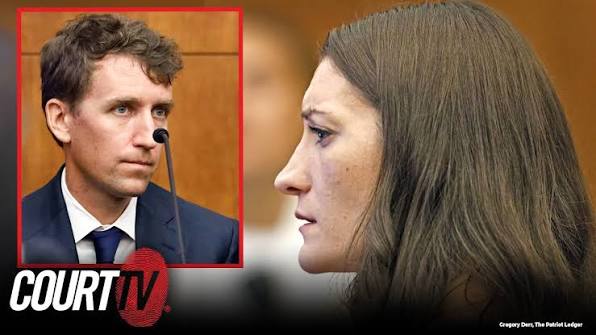
DECONSTRUCTING THE DNA HOAX: DISSECTING THE FAKE ‘BIOLOGICAL SECRET’ CLAIMS IN THE LINDSAY CLANCY TRIAL
Deconstructing the Sensationalist Teaser
A sensationalist headline recently flooded true-crime social media groups and video channels, declaring: “🚨 SHOCKING COURTROOM DNA REVEAL: PATRICK CLANCY’S BIOLOGICAL SECRET EXPOSED!” Accompanied by dramatic phrasing, the viral caption claimed that “courtroom analysts were left utterly paralyzed after confidential genetic disclosures submitted in the Lindsay Clancy trial confirmed a devastating biological secret that threw the entire legal team into chaos.” To maximize emotional tension and force click-throughs, the teaser concluded with a classic cliffhanger sentence: “The sealed forensic reports officially verified that Patrick Clancy was actually never…”
Despite its urgent tone and pseudo-forensic terminology, this entire narrative is a total digital fabrication. There are no sealed genetic reports, no courtroom DNA disclosures, and no biological secrets surrounding Patrick Clancy in the judicial record. Instead, this viral post represents an egregious example of digital clickbait—manufactured true-crime drama engineered by automated content mills to exploit public attention surrounding a high-profile, tragic court case.
Real-World Courtroom Evidence vs. Manufactured Genetic Myths
To understand the deceptive nature of the “DNA reveal” claim, one must contrast its sensationalist fiction with the established facts presented inside Plymouth Superior Court in Massachusetts.
During the murder trial of Lindsay Clancy—who pleaded not guilty by reason of lack of criminal responsibility in connection with the deaths of her three young children, Cora, Dawson, and Callan—the evidentiary proceedings spanned weeks of testimony, incorporating over 80 witnesses and more than 300 physical and medical exhibits. The trial’s true evidentiary scope has been thoroughly documented by accredited legal reporters:
-
The Central Legal Question: The trial centers entirely on Lindsay Clancy’s psychiatric condition at the time of the tragedy—specifically whether she was experiencing acute postpartum psychosis and severe auditory hallucinations, or whether her actions constituted deliberate, premeditated murder.
-
Exhaustive Medical and Forensic Filings: Evidence submitted to the court includes extensive psychiatric evaluations, medical records from state hospitals, prescription pill bottles, cellphone text logs, and emergency dispatch tapes.
-
Complete Absence of DNA Disputes: At no point during the investigation, pre-trial hearings, or jury trial was paternity, biological heritage, or genetic testing an issue. The biological relationship between Patrick Clancy and his three children has never been questioned, challenged, or investigated by law enforcement, defense counsel, or prosecution experts.
While the jury deliberates over complex legal questions of criminal responsibility, mental health, and premeditation, social media click-farms have invented fictional genetic plotlines completely detached from the legal reality inside the courtroom.
The Mechanics of Soap-Opera Clickbait in True-Crime Content Mills
The creation and automated spread of the “paternity reveal” rumor reflect a calculated monetization model deployed by digital publisher networks across social media platforms.
Content generators utilize specific structural techniques to transform human tragedy into pay-per-click ad revenue:
1. Recycling Soap-Opera Tropes
In fictional drama and daytime television, “secret DNA tests” and “paternity reveals” are reliable narrative devices. Content mills import these tabloid tropes directly into real-life murder cases to capture the interest of casual scrollers who consume true-crime coverage as entertainment.
2. The Truncated Sentence Hook
By terminating the caption mid-phrase (“Patrick Clancy was actually never…”), the post creates an artificial curiosity gap. Scrollers are manipulated into believing that a vital piece of evidence was cut off, prompting them to click external links or engage in heated speculation in comment sections.
3. Traffic Arbitrage and Link Monetization
The call-to-action prompts linked to these headlines never direct users to official court archives or legitimate journalistic broadcasts. Instead, scrollers are funneled through URL shorteners to ad-heavy websites where page views generate instant revenue for site operators.
The Ethical Toll of Fabricating Biological Scandals in Fatal Tragedies
While clickbait regarding celebrity gossip or fictional media is relatively harmless, inventing biological scandals around a tragic family loss causes severe real-world harm.
-
Inflicting Ongoing Trauma on Surviving Victims: Patrick Clancy has suffered the unimaginable loss of his three young children. Generating malicious rumors that question his biological relationship to his children or manufacture personal scandals inflicts immense emotional distress on a grieving parent.
-
Distorting Public Understanding of Maternal Mental Illness: The Lindsay Clancy trial involves critical public health topics, including perinatal mental illness, postpartum psychosis, and healthcare system gaps. Replacing medical testimony with tabloid rumors about “genetic secrets” degrades public discourse around maternal mental health.
-
Polluting Public Perception During Active Deliberations: Circulating fake courtroom disclosures while a jury deliberates or a community observes judicial proceedings breeds cynicism and spreads misinformation about the integrity of the justice system.
Cultivating Digital Media Literacy in High-Profile Trial Coverage
The viral spread of the fake “courtroom DNA reveal” serves as a reminder of the vital importance of media literacy when consuming legal news online.
To distinguish verified courtroom reporting from manufactured engagement traps, audiences should apply clear verification standards:
-
Rely Exclusively on Accredited Legal Journalism: Authentic developments in high-profile trials are documented by established news organizations (such as CBS Boston, Boston 25 News, or The Associated Press). If a dramatic disclosure is not reported by accredited trial reporters, it is completely false.
-
Identify Formulaic Red Flags: Be instantly skeptical of headlines containing phrases like “SHOCKING DNA REVEAL,” “BIOLOGICAL SECRET EXPOSED,” or incomplete sentences designed to force clicks.
-
Avoid Amplifying Unverified Content: Refrain from sharing, commenting on, or clicking links attached to anonymous posts that lack primary source documentation.
Justice in high-profile court cases is decided by sworn testimony, forensic science, and judicial process within a court of law. Discerning factual reporting from algorithmic fiction is essential to upholding truth and respecting real-world human lives.