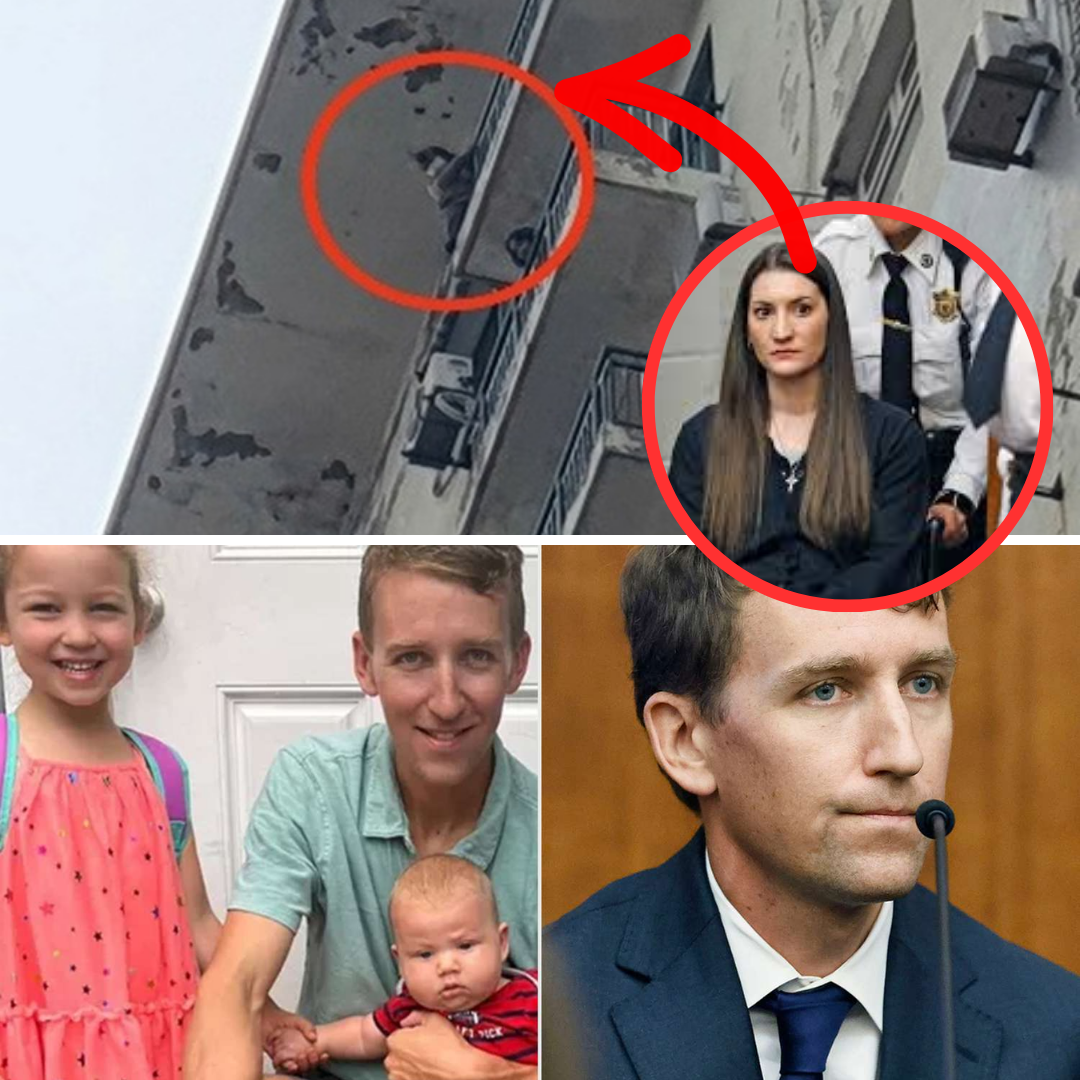
DECONSTRUCTING THE SHADOW WATCHER HOAX: ANATOMY OF A FAKE ‘NEIGHBOR-RECORDED’ VIDEO IN THE CLANCY CASE
DECONSTRUCTING THE SHADOW WATCHER HOAX: ANATOMY OF A FAKE ‘NEIGHBOR-RECORDED’ VIDEO IN THE CLANCY CASE
Deconstructing the Sensationalist Teaser
A deeply unsettling social media post recently began circulating across true-crime groups and video feeds, proclaiming: “🚨 CHILLING LEAKED FOOTAGE: MYSTERY WOMAN SPOTTED WATCHING LINDSAY CLANCY’S TRAGIC JUMP!” Embellished with sensationalist phrasing and eerie tropes, the viral caption claimed that alleged “neighbor-recorded video” captured a “strange woman standing silently in the shadows, glaring with a terrifying expression” as Lindsay jumped without warning. The post then pushed the conspiracy further, alleging that “digital analysis exposed this eerie watcher’s direct connection to Patrick Clancy, proving she was actually his…” before abruptly cutting off mid-sentence.
Despite its vivid descriptions and dramatic references to digital forensics, this entire story is a complete fabrication. There is no neighbor-recorded video of a mysterious bystander, no shadowy figure standing at the scene, and no digital analysis revealing a secret connection to Patrick Clancy. Instead, the post represents a sinister variation of true-crime clickbait: blending real-world human tragedy with supernatural-style horror tropes and fabricated conspiracy theories to farm digital engagement and monetize public fascination.
The Facts of the Emergency Response versus Manufactured Urban Legends
To understand the absurdity of the “mystery watcher” narrative, one must contrast its urban-legend framing with the verified police and medical records from Duxbury, Massachusetts.
On the evening of January 24, 2023, emergency responders arrived at the Clancy home following a frantic 911 call from Patrick Clancy, who had just returned home after running brief errands to pick up takeout and prescription medication. The physical and forensic facts established by the Plymouth County State Police Association and local law enforcement are clear:
-
Exhaustive Crime Scene Forensics: First responders, homicide detectives, and crime scene analysts thoroughly secured and documented the home, the surrounding yard, and neighboring properties. Every angle of the scene was analyzed for physical evidence, footprint tracks, and neighborhood surveillance coverage.
-
No Third-Party Involvement: Authorities confirmed that no third party was present on or near the property during the incident. The timeline established by law enforcement relies on cell phone GPS data, receipt timestamps, and emergency dispatch logs—none of which indicate the presence of any unknown individual or shadowy observer.
-
Focus on Perinatal Mental Health: The subsequent legal proceedings in Plymouth Superior Court have focused strictly on Lindsay Clancy’s medical history, clinical documentation of severe postpartum psychosis, auditory hallucinations, and a complex regimen of prescribed psychiatric medications.
The tragic reality documented in official court filings centers on a devastating medical and psychological crisis, completely devoid of secret observers or theatrical conspiracies.
The Mechanics of Disinformation: Injecting Horror Tropes into Real Crimes
The creation and viral spread of the “eerie watcher” caption reflect a calculated business model executed by automated content mills and true-crime click-farms across digital platforms.
Publishers of fake news employ specific psychological hooks to convert tragedy into ad revenue:
1. Adaptation of Creepypasta and Urban Legend Tropes
The concept of a “strange figure in the shadows” or an “eerie onlooker” is a classic trope borrowed from internet horror fiction and urban legends. By superimposing these cinematic elements onto a real-life trial, clickbait creators exploit the public’s innate fear of the uncanny, making the story feel like a scene from a thriller rather than a real courtroom proceeding.
2. Targeting Patrick Clancy with Fabricated Conspiracies
This hoax builds upon a recurring trend among true-crime content mills that repeatedly target Patrick Clancy with fake updates. Previous hoaxes have invented fictional “new wives,” “secret mistresses,” and “hidden motives.” By ending the post with “proving she was actually his…”, the caption manufactures an artificial cliffhanger designed to fuel baseless accusations in comment sections.
3. Traffic Arbitrage and Link Monetization
The links attached to these viral teasers never lead to legitimate news broadcasts or public court filings. Instead, scrollers are funneled through URL shorteners to ad-cluttered blogs, automated audio loops, or malware-suspect landing pages where site owners collect revenue for every page view generated.
The Ethical Damage of Sensationalizing Real Human Suffering
While fictional horror stories are entertaining, superimposing horror tropes onto real-life fatal tragedies causes immediate, real-world harm.
Sensationalized true-crime disinformation leads to severe consequences:
-
Harassment of Surviving Victims: Generating fake claims about Patrick Clancy or inventing secret figures around the tragedy inflicts ongoing emotional distress on a family already coping with profound loss.
-
Stigmatizing Severe Perinatal Mental Health: Transforming a complex medical case involving postpartum psychosis into a sensationalized horror mystery trivializes the reality of severe maternal mental illness. It replaces evidence-based clinical discussion with sensationalized fearmongering.
-
Poisons Public Perception and Legal Proceedings: High-profile judicial cases require an objective public sphere to ensure fair trial standards. The proliferation of fake “leaked videos” and manufactured “witnesses” pollutes potential jury pools with fictional narratives.
Cultivating Media Literacy in Modern True-Crime Consumption
The rapid spread of the fake “shadow watcher” video underscores the critical need for media literacy among online audiences following legal coverage.
To avoid falling for manufactured crime hoaxes, readers should apply basic principles of critical evaluation:
-
Cross-Reference with Accredited News Outlets: Major developments, evidence filings, and law enforcement statements are reported by established journalists and local news organizations (such as The Boston Globe, CBS Boston, or The Associated Press). If a dramatic claim appears only in an anonymous social media post, it is false.
-
Recognize Cinematic Horror Tropes: Be immediately skeptical of crime posts that use theatrical language like “chilling leaked footage,” “terrifying expression,” “eerie watcher,” or “standing silently in the shadows.” Authentic crime reporting uses objective, factual language.
-
Refrain from Interacting with Cliffhanger Links: Avoid clicking on unverified links that use incomplete sentences or high-pressure prompts (“Watch here to find out who she was!”), as these are designed exclusively for link monetization.
Justice and truth in complex legal cases are determined by verified forensic evidence, medical science, and judicial process inside a court of law. Discerning fact from algorithmic fiction is essential to treating real-world human tragedies with dignity and respect.