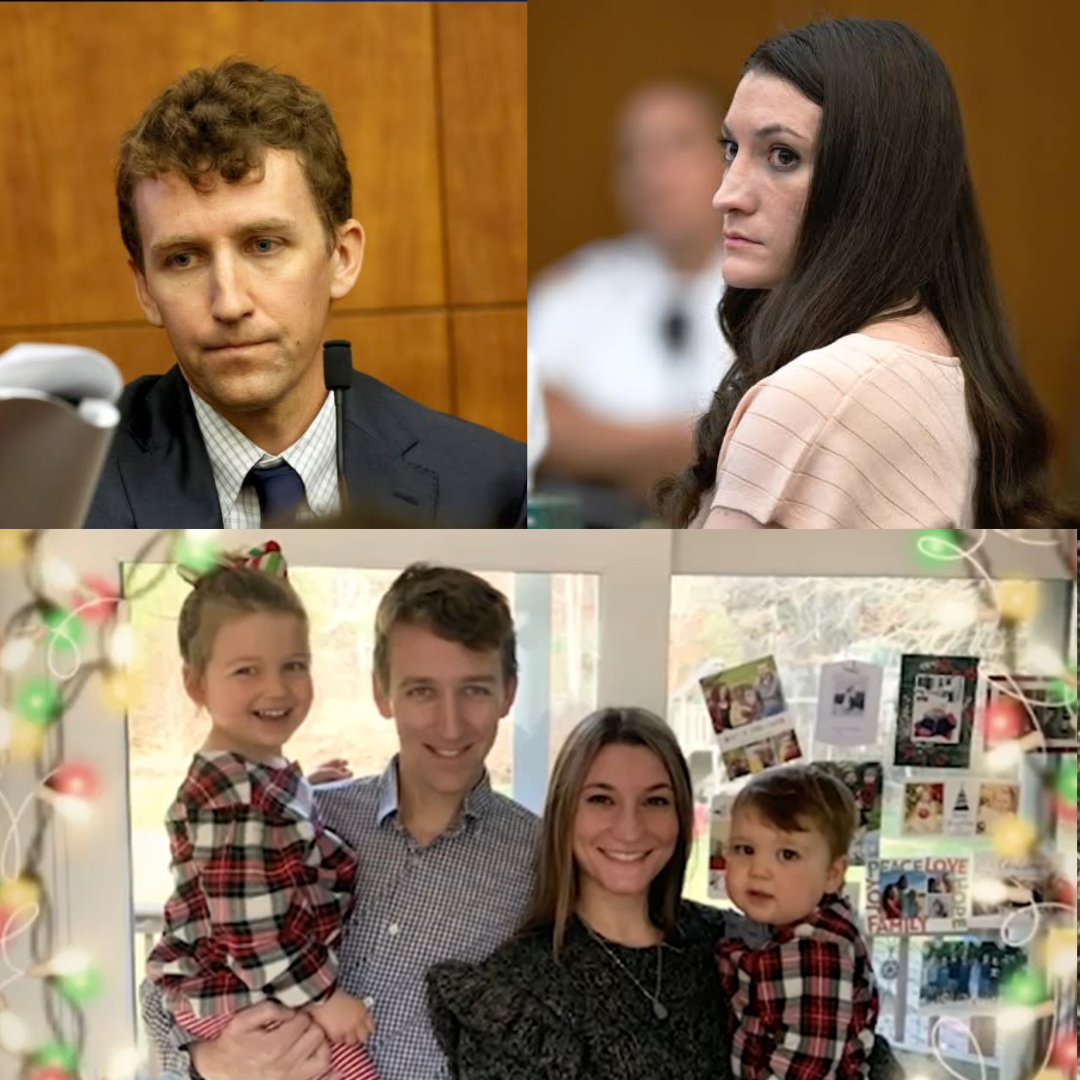
HIDDEN CAVITY BEHIND DRYWALL: THE BASEMENT MODIFICATION IN THE CLANCY CASE!
An unpermitted renovation. A partition pulled apart. A locked safe in the wall. That is the latest teaser attached to the Duxbury house. The trial that already walked a jury through that basement told a different story.
Every infamous house eventually grows a secret room.
The Clancy home on Summer Street in Duxbury already had the ingredients: a finished lower level, a father who worked down there, exercise bands hanging on a door, three children found on the floor, a jury later led through the same rooms in groups of three. Now a new caption insists that “physical verification teams” have shattered the idea of a standard layout — that drywall came down, that a blueprint was unsealed, that a renovation was done without permits to dodge inspectors, and that a locked safe was waiting inside. The sentence ends where all of these posts end: containing…
As of today, that safe has not been produced in open court. No Massachusetts filing released this week identifies a concealed cavity as newly discovered proof that rewrites 24 January 2023. What was documented, under oath, is grim enough without a wall safe.
The basement the jury was allowed to see
Judge William Sullivan’s order for the crime-scene view was specific. Jurors could look at the outside of 47 Summer Street, the basement, the first floor and the second floor. They could not open closets, touch objects or disturb the premises. Police locked the property down so “third parties” stayed out. That is the opposite of a midnight demolition crew ripping a partition for the cameras.
Officers who searched the house in 2023 described a lower level that already had a use: an office and gym area. Laptops and an external hard drive were collected from the office. Workout bands were noted hanging on a door. First responders looked through a metal window well and saw Patrick Clancy in that lighted basement space, unwrapping material from a child’s head after the scream that brought them to the glass. Later testimony mapped where each child was found — Dawson in one area near a yellow band, Cora and infant Callan in another, blood and bands in the photographs shown to the jury.
That is a crime scene. It is not a hidden bunker that only became visible when someone took a crowbar to the gypsum.
Why “no permit” sounds like a plot and usually isn’t
Unpermitted basement work is one of the most common headaches in American housing. Finishing a lower level, moving a wall, closing drywall over wiring — towns care because of fire ratings, egress and inspectors who want to see the bones before the paint. Homeowners skip permits every day to save money or time. None of that, by itself, is a confession.
The viral post treats a missing permit as proof of intent to “bypass routine inspections,” as if the Clancys framed a wall so that, years later, a safe could sit in the cavity like a movie prop. If Duxbury’s building department has a renovation file — or a gap where a file should be — that is a municipal records question. It is not, on present public evidence, the key that opens a secret compartment full of answers.
Police executing a homicide warrant in January 2023 were not a building inspector looking for nail plates. They were collecting phones, computers, bands and blood. Detectives do open walls when they have a reason. If they had found a locked safe embedded in a partition and that safe had changed the theory of the case, it would have been an exhibit, a photograph, a motion. It was not the story the Commonwealth or the defence tried to the jury.
What the lower level already contained — without a cavity
The basement was where the children died. That fact does not require a second architecture.
Lindsay Clancy has not denied using exercise bands on Cora, 5, Dawson, 3, and Callan, then eight months old. She cut herself upstairs and went out a second-storey window. Patrick came home from CVS and a takeaway run, found blood and an open window, found his wife on the lawn, then found the basement. The legal question that hung the jury in September 2026 was responsibility — postpartum psychosis versus knowledge of right and wrong — not whether a contractor once closed a wall without a stamp.
A “locked safe containing…” invites the reader to invent the contents: a confession, a second phone, cash, medication logs, a note. That is how these captions work. They outsource the accusation to your imagination so the author never has to name a document that can be checked.
Blueprints, disbelief, and the market for unfinished sentences
“Those evaluating the site stopped in disbelief.” That is television language. The people who evaluated this site on the record were state police, Duxbury officers, firefighters at a window well, medical examiners, and later eighteen jurors walking through on a court order. Their disbelief, where it appears in testimony, is the disbelief of adults looking at three small bodies and a father trying to take bands off necks. It is not the disbelief of a contractor finding a Sentry box in the studs.
Could a later civil case, a sale of the house, or a fresh investigative theory produce new photographs of construction? In theory, yes. Houses get opened. New owners pull walls. Journalists file public-records requests for permits. None of that has been presented, in the days since the mistrial, as an authenticated hidden safe that “shattered initial assumptions of a standard home layout.”
The layout the trial used was already enough: stairs down, office light on, window well, bands, children.
After a hung jury, every wall becomes a suspect
The September mistrial left the indictment alive and the mother in a psychiatric hospital. Online, the vacuum camera came first. The drywall cavity came next. Tomorrow it will be something else that was “unsealed.” The pattern is the same. Take a real room — the basement that already haunts this case — and insert a feature the exhibits never showed. End on an ellipsis. Let rage and curiosity finish the job.
Readers who want the next real document should watch the 29 September status hearing, the district attorney’s decision on a retrial, and the malpractice docket Lindsay Clancy filed against her providers. Those files have lawyers’ names and stamp dates. A caption about a safe “containing…” has a cliffhanger.
The only cavity that matters on the present record
There was a space behind an ordinary finished wall in a family house in Duxbury. On one January evening it held a home office, gym gear, and then three children who were not going to get up. First responders looked through glass and saw a father in that room. A jury later stood in it and was told not to touch.
If someone has since cut that drywall and found a locked box that changes those facts, the place to put it is a courtroom, not a teaser.
Until that happens, the basement modification that defines this case is not a secret renovation. It is the fact that a lower level built for work and play became the last room three children were in. No permit stamp alters that. No unopened safe is required to understand it.
The wall, on the evidence the public has been shown, was just a wall. The horror was already in the room.