
SHOCK AT AUGUSTA: TIGER WOODS WITHDRAWS FROM THE MASTERS AMID LEGAL TURMOIL
The sports world is reeling following a seismic development: Tiger Woods has officially withdrawn from the 2026 Masters. This stunning announcement comes in the immediate wake of a controversial legal incident in Florida, leaving a gaping void at Augusta National and sending shockwaves through the hearts of millions of fans worldwide.
In the history of global sports, few names are as synonymous with resilience and legendary comebacks as Tiger Woods. Yet, at age 50, the “Big Cat” is once again confronting the shadows, as fresh off-course troubles threaten to overshadow his storied career and perhaps bring it to a premature, sorrowful close.
The Midnight Incident in Florida
The ordeal began on a quiet night on Jupiter Island, Florida. Initial investigative reports indicate that law enforcement officers discovered a luxury vehicle stopped irregularly on the side of the road, showing signs of minor collision damage. Behind the wheel was Tiger Woods, described by first responders as appearing “dazed and disoriented.”
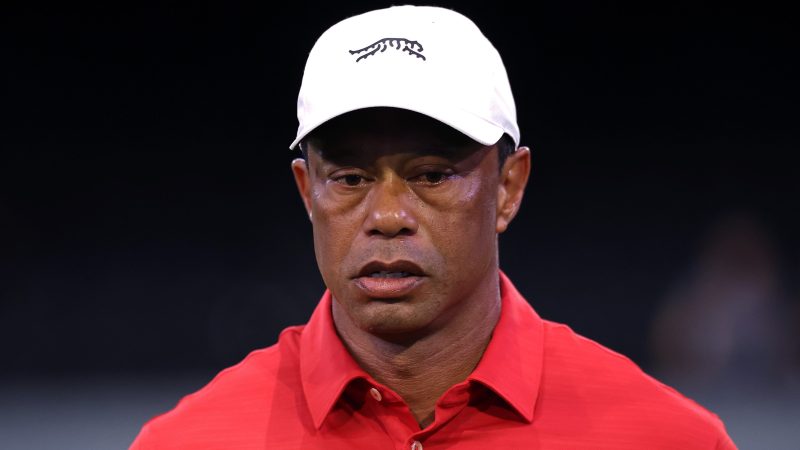
While a breathalyzer test returned a zero reading for alcohol, the circumstances surrounding the incident are profoundly complex. According to sources close to the situation, Woods declined further specialized testing at the scene. This refusal triggered a temporary detention and allegations of “improper control of a vehicle,” fueling a firestorm of media speculation. The sight of a weary, hollow-eyed Woods in police booking documentation has left supporters devastated, marking yet another troubling chapter in a history that has seen the icon grapple with both physical health and legal scrutiny.
A Heartbreaking Withdrawal from Augusta
Mere days after the incident, via his management team, Tiger Woods released a statement that hit the golf world like a hammer blow: he would not be competing in the 2026 Masters—a tournament where he has served as both the soul and the symbol of dominance, having donned the Green Jacket five times.
“This is an incredibly difficult but necessary decision,” the statement read. Woods expressed that he needs to focus entirely on personal recovery and addressing his current health challenges. He offered a sincere apology to his fans and the administrators at Augusta National.
His absence at the Masters is not merely a competitive loss; it is a profound blow to the tournament’s spirit and commercial stature. At Augusta, Tiger is not just a participant; he is a cornerstone of the sport’s history. Walking the lush, manicured fairways of Georgia without his presence feels inherently hollow, leaving the atmosphere in the lead-up to the event darker and more somber than in decades past.
The Hidden Costs of a Legendary Career
Why does a figure who has displayed such unbreakable resolve on the course consistently stumble in his personal life? Sports analysts suggest this is the tragic accumulation of decades of physical agony. Following a career defined by relentless surgeries on his back and the reconstructive reconstruction of his legs after his catastrophic 2021 car accident, Tiger has been forced to navigate a grueling existence of chronic pain and intensive medical regimens.
The pressure to compete at an elite level, coupled with the psychological weight of his own high standards, has created a “perfect storm.” Critics and supporters alike are left asking: is this the final toll of a body pushed beyond its limits, or are we witnessing the private unraveling of an icon who has spent his entire life in the public eye?
The End of an Era?
As the 2026 Masters approaches, the conversation has shifted from tournament favorites to a singular, chilling question: Is this truly the end for Tiger Woods? The ambiguity surrounding his legal situation, combined with the indefinite timeline of his health recovery, paints a grim picture for his future on the PGA Tour.
Throughout his career, Woods has been the master of the “miracle comeback.” He has risen from scandals, surgeries, and public disgrace to reach the pinnacle of the sport time and again. Yet, at 50, the mountain is steeper, the recovery is slower, and the margin for error has vanished. Whether this is a temporary retreat to recharge for one final swan song or the quiet closing of the most influential chapter in golf history remains unknown.
For now, the green grass of Augusta will wait, and the roars of the gallery will be muffled. Tiger Woods is no longer fighting for a jacket; he is fighting for his legacy, and perhaps, for his peace of mind. The golf world remains in disbelief, holding its breath for a resolution that may never come.