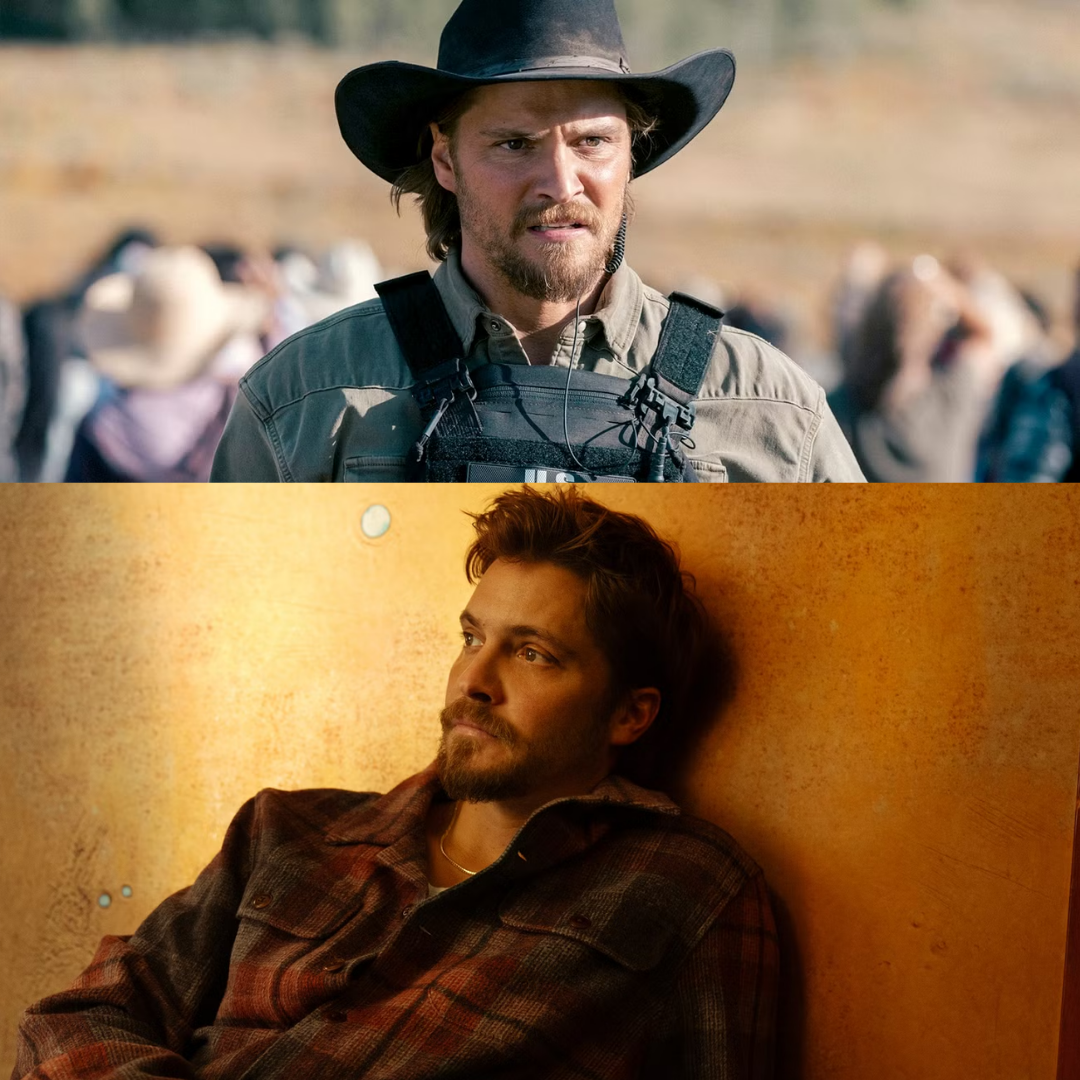
NEW UPDATE: Just when he thought he could close the chapter on Yellowstone and focus all his efforts on the new project, Marshals, Luke Grimes didn’t expect fate to take a completely different turn. As the actor prepared to say goodbye, an unexpected twist forced him to return.
Luke Grimes has worn Kayce Dutton’s boots for nearly a decade, a journey that began with the gritty neo-Western saga Yellowstone and has now evolved into his own leading role in the CBS spin-off, Marshals. The transition from a supporting member of the sprawling Dutton ensemble to the face of a procedural drama marks a significant turning point for the actor. Reflecting on his long tenure as the youngest Dutton son, Grimes recalls his early days preparing for the role by purchasing a pair of Ariat boots at a Boot Barn near Los Angeles. Those same boots, along with his original hat and jacket, remain his costume today, symbolizing the continuity of a character that has defined his professional life.
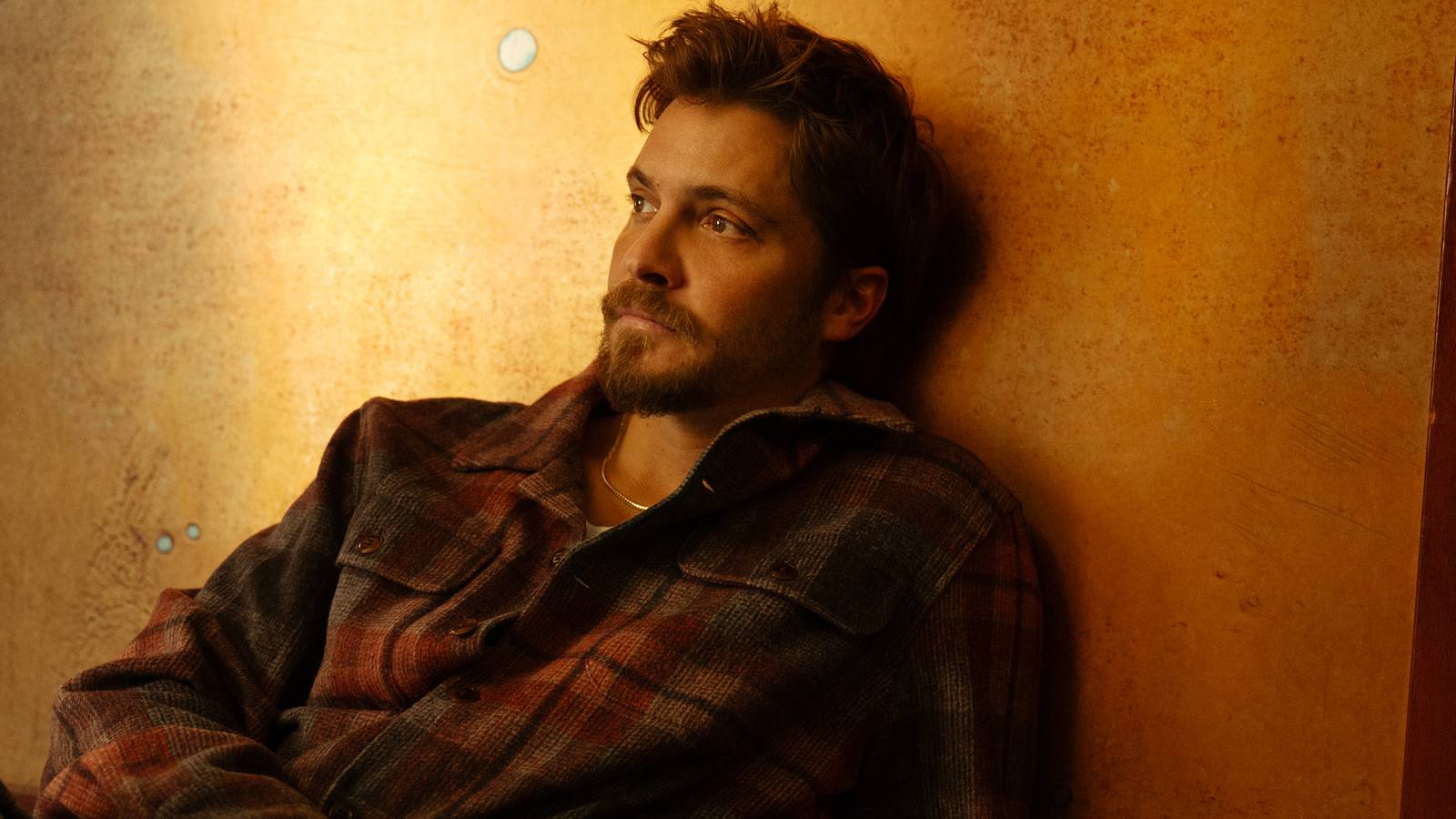
The road to Marshals was not one Grimes initially expected to travel. When Yellowstone concluded its five-season run, marked by 53 episodes and the high-profile departure of patriarch Kevin Costner, Grimes believed he was saying a final goodbye to the character. The emotional weight of the series finale was palpable; he remembers heartfelt speeches and tears from co-stars like Kelsey Asbille. To Grimes, it felt like the closing of a beautiful, transformative chapter. Consequently, when the idea of a Kayce Dutton-led procedural was first pitched, he was skeptical. Admitting he didn’t fully grasp the demands of the genre, he sought advice from a friend who warned him of the grueling workload required of a procedural lead.
His hesitation was eventually overcome by a conversation with Spencer Hudnut, the showrunner for Marshals. Hudnut, bringing years of experience from SEAL Team, envisioned a hybrid format that balanced “case-of-the-week” storytelling with long-form character arcs. This approach appealed to Grimes, as did the core concept of a dedicated team pursuing justice. The challenge lay in “threading the needle”—creating a show that paid homage to the Yellowstone legacy for longtime fans while remaining accessible to new viewers who had never stepped foot on the Dutton Ranch. Returning to the same soundstages where Yellowstone began in 2017 felt surreal for Grimes, yet he expressed a profound sense of gratitude, noting that Kayce is a character he could happily play for as long as the network allows.
However, the transition into this new series brought narrative heartbreak. Marshals picks up over a year after the events of Yellowstone, revealing a world where Kayce is grieving the loss of his wife, Monica. Grimes found the absence of Kelsey Asbille difficult, both personally and professionally, given their close bond. Yet, he recognized the narrative necessity of the tragedy; for Kayce to find a new purpose in the Marshals, his previous “dream life” had to be shattered. Monica’s death, attributed to cancer from toxic exposure on the reservation, serves as a poignant commentary on real-world systemic issues affecting Native American communities. This grief becomes a catalyst for Kayce, driving him to fight for others to avoid being consumed by his own sorrow.
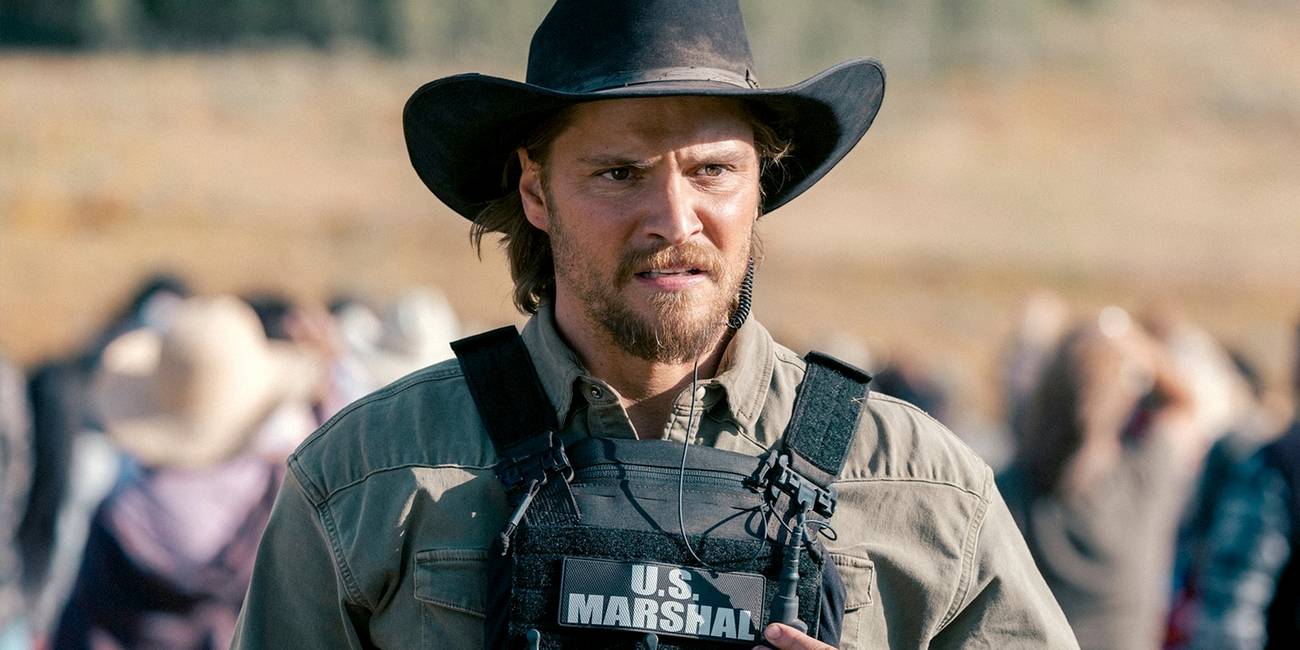
The shift in format has also demanded a physical evolution. While Yellowstone often leaned into the rhythms of a family melodrama, Marshals is a high-octane action series. Grimes admitted to being caught off guard by the physical toll of the first season’s 13 episodes, which featured constant gunfights, high-speed chases, and horseback pursuits. As the show moves toward a second season with an expanded order of 18 to 20 episodes, Grimes is focusing on training for longevity, treating the production as both a marathon and a sprint.
Looking back at his career trajectory, Grimes sees a series of “lucky breaks” that led him to this moment. Before the Stetson and the spurs, he was a skinny, unathletic kid from Ohio who moved to New York at 18 to study acting. His early roles, such as a brief appearance in Taken 2, didn’t necessarily scream “action star.” However, his performance as a Navy SEAL in Clint Eastwood’s American Sniper proved to be the pivotal moment. It was this role that caught the eye of Yellowstone creator Taylor Sheridan. Grimes remains deeply grateful for that opportunity and for the lessons he learned working alongside Bradley Cooper, whom he admires for his lack of ego and dedication to the ensemble.
Interestingly, Grimes’ original aspirations were far from the somber, stoic world of the Duttons. Growing up as a fan of Jim Carrey and Saturday Night Live, he once dreamed of a career in comedy. He found a small outlet for this as Elliot Grey in the Fifty Shades of Grey franchise, a role that provided him with financial stability and a touch of comic relief. While he jokes about currently playing “the saddest guy of all time,” he still harbors a desire to return to comedic roots, citing his recent work in Ari Aster’s dark comedy Eddington as a step in that direction.

The massive success of Yellowstone, which surged in popularity during the early days of the COVID-19 pandemic, changed Grimes’ life forever. It was the moment he realized he would never have to “get a normal job” again. Now, as the lead of a successful spin-off that has already secured a second season, he is exploring new depths of his character. In Marshals, Kayce is stepping into a leadership role, taking others under his wing and “taking care of business” in a way viewers haven’t seen before.
As for the future, the Yellowstone universe continues to expand with other spin-offs like Dutton Ranch, featuring Kelly Reilly and Cole Hauser. Grimes is enthusiastic about the possibility of a crossover, noting that his contract even includes provisions for such an event. Whether Kayce visits Texas or Beth comes to the world of the Marshals, Grimes is ready for the ride. With Season 1 ending on what he describes as a “Yellowstone-style cliffhanger,” the actor remains as invested as the fans, preferring to receive scripts shortly before filming to experience the story’s twists and turns alongside the audience. For Luke Grimes, the journey that started at a Boot Barn over a decade ago is far from over.