Husband Caught ‘Relaxing’ While Wife is Missing in Bahamas
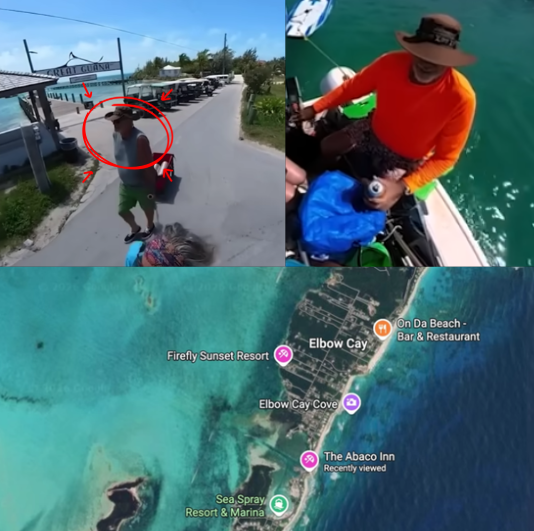
The turquoise waters of the Abaco Islands in the Bahamas are often synonymous with serenity and the ultimate “live-aboard” dream. For Lynette and Brian Hooker, this dream had been their reality for four years, residing on their 46-foot ketch sailboat, Soulmate. However, on the night of April 4, 2026—the eve of Easter Sunday—that dream dissolved into a chilling nightmare. Lynette Hooker vanished, and in the weeks following, the focus has shifted from a tragic maritime accident to a deeply suspicious investigation centered on the conflicting accounts and bizarre behavior of her husband, Brian Hooker.
I. The “Bouncing Out” Narrative: A Sailor’s Tale Under Fire
The official story, according to Brian Hooker, a former U.S. Marine, is as dramatic as it is inconsistent. Brian claims that while navigating their dinghy back to Soulmate from the Abaco Inn at approximately 7:45 PM, the sea became “angry.” He describes a harrowing scene where 2-to-4-foot seas and fierce winds caused Lynette—who was allegedly driving the dinghy—to “bounce off” the back of the vessel.
Brian’s narrative continues with a series of unfortunate events: as she fell, she supposedly grabbed her dry bag and accidentally yanked the kill-switch lanyard, killing the engine and leaving Brian powerless. He claims he spent the next nine hours drifting four miles across the Sea of Abaco, eventually washing ashore at Marsh Harbour at 4:00 AM the following morning.
The Scientific Impossibility
However, local mariners and meteorological experts have debunked this “stormy” imagery. On the evening of April 4, eyewitnesses and weather data confirm that the waters on the leeward side of Elbow Cay, where the couple was anchored, were “like glass” or only slightly wavy. The “Andrea Gail” style storm Brian described simply did not exist.
Furthermore, maritime experts point out a glaring flaw in his drifting trajectory. Given the actual wind direction that night, a drifting vessel from their location should have washed up on Lubbers Quarters—a nearby island—not Marsh Harbour, which is four miles away in a different direction. To reach Marsh Harbour, the dinghy would have had to defy the natural current and wind patterns, leading investigators to suspect the boat was moved under power—specifically, the electric engine Brian claimed was disabled.
II. The Red Flags: Behavior of a “Grieving” Husband
In the wake of a spouse’s disappearance at sea, one would expect a desperate, frantic search. Yet, eyewitness reports from Marsh Harbour paint a picture of a man remarkably composed—even “relaxed.”
The “Porch” Investigation
While the Hope Town Volunteer Fire and Rescue and local authorities were scouring the Sea of Abaco for any sign of Lynette, Brian Hooker was reportedly seen “cooling his heels” on the porch of the Conch Inn for two consecutive days (Monday and Tuesday). Despite being given names and numbers of boat rentals to join the search, witnesses claim he never made those calls.
Ashleigh Banfield’s investigation highlights this jarring contrast: “If my husband was lost at sea, I’d be out swimming looking for him. Brian was hanging out on the porch.”
The Emergency Passport and the “Great Escape”
Perhaps the most damning evidence of Brian’s intent was his secret maneuverings while the world watched his emotional pleas on major networks. On Tuesday, April 14, Brian sat down for interviews with ABC, NBC, and CBS, tearfully stating, “My sole focus is finding Lynette… I’m going to need somebody with more authority to tell me to stop.”
Behind the scenes, however, Brian was frantically securing an emergency passport. The very next day, he “blew that popsicle stand,” flying back to the United States and effectively abandoning the search he claimed was his life’s mission. He has since been spotted in Sacramento and Michigan, far from the Bahamian waters where his wife remains missing.
III. Dissecting the Dinghy Incident
The technical details of the “accident” are riddled with what investigators call “bad facts.”
- The Driver: Lynette was not the primary driver of the dinghy. Brian, the experienced Marine, usually handled the tiller. Why, in allegedly treacherous conditions, would the less experienced driver be at the helm?
- The Dry Bag Myth: Brian claims Lynette went overboard with her dry bag. Boating experts find it preposterous that someone would be wearing a briefcase-like dry bag while driving in rough seas. Social media photos of the couple consistently show dry bags stored at the bottom of the boat, not worn on the person.
- The Kill-Switch: The kill-switch on their specific model is a lanyard that hangs down. Brian’s claim that she “grabbed it” as she bounced out suggests a level of reflex and positioning that defies the physics of a sudden fall.
- The Rowing Attempt: Brian claimed he tried to row to her but a pin broke. However, social media evidence shows the seat of the dinghy had been removed. To row that specific boat, one must sit on the seat with their back to the bow. Without the seat, Brian’s “heroic rowing” story collapses.
IV. A History of Violence: The “Choke Out” Allegations
To understand the present, investigators are looking into the couple’s past. According to family members and siblings, Brian Hooker has a history of domestic volatility.
Allegations have surfaced that Brian had previously “choked out” his 12-year-old daughter and had a history of physical altercations with Lynette. Lynette had even sent photos to a friend, Rachel, showing severe bruising on her back from a previous incident where Brian allegedly choked her. She reportedly kept the photos as a reminder of why she should leave him—yet, like many victims of domestic cycles, she returned.
This history provides a dark motive. If an argument on Soulmate escalated on the night of April 4, the “bouncing out” story could simply be a cover for a much more sinister crime.
V. The “Weird” Couple at the Pool: Last Seen Evidence
New testimony from witnesses at the Abico Inn pool on the night of the disappearance adds another layer of unease. A group of tourists described the couple’s behavior as “nothing normal.”
Lynette was reportedly at the northern end of the pool, dancing by herself and taking selfies for over half an hour. Brian, meanwhile, sat at the far southern end, scowling and staring out at the Atlantic, completely detached from his wife. This emotional distance contradicts the image of the “soulmates” Brian frequently projected.
Furthermore, a bartender at “Nippers”—another popular local spot—confirmed serving the couple on March 28 and 29. A group of tourists there reported that a man matching Brian’s description was harassing people to “party” and acting aggressively days before the disappearance.
VI. The Shark Theory vs. The Burial Theory
In any island disappearance, the “shark” theory is often raised. On the day Lynette went missing, local homeowners near Pat’s Bay were cleaning a large catch of fish, throwing chum into the water. Tiger sharks and bull sharks are known to patrol these areas.
However, maritime experts argue that sharks rarely consume a human entirely without leaving some trace—clothing, a limb, or debris. The Sea of Abaco is described as a “giant swimming pool”; the currents are predictable. If Lynette had truly gone overboard, something should have washed up.
The alternative theory being explored is that Lynette never went overboard at all. Investigative efforts have focused on Lubbers Quarters, an island with dense areas where a body could be hidden. While a cadaver dog named Maggie searched the northern tip of the island with no results, investigators are calling for a more thorough search of the entire Cay.
VII. The Current Status of the Investigation
As of late April 2026, the Royal Bahamian Police Force and the U.S. Coast Guard Investigative Services (CGIS) remain on the case. Although Brian was detained for five days in Freeport, authorities lacked the physical evidence to charge him with a crime at that time, forcing his release.
The sailboat Soulmate remains on its mooring ball in Marsh Harbour, largely unmanned and a haunting reminder of the life the Hookers once shared.
VIII. Conclusion: The Truth is “Drop Dead Serious”
The disappearance of Lynette Hooker is a case defined by silence and contradictions. It is the silence of the Bahamian waters that yielded no trace of a woman supposedly lost to a storm. It is the contradiction of a husband who pleades for help on national television while clutching a one-way ticket and an emergency passport in his pocket.
As investigative journalists and local volunteers continue to piece together the map of April 4th, the pressure on Brian Hooker mounts. In the words of Ashleigh Banfield, “Your behavior doesn’t match the facts… those are called bad facts for people facing charges.”
The search for Lynette Hooker continues, not on the porches of resorts, but in the gritty details of forensic timelines and the brave testimony of those who saw the “weird couple” by the pool. The truth in the Abacos is no longer just a mystery; it is, as the investigation suggests, drop dead serious.