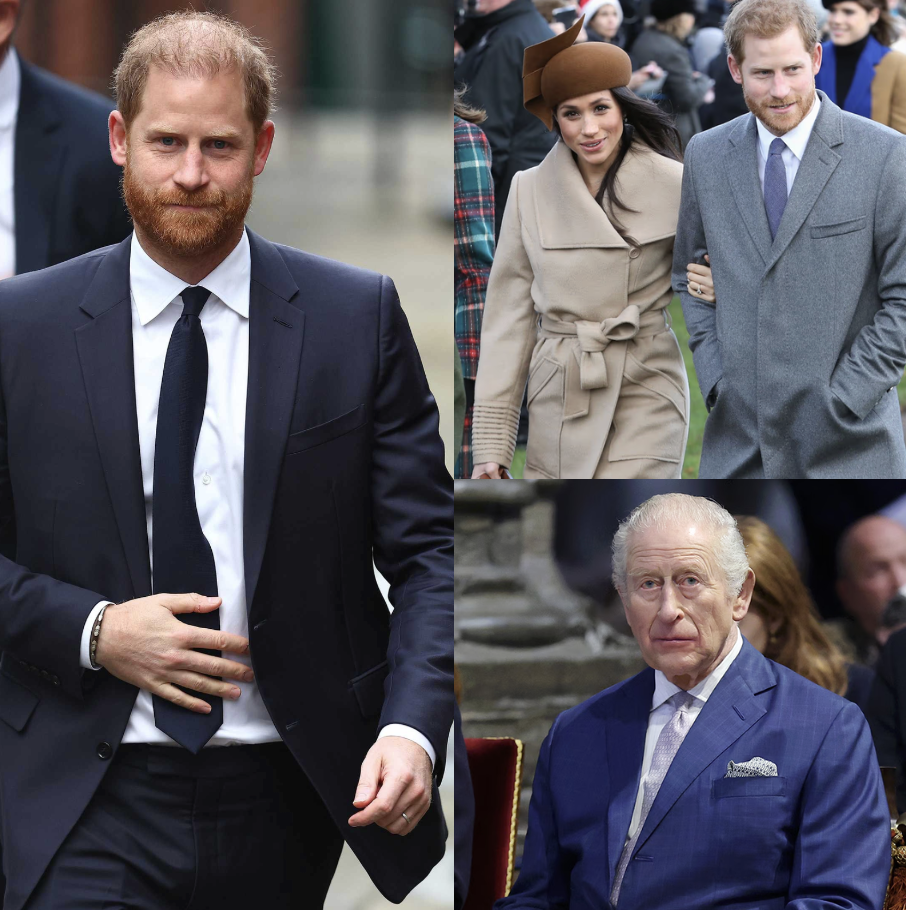
Prince Harry’s Latest Remark Reignites Debate Over the Future of the Monarchy
A recent statement attributed to Prince Harry has once again placed the British Royal Family at the center of public debate. In a comment that quickly circulated across media and social platforms, the Duke of Sussex is reported to have said that the Royal Family “needs” him and Meghan Markle—a remark delivered with notable confidence and without qualification.
While brief, the statement has had a wide impact, prompting strong reactions from both supporters and critics. For some, it reflects a belief that the couple still holds cultural and institutional relevance despite stepping back from official royal duties. For others, it is seen as a continuation of a strained relationship with the monarchy, raising questions about tone, timing, and intent.
The response has been immediate and divided. Those sympathetic to Prince Harry and Meghan Markle argue that the couple’s global profile, charitable initiatives, and media presence give them a unique ability to modernize and expand the Royal Family’s reach. In their view, the statement is less about personal importance and more about the evolving role of public figures in a changing media landscape.
Critics, however, interpret the remark differently. Some see it as overly assertive, particularly given the couple’s decision to step back from senior royal responsibilities in 2020. Others question whether such a claim risks deepening existing tensions within the family, especially at a time when the monarchy continues to navigate public scrutiny and internal adjustments.
At the center of the discussion is not only what was said, but what has not been said. King Charles III has not issued any public response to the reported comment. The absence of an official statement from Buckingham Palace has added another layer of intrigue, leaving observers to interpret the situation without direct clarification from the monarchy.
Historically, the Royal Family has often chosen restraint in responding to personal or potentially divisive remarks. Silence, in many cases, has functioned as a form of measured communication—allowing public attention to settle without escalating the narrative. Whether that approach will continue in this instance remains uncertain, but for now, the lack of response has become part of the story itself.
This development arrives within a broader context of ongoing public interest in Prince Harry and Meghan Markle’s relationship with the monarchy. Since relocating to the United States, the couple has pursued independent ventures, including media projects and philanthropic work, while also sharing personal perspectives on their experiences within royal life. These choices have contributed to an evolving public image—one that exists both within and outside traditional royal structures.
The latest remark adds to that narrative, highlighting the complex balance between independence and association. While Prince Harry and Meghan Markle are no longer working royals, their connection to the institution continues to shape public perception. Statements like this one tend to resonate not only because of their content, but because of the broader history that surrounds them.
For the monarchy, the situation reflects a familiar challenge: maintaining stability and continuity while adapting to modern expectations of transparency and engagement. Public discourse around the Royal Family has become increasingly global, influenced by social media, digital platforms, and a 24-hour news cycle. In that environment, even a single sentence can generate widespread interpretation and debate.
It is also worth noting that reactions to such statements often reveal as much about public sentiment as they do about the individuals involved. The divided response underscores ongoing differences in how audiences view the roles of tradition, accountability, and personal expression within institutions like the monarchy.
As the discussion continues, the key questions remain open. Was the comment intended as a statement of confidence, a reflection on relevance, or something more nuanced? And how, if at all, will the Royal Family choose to respond?
For now, there are no official answers. What remains is a moment that has once again brought attention to the intersection of personal voice and public institution—an area where every word carries weight, and every silence invites interpretation.