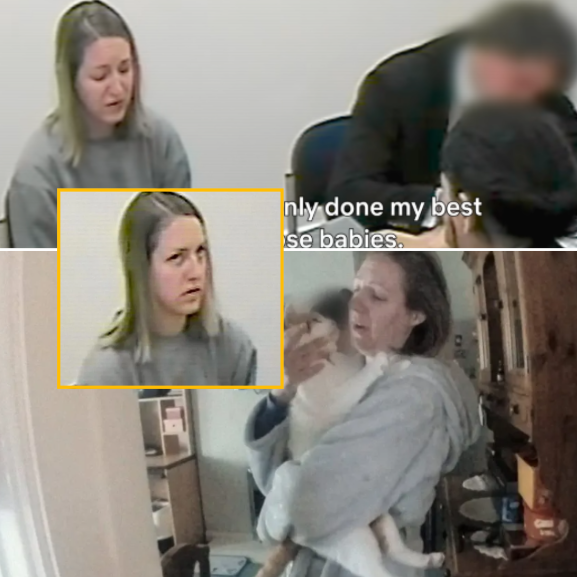
HORROR IN THE WARD: Investigation Into Infant D.e.a.t.hs Sparks UK Outrage
In the modern streaming landscape, true crime has evolved from a niche interest into a dominant cultural currency. From the viral success of Making a Murderer to the dark fascination with Jeffrey Dahmer, Netflix and its rivals have turned real-world tragedy into high-gloss entertainment. However, as a new wave of documentaries and dramatizations—including projects centered on the Lucy Letby case—begin to surface, a critical question arises: At what point does public interest cross the line into ghoulish exploitation?
According to a recent analysis by iNews, the rapid “content-ification” of the Letby case represents a dangerous tipping point for the genre. As viewers, we are being urged to exercise extreme caution, not just for our own mental well-being, but for the integrity of the justice system and the dignity of the victims.
Part I: The “Letby Effect” – When News Becomes Entertainment
The trial of Lucy Letby, the neonatal nurse convicted of murdering seven babies and attempting to murder six others, was one of the most harrowing in British history. Because the details are so fresh and the wounds so deep, the announcement of various film and documentary projects has been met with significant backlash.
1. The Rush to Produce Typically, a “historical” true crime documentary waits a decade for perspective. With Letby, the turnaround has been near-instant. Critics argue that this rush serves only the “attention economy,” prioritizing streaming numbers over the sensitivity required for a case involving the deaths of infants.
2. The Danger of Speculation Unlike older cases where all facts are settled, “active” true crime often fuels conspiracy theories. As iNews points out, documentaries that question forensic evidence or police conduct while legal appeals are ongoing can inadvertently sway public opinion and undermine the finality of the court’s decision.

Part II: The Psychology of the “Armchair Detective”
Why are we so obsessed with these shows? Psychologists suggest that true crime allows viewers to process their fears from a safe distance. However, this “safe distance” is a luxury not afforded to the families of the victims.
-
Gamification of Grief: True crime often uses cliffhangers and dramatic scores that mimic fictional thrillers. This “gamifies” real tragedy, encouraging viewers to hunt for “clues” on social media as if the case were a fictional puzzle like Knives Out.
-
The Hero Narrative: Documentaries often frame journalists or lawyers as “heroes” uncovering the truth. While sometimes accurate, this narrative often ignores the quiet, agonizing reality of the families who are forced to see their private trauma turned into a global talking point.
Part III: Institutional Responsibility vs. Profit
Streaming giants are businesses, and true crime is incredibly cheap to produce compared to high-budget sci-fi or period dramas.
1. The Lack of Regulation While traditional news outlets are bound by strict Ofcom regulations in the UK regarding “contempt of court” and “fairness,” international streaming platforms often operate in a legal gray area. They can release “documentaries” that include biased interviews or excluded evidence that a news program would never be allowed to air during an active appeal process.
2. The “Netflix-ification” of Reality The iNews report warns that these platforms often prioritize a “compelling narrative” over boring, objective truth. If the truth doesn’t fit a 10-episode arc with a twist in episode 8, the truth is often edited or omitted.
Part IV: Impact on the Victims’ Families
The most glaring reason to watch with caution is the human cost. For the parents involved in the Letby case, every new documentary is a reminder of their loss, played out on a global stage.
“Every time a new ‘exploration’ of the case is released, the families have to relive the trauma,” says a victims’ rights advocate. “They didn’t sign up to be characters in a Netflix series. Their grief is being sold back to them as entertainment.”
Part V: How to Watch Ethically
If we choose to engage with true crime, iNews suggests a more “conscious” approach to consumption:
-
Check the Source: Is the documentary produced by a reputable news organization or a studio known for sensationalism?
-
Question the “Twists”: If a show presents a “shocking new theory,” ask why that theory wasn’t presented in a court of law.
-
Support the Survivors: Prioritize content that centers on the victims’ lives and the systemic changes needed to prevent future crimes, rather than the “genius” or “mystery” of the killer.
Conclusion: A Mirror of Our Society
The rise of true crime documentaries centered on cases like Lucy Letby tells us as much about the audience as it does about the criminal. Our appetite for these stories is insatiable, but we must ask if our curiosity is worth the erosion of empathy.
As we navigate the 2026 media landscape, “watching with caution” isn’t just a suggestion—it’s a moral necessity. We must ensure that our quest for “the truth” doesn’t trample over the very real lives that these stories have destroyed.