PRESSED PLAY FOR THE COSTUMES — BUT STEPHEN GRAHAM’S UNEXPECTED VULNERABILITY COMPLETELY SHATTERED ME… WHY DOES NO ONE TALK ABOUT THIS PERFORMANCE?!
Stephen Graham is best known for playing dangerous, unpredictable men. But in BBC Two’s lavish period drama Parade’s End, the acclaimed British actor reveals a surprisingly delicate side — delivering an understated performance that deserves far more recognition.
When Parade’s End first arrived on BBC Two in 2012, audiences were captivated by its magnificent costumes, breathtaking period settings and Benedict Cumberbatch’s commanding portrayal of Christopher Tietjens.
Adapted by legendary playwright Tom Stoppard from Ford Madox Ford’s celebrated novels, the five-part drama explored love, betrayal, class divisions and the devastating consequences of the First World War.
Yet hidden among its elaborate drawing rooms, elegant dinner parties and emotionally restrained aristocrats was a performance that offered something unexpectedly moving.
Stephen Graham, an actor celebrated for portraying violent criminals and deeply troubled men, stepped into the role of Vincent MacMaster — Christopher’s close friend and confidant.
And what emerged was a remarkably different side of his extraordinary talent.
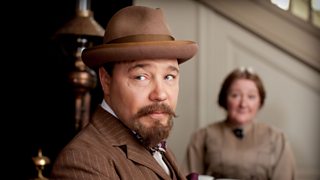
A COMPLETELY DIFFERENT STEPHEN GRAHAM
For viewers familiar with Graham’s terrifying portrayal of Combo in This Is England or his charismatic Al Capone in Boardwalk Empire, MacMaster represented a fascinating departure.
Rather than relying on explosive anger or intimidating physicality, Graham explored the insecurities of a man desperate to escape the limitations of his upbringing.
MacMaster comes from a working-class Scottish background and longs to establish himself within a society obsessed with status, reputation and inherited privilege.
Behind his polished manners and social ambition lies an uncomfortable truth: acceptance is something he must constantly work to achieve.
That tension gives Graham an opportunity to communicate vulnerability through restraint rather than confrontation.
His character may appear charming and socially confident, but his determination to belong exposes the emotional cost of ambition.
THE SECRET BEHIND HIS PERFORMANCE
In an interview with Digital Spy, Graham revealed just how carefully he approached MacMaster’s complicated personality.
The actor explained that understanding the character’s background was essential, particularly his Edinburgh origins, working-class experience and desire to climb the social ladder.
He also disclosed an unusual preparation technique.
Before beginning a role, Graham creates a notebook containing details about his character’s life, including personal preferences, childhood experiences and imagined history.
This painstaking preparation allows him to develop a believable personality before stepping in front of the camera.
For MacMaster, that attention to detail helped transform what could have been a conventional supporting character into a man whose ambitions feel deeply human.
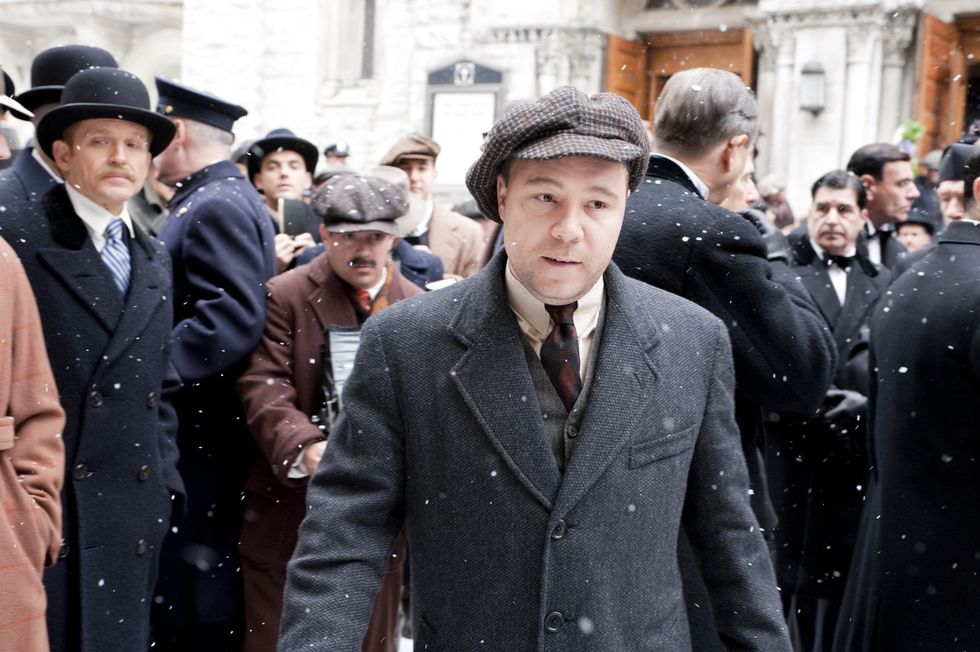
WHY THE DIRECTOR WANTED SOMETHING DIFFERENT
Graham credited director Susanna White with encouraging him to embrace the role.
The pair had previously connected through Boardwalk Empire, and White approached him about the ambitious adaptation.
Graham admitted that he was accustomed to playing men on the edge — characters capable of frightening or unpredictable behaviour.
But MacMaster offered something refreshingly different.
White wanted audiences to find him appealing despite his imperfections.
Graham described the intended characterisation as a “lovable rogue”, revealing how much pleasure he took in exploring a more decadent, socially ambitious world.
The result was a performance built around contradictions: confidence masking insecurity, charm concealing ambition and friendship existing alongside personal advancement.
BENEDICT CUMBERBATCH AND AN UNEXPECTED PARTNERSHIP
Working opposite Benedict Cumberbatch added another dimension to Graham’s experience.
Cumberbatch’s Christopher Tietjens embodies an almost painfully rigid sense of duty, while MacMaster approaches society with greater flexibility and personal ambition.
Their contrasting personalities help illuminate the drama’s central conflict between traditional values and a rapidly changing world.
Off-screen, however, their relationship was considerably more playful.
Graham recalled Cumberbatch entertaining colleagues with celebrity impressions, including an Alan Rickman impersonation that reportedly fooled Graham’s wife during a telephone call.
The anecdote offered a glimpse of the warmth behind a production otherwise dominated by emotional repression and social tension.
THE QUIET PERFORMANCE THAT DESERVES ANOTHER LOOK
Perhaps the most compelling aspect of Graham’s work in Parade’s End is how little it resembles the performances that made him famous.
There are no prolonged displays of terrifying violence or explosive psychological breakdowns.
Instead, his portrayal finds drama in social anxiety, aspiration and the need to be accepted.
MacMaster is not simply a loyal companion or an ambitious opportunist. He is a man navigating a world where class can determine almost everything about his future.
And Graham makes those contradictions worth watching.
For an actor whose greatest performances often emerge from emotional extremes, Parade’s End demonstrates that vulnerability can be equally powerful when expressed quietly.