JUST 40 MINUTES AFTER THE A.T.T.A.C.K, 14-YEAR-OLD CHRISTOPHER McBURNIE WAS D.E.A.D — AND A SNAPCHAT DISPUTE CONTAINED A FRIGHTENING WARNING!
A terrifying confrontation arranged through Snapchat ended in the death of a 14-year-old schoolboy on the Isle of Man, after an online dispute escalated into a violent encounter that would leave an entire community devastated.
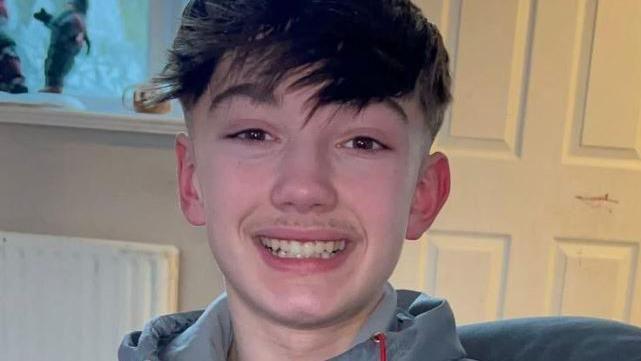
Christopher McBurnie, a teenager from Castletown, lost his life on May 29, 2025, after travelling with friends to Ramsey to confront another boy he had been arguing with online.
What initially appeared to be a planned fistfight between two teenagers ended in tragedy when the older boy, then aged 16, emerged from his home carrying a concealed kitchen knife.
Following a four-week murder trial, a jury found the teenager guilty of killing Christopher, rejecting the defence argument that he had acted to protect himself.
But the most disturbing details emerged from the digital exchanges that preceded the fatal encounter.
ELEVEN DEATH THREATS BEFORE THE FATAL CONFRONTATION
According to evidence presented during the trial, Christopher and the defendant had never previously known each other in person.
Their hostility developed through Snapchat, where an increasingly aggressive exchange of messages eventually led to an agreement to fight.
The court heard that the defendant had threatened Christopher’s life on 11 separate occasions.
In one particularly disturbing exchange, he allegedly warned that he would travel to the younger boy’s home and kill him.
These messages became an important part of the prosecution’s case, raising questions about whether the violence that followed was spontaneous or had been anticipated.
On the afternoon of May 29, Christopher travelled from Castletown to Ramsey with several friends.
The group arrived outside the defendant’s home and encouraged him to come out.
What happened next would determine the outcome of the murder trial.
A KITCHEN KNIFE HIDDEN BEFORE THREE FATAL STABS
Jurors heard that the older teenager left his house with a kitchen knife concealed in his pocket.
During the confrontation, he was struck twice in the head.
He then stabbed Christopher three times.
Emergency responders arrived at approximately 3.40pm, but despite efforts to save him, Christopher was pronounced dead around 40 minutes after the attack.
The prosecution characterised the stabbing as an intentional and frenzied assault, arguing that the defendant’s earlier threats and decision to carry a weapon undermined his claim of self-defence.
His legal team presented a different interpretation.
They argued that he had felt threatened by the group gathered outside his home and reacted out of fear rather than a predetermined intention to kill.
The defence also drew attention to the teenager’s low cognitive ability, suggesting this was relevant to understanding his decisions during the confrontation.
However, after considering the evidence, the jury returned a guilty verdict for murder.
A FAMILY LEFT WITHOUT ANSWERS TO THE MOST PAINFUL QUESTION
Detective Chief Inspector Neil Craig emphasised the devastating human cost of the killing, acknowledging Christopher’s family and the permanent loss they now face.
The case has also deeply affected the Isle of Man, an island widely regarded as a safe community where violence of this severity is exceptionally uncommon.
Christopher’s death has become a stark reminder of how rapidly threatening online exchanges can escalate into irreversible real-world consequences.
The convicted teenager cannot be publicly identified because of legal restrictions protecting his identity.
His sentencing is scheduled for January 12, 2027.
For Christopher’s loved ones, however, the guilty verdict cannot restore the future taken from a boy who was only 14.
And as the case moves towards sentencing, one haunting detail remains at the centre of the tragedy: long before Christopher arrived outside that house, the online threats had already revealed just how dangerous the confrontation could become.