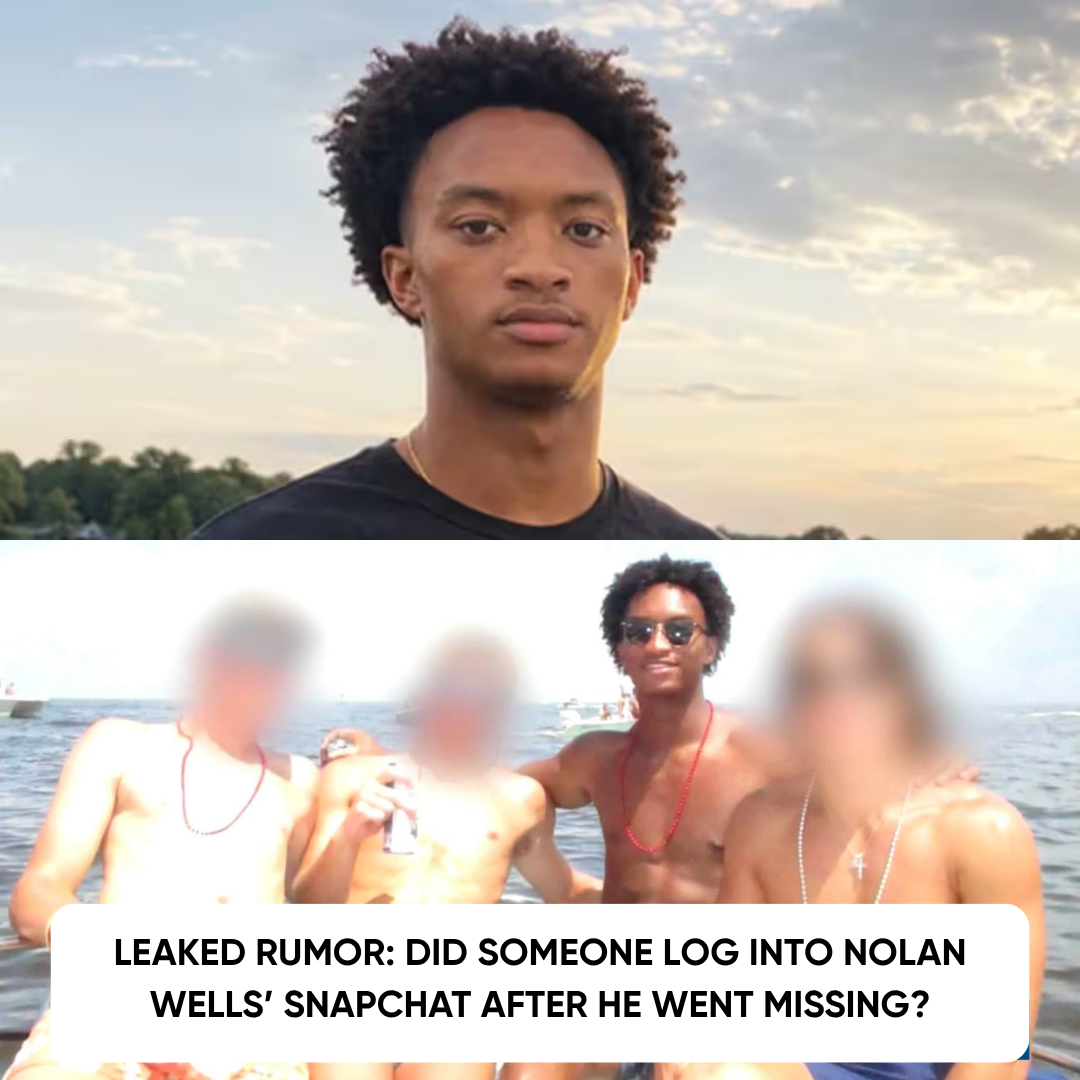
LEAKED RUMOR: DID SOMEONE LOG INTO NOLAN WELLS’ SNAPCHAT AFTER HE WENT MISSING?
The truth is starting to leak out. Sleuths tracking the Nolan Wells case have zeroed in on a massive discrepancy in his phone’s digital data. While his friends claimed he voluntarily stayed behind on Horn Island, location logs from Snapchat and Life360 reportedly showed his devices pinging in two completely different places at the same critical window. Forensic IT teams and online investigators now suspect someone else may have been moving or accessing his phone while the 18-year-old was missing. What happened in those unaccounted hours is the question that refuses to die.
Nolan Wells was last seen alive on July 4, 2026. The Ocean Springs, Mississippi teenager — a college student athlete and football player known to friends as someone who documented almost everything — joined a group of friends for a holiday boat trip to Horn Island, a remote barrier island in the Gulf of Mexico. According to the account given by those who were with him, the group spent the day on the island. As the afternoon wound down, Wells reportedly told friends he wanted to stay longer to talk to a girl. The boats left around 4:30 p.m. without him.
Two days later, on July 6, his body was recovered from the water near the island. Authorities initially found no clear signs of foul play. An independent autopsy later listed the cause of death as undetermined, with some discoloration noted around the head. Full toxicology results from the state remain pending. The Jackson County Sheriff’s Office has maintained that witness statements were consistent and that the early evidence did not point to criminal activity. The FBI became involved because Horn Island falls under federal jurisdiction.
But the digital trail has never aligned neatly with the official narrative, and that gap has only widened.
Nolan’s mother, Christine Wonsley, has described how she and others began tracking her son’s phone after he failed to return. Using Life360, the family safety and location app, they located the device on land — at the home of one of the friends who had been on the trip. Snapchat’s location feature, however, appeared to show something different. The two apps did not agree. Family members and online investigators have repeatedly pointed to that mismatch as one of the first red flags.
When the phone was finally recovered and returned, Wonsley said she opened Nolan’s two Snapchat accounts and found them essentially blank for the critical period. No photos. No videos. No snaps from the island. No messages that reflected the biggest day of his summer. For a teenager who, by all accounts, lived on social media and routinely captured moments with friends, the silence was jarring. “Absolutely nothing,” she has said in interviews. “It wasn’t even 24 hours, which is how long videos and pictures stay in Snapchat.”
That emptiness triggered deeper suspicion. Friends of the family and independent observers began asking whether content had been deleted after Nolan went missing — or whether someone else had physical access to the device long enough to clear activity. The phone itself was not recovered from Nolan on the island. It was found later at a friend’s residence. The timeline of when the device left the island, who controlled it, and what happened to its data in the hours and days after 4:30 p.m. on July 4 has never been fully publicly reconciled.
In late July 2026, the family’s legal team escalated the digital hunt. Mississippi attorney Gary Bufkin filed subpoenas in Jackson County Chancery Court seeking records from Snapchat, TikTok, Life360, WhatsApp, and Meta platforms. The requests target messages, photos, videos, GPS location data, and timestamps tied to Nolan’s accounts. The family has made clear they want the raw data — not summaries or filtered versions — that could show exactly when and where the phone was active, who logged in, and whether any activity occurred after Nolan was last confirmed alive.
Online sleuths have amplified the pressure. Screenshots and discussions circulating across platforms claim that location pings from Snapchat and Life360 diverged in ways that suggest the phone was not simply left behind in one place. Some posts allege that activity consistent with an active login appeared after the group boats had already departed. Others focus on the absence of the kind of geotagged media Nolan typically produced. None of these claims have been independently verified by law enforcement in public statements, but the volume of speculation has forced the digital evidence into the center of the story.
Attorney Ben Crump and other advocates working with the family have repeatedly asked a simple, devastating question: Why would an 18-year-old leave his phone behind on a remote island if he planned to stay of his own free will? And why would the device that documented his life go dark on the single most significant day of that summer?
Friends who were on the trip have pushed back against suggestions of cover-up. One young man who described himself as Nolan’s best friend has publicly addressed the family’s concerns about deleted content, insisting that the group’s account of events remains consistent. Authorities have pointed to the same consistency in witness statements. Yet the phone’s recovery process itself has drawn scrutiny. Reports indicate there was a delay between the time the device was located and the moment it was handed over to the family. That lag has fueled further questions about what, if anything, happened to the data in the interim.
The case has also taken on a sharp public dimension. Nolan Wells was a Black teenager whose disappearance and death occurred in a region where racial distrust of official investigations runs deep. Crowdsourcing and social media pressure have kept the story alive even as the official probe continues. Tips continue to be solicited through a dedicated line. The family’s subpoenas represent their clearest attempt yet to force the digital record into the open.
What the Snapchat and Life360 data ultimately show remains unknown to the public. The companies have not released statements detailing what their servers contain. Forensic examination of the physical phone is reportedly underway, with both the family’s representatives and local investigators expected to review the results. Digital forensics experts note that Snapchat data is notoriously difficult to fully recover once deleted from a device, but server-side logs, login records, IP addresses, and precise location histories can still exist. Those records, if obtained, could either corroborate the friends’ timeline or expose a window of activity that has never been explained.
For now, the discrepancy stands. Two apps. Two locations. A phone that left the island without its owner. Empty Snapchat accounts on a day that should have been filled with images. And a family still waiting for answers about what happened to Nolan Wells in the unaccounted hours after the boats pulled away from Horn Island.
The leaked rumor is no longer just online chatter. It has become the central pressure point in a case that refuses to settle. Until the full digital record is produced and examined in daylight, the question will keep circulating: Was someone else using Nolan Wells’ phone after he went missing — and if so, what were they trying to hide?