
“I CAN BREATHE AGAIN”: THE HORRIFIC TEXTS LEAKED AFTER DANIELLE DAUPHINAIS KILLED HER 5-YEAR-OLD SON!
The tragic story of 5-year-old Elijah Lewis has shaken the public after horrifying court records exposed the sheer cruelty of his mother, Danielle Dauphinais, and her boyfriend Joseph Stapf. After months of brutal torture, starving the child down to just 19 pounds, and throwing him into a shower wall, the mother sent a chilling text right after he died: “I can breathe and be free.” The shocking detail uncovered in the basement bathroom where Danielle gave birth to another baby just weeks before Elijah’s death was part of a broader pattern of unimaginable neglect and abuse that ended in homicide.
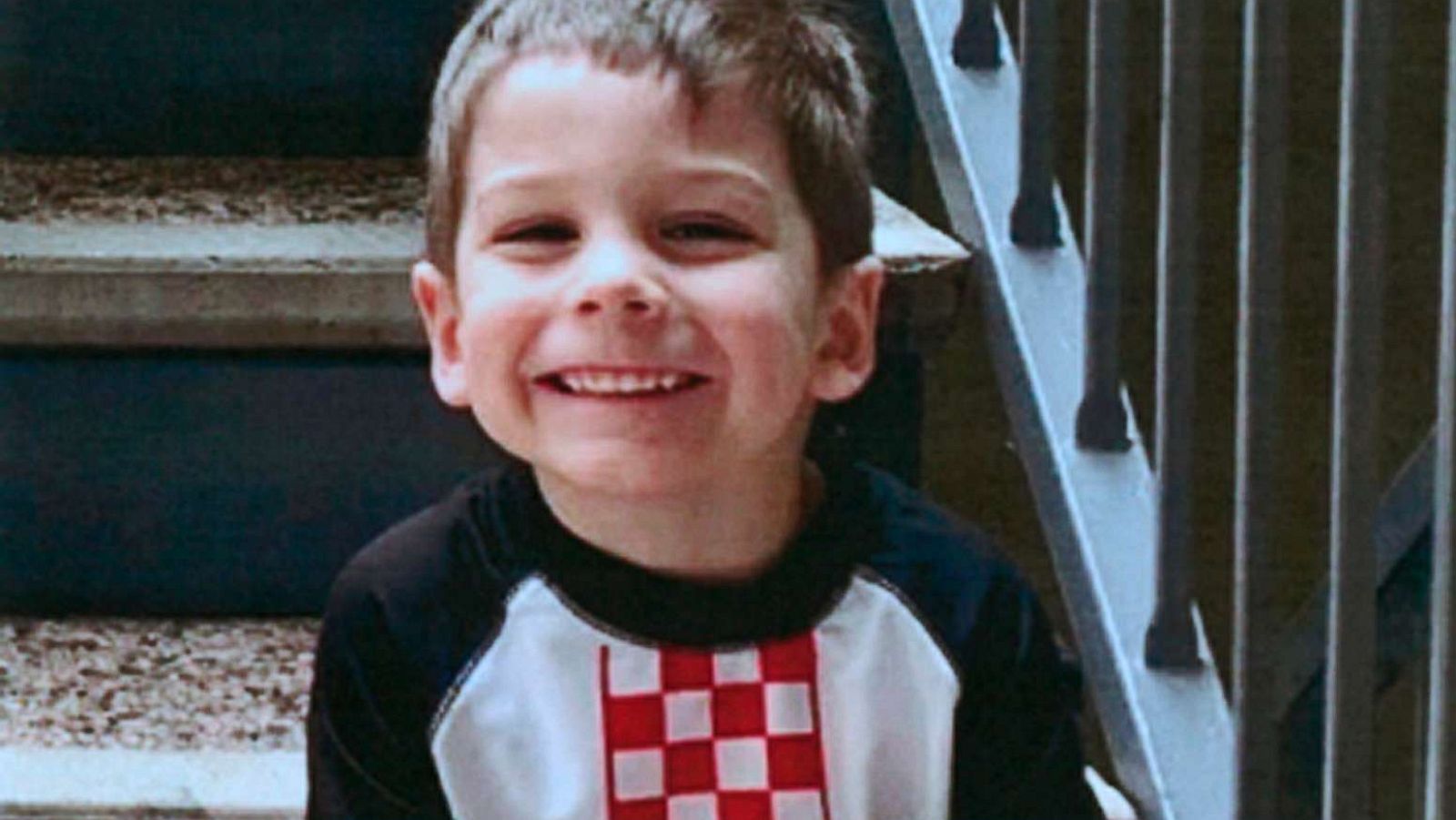
Elijah Lewis, a smiling 5-year-old whose life was cut short by horrific abuse.
This case, which unfolded in Merrimack, New Hampshire, and spilled over into Massachusetts, highlights not only the depths of human depravity but also systemic failures in child protection that allowed a vulnerable boy to suffer in silence for months. Elijah’s short life was marked by developmental challenges, but nothing prepared the public for the revelations that emerged after his body was discovered buried in a state park.
A Troubled Beginning
Elijah Lewis was born on January 7, 2016, in Arizona to Danielle Dauphinais and Timothy Lewis. The couple divorced a year later, and Dauphinais eventually moved to New Hampshire with her children. By May 2020, Elijah’s father, concerned about his son’s well-being, brought the boy to live with Dauphinais, her boyfriend Joseph Stapf, and their young daughter in the basement of a home owned by Stapf’s mother.
What should have been a fresh start quickly turned nightmarish. Elijah, who had developmental challenges and behavioral issues that had intensified, became the target of escalating abuse. Court records and testimony later revealed a household where starvation, beatings, and emotional torment were routine.
By November 2020, during a doctor’s visit, Elijah weighed just 32 pounds and showed visible bruises on his face, eye, and arm. Despite red flags, the abuse continued unchecked for nearly another year.
Months of Systematic Torture
Prosecutors painted a picture of relentless cruelty. Elijah was starved to the point of emaciation. When his remains were eventually recovered, the once-active boy who should have weighed around 40 pounds for his age and height stood at just 3 feet tall and a skeletal 19 pounds. He suffered from malnourishment, pressure ulcers (bedsores from prolonged immobility or neglect), facial and scalp injuries, and acute fentanyl intoxication.
Disturbing text messages exchanged between Dauphinais and Stapf, introduced in court proceedings, laid bare their hostility. One message referenced Elijah saying he wanted food and for them to stop starving him “because it’s not nice.” Another chilling exchange included threats like “I’m gonna kill him and I mean it,” and admissions such as “I hit him with the shower rod that’s all I did.”
Stapf reportedly instructed Dauphinais at times to feed the boy more to “fatten him up,” perhaps to avoid scrutiny, but the pattern of deprivation persisted. Elijah endured beatings, confinement, and denial of basic necessities. The basement bathroom where the family lived became the site of unimaginable horror.
In a particularly grim detail, Dauphinais gave birth to another child with Stapf in that same basement bathroom in early October 2021, just weeks after Elijah is believed to have died. The newborn was later surrendered under Safe Haven laws at a hospital, where staff noted drug dependency.

Danielle Dauphinais, whose actions led to her son’s death.
The Cover-Up and Discovery
Investigators believe Elijah died between September 21 and 24, 2021. Rather than report the death, Dauphinais and Stapf concealed it. They placed his body in a container and transported it to Ames Nowell State Park in Abington, Massachusetts, where Stapf buried it.
The disappearance came to light in mid-October 2021 when a Division for Children, Youth and Families (DCYF) employee noticed Elijah was not listed as a resident in Dauphinais’ home documents during an investigation triggered by the newborn’s hospital visit. Dauphinais lied, claiming the boy was with relatives in California or Texas—relatives who later confirmed she had asked them to corroborate the false stories.
On October 10, 2021, both Dauphinais and Stapf sent texts to Stapf’s mother urging her not to mention Elijah if asked. No photos of the boy remained in the home, and bags of his clothing were discarded. Police obtained a search warrant, and the couple fled to New York City, where they were arrested on October 18.
Elijah’s remains were found on October 24, 2021, confirming the worst fears. The autopsy ruled his death a homicide due to violence and neglect.
Chilling Post-Death Texts
Among the most shocking evidence were texts sent by Dauphinais after Elijah’s death. In one message to Stapf, she wrote: “Seriously, like, I can breathe and be free. I was a prisoner for so long baby. It was hell…” This text, revealed in court motions, captured her apparent relief at the boy’s death, framing her son as a burden that had imprisoned her.
These messages, alongside others detailing abuse, were central to the prosecution’s case and stunned those following the proceedings. They underscored a complete lack of remorse or maternal instinct, turning public grief into outrage.
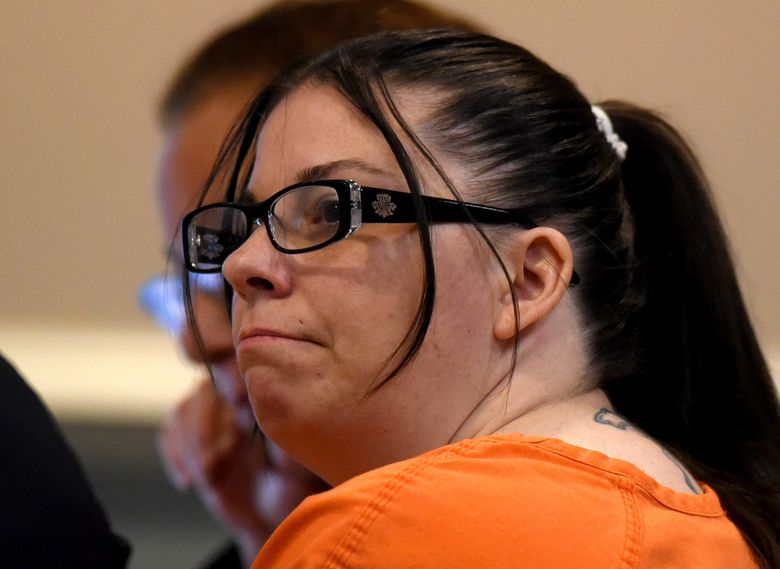
Danielle Dauphinais in court during proceedings related to the case.
Legal Proceedings and Sentencing
Joseph Stapf pleaded guilty in 2022 to manslaughter, second-degree assault, falsifying physical evidence, and witness tampering. He was sentenced to 22 to 45 years in prison. During his sentencing, more details of the abuse emerged through the texts.
Dauphinais faced charges including first- and second-degree murder. After delays, she pleaded guilty on September 26, 2024, to second-degree murder and two counts of witness tampering. On October 25, 2024, she was sentenced to 50 years to life on the murder charge, plus consecutive terms for tampering, resulting in 53.5 years to life.
In court, Dauphinais sobbed as the judge addressed her direct role in killing her son “hour by hour, day by day and month by month.” Elijah’s father, Timothy Lewis, delivered a powerful victim impact statement, telling Dauphinais, “All you had to do was stop by and bring him home.”
Broader Implications and Failures
This case has raised serious questions about child welfare oversight. A wrongful death lawsuit was filed against Dauphinais, Stapf, Stapf’s mother, and the state DCYF, alleging failures to protect Elijah despite known concerns. The agency has sought dismissal, arguing it did not have custody.
Advocates point to the case as emblematic of gaps in the system—missed doctor visits, ignored bruises, and lies that went unchallenged until it was too late. Elijah’s story has fueled calls for stronger interventions in cases of suspected neglect, especially involving parents with substance issues or unstable living situations.
The basement apartment, once a supposed family home, became a chamber of horrors. The birth of another child there, followed by the disposal of Elijah’s body, adds layers of tragedy. How could a mother give life in one moment and extinguish it in another?
Remembering Elijah
Elijah Lewis was more than a victim. Photos show a bright-eyed boy with a wide smile, full of potential despite his challenges. Family and community vigils honored his memory, with calls for justice and reform.
His father and others who knew him described a child who deserved love, care, and protection. Instead, he endured isolation, pain, and ultimately death at the hands of those entrusted with his life.
The leaked texts and court records serve as a grim archive of suffering. Phrases like “I can breathe again” echo not as liberation but as a damning indictment of a mother’s failure.
As society processes this horror, the focus must remain on preventing future tragedies. Enhanced training for child services workers, better inter-agency communication, and public awareness of warning signs are essential. Elijah’s death should not be in vain; it must drive change.
In the end, no sentence can restore a stolen childhood or erase the pain inflicted. But accountability, however imperfect, ensures that the voices of the voiceless—like little Elijah—are heard.