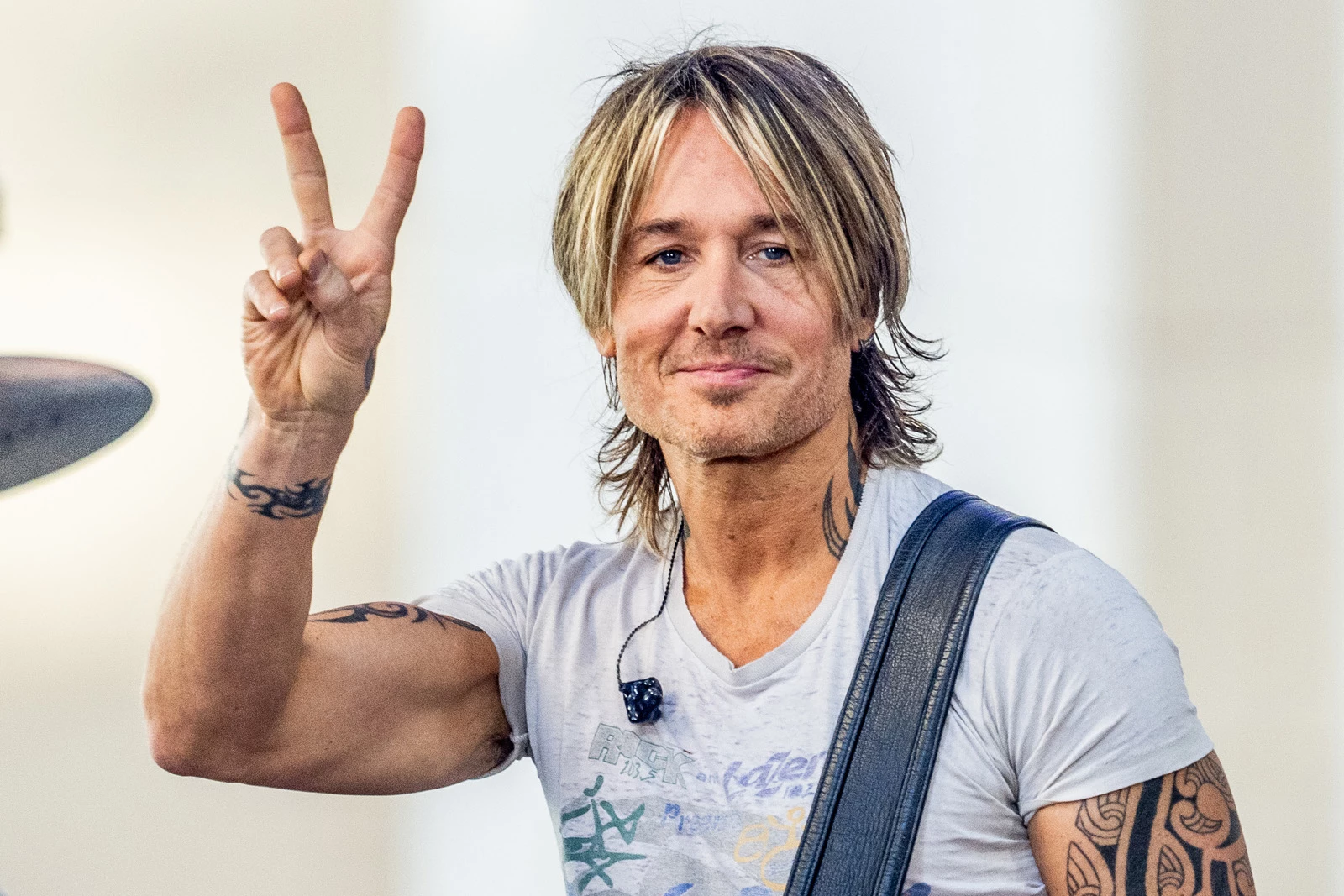
KEITH URBAN ALMOST LOST EVERYTHING BEFORE COUNTRY MUSIC SAW HIM RISE AGAIN
Long before becoming one of Nashville’s biggest stars, Keith Urban faced a battle that threatened both his career and his personal life. The road back became one of the defining stories behind the music millions know today.
Born Keith Lionel Urban on October 26, 1967, in Whangarei, New Zealand, the future country superstar moved with his family to Caboolture, Queensland, Australia, at just two years old. His parents, Bob and Marienne, instilled in him a deep love for American country music from an early age. At four, he received a ukulele, and by six, he had picked up the guitar. Music wasn’t just a hobby—it was his calling.
Urban began entering talent competitions around age eight and, as a teenager, played gigs in pubs and clubs. He quit school at 15 to pursue music full-time. In 1988, he formed a band that toured Australia, and by 1990, he won an award at an Australian country music festival, leading to a record deal with EMI Music Australia. His self-titled debut album released in 1991 performed well locally, charting several singles.
But Australia was never the end goal. Like many aspiring country artists, Urban dreamed of Nashville—the beating heart of the genre. In 1992, he made the bold move across the Pacific, leaving behind his early success for the uncertain grind of Music City.
The Nashville Grind and Early Breakthrough
In Nashville, Urban formed a band called The Ranch. Their self-titled album in 1997 received moderate critical acclaim but struggled commercially. Around this time, Urban faced a significant health scare: a vocal cord condition that silenced his singing voice temporarily. The band disbanded, and while recovering, he honed his guitar skills, becoming a sought-after session player for major acts like the Dixie Chicks and Garth Brooks.
His solo breakthrough came in 1999 with the release of his American debut album, Keith Urban. It spawned hits like “But for the Grace of God,” which reached No. 1 on the Billboard Hot Country Songs chart. The album went platinum, establishing him as a rising star. Subsequent albums Golden Road (2002) and Be Here (2004) solidified his status, delivering multiple chart-toppers and earning him widespread acclaim for blending traditional country with pop-rock influences and raw, honest lyrics.
On the surface, Urban’s career was soaring. But beneath the success, personal demons were brewing.
:max_bytes(150000):strip_icc():focal(719x179:721x181)/acm-party-cause-4-93e4360426cb49428a60b34da22804a0.jpg)
The Battle with Addiction
Urban’s struggles with substance abuse, particularly alcohol and cocaine, dated back years. He has spoken openly about being a binge drinker and how addiction clouded his judgment, derailing opportunities. His father’s own issues with alcohol may have influenced his path, though Urban has noted he doesn’t dwell on it publicly.
He entered rehab for cocaine in 1998 at Cumberland Heights in Nashville. There were other stints as well. Despite professional success, his personal life was unraveling. Addiction is often described as a progressive disease, and for Urban, it intensified as fame grew.
By the mid-2000s, Urban was a major star, but his battles were far from over. In 2006, everything came to a head.
Love, Intervention, and Rock Bottom
In June 2006, Urban married actress Nicole Kidman in a lavish ceremony in Australia. Their romance had captured public attention—two high-profile artists from different worlds finding common ground. But just four months into their marriage, the honeymoon phase shattered.
Urban relapsed. Kidman, along with friends, staged an intervention. She flew back from filming abroad to confront him. Urban later described it as a pivotal “fork in the road.” He checked into the Betty Ford Center in Palm Springs for three months of treatment.
“Four months into a marriage, I’m in rehab for three months, with no idea what was going to happen to us,” Urban has recalled. “And if you want to see what love in action really looks like, give that a whirl.” He credits Kidman’s unwavering support with saving not just their marriage but his life.
:max_bytes(150000):strip_icc():focal(933x560:935x562)/Nicole-Kidman-Keith-Urban-092925-32c44227b39f46d892e62d4c83ef619f.jpg)
This wasn’t his first rodeo with rehab, but it proved to be his last. Urban emerged in early 2007 committed to sobriety. He has now maintained it for nearly two decades, often marking milestones publicly with gratitude.
The timing was precarious. His album Love, Pain & the Whole Crazy Thing was set for release around the time of his treatment. The industry wondered if his career could survive such a public personal crisis. But Urban’s resilience—and the strength of his music—prevailed.
The Comeback and Enduring Success
Post-rehab, Urban’s career not only recovered but flourished. Albums like Get Closer (2010), Fuse (2013), and later works continued to produce hits. Songs like “Somebody Like You,” “You’ll Think of Me,” and “Blue Ain’t Your Color” became anthems. He became known for electrifying live performances, masterful guitar work, and a genre-blending style that appealed to country purists and crossover fans alike.
Urban has sold millions of albums, won multiple Grammy Awards, and headlined major tours. He served as a judge on American Idol, further expanding his reach. His marriage to Kidman endured, and they welcomed two daughters, Sunday Rose and Faith Margaret. Family life in Nashville became a cornerstone of his stability.
Urban has been candid about how sobriety transformed his creativity and relationships. In interviews, he describes it as choosing life over self-destruction. “I’m never looking back,” he has said, reflecting on nearly 19 years sober.
:max_bytes(150000):strip_icc()/keith-urban-100325-4b8a38c888514bb6aee2e03616260038.jpg)
Lessons from the Journey
Keith Urban’s story resonates because it’s more than a celebrity redemption arc—it’s a human one. Addiction doesn’t discriminate by talent, fame, or success. Urban’s willingness to share his vulnerabilities has inspired countless fans facing their own battles.
He has emphasized the role of support systems, professional help, and personal accountability. Kidman’s role highlights the power of compassionate love during crisis. Their relationship weathered early storms to become one of Hollywood’s more enduring partnerships (noting public reports up to recent years).
Musically, Urban’s post-recovery work often reflects themes of gratitude, resilience, and love. His guitar-driven sound evolved while staying true to the storytelling roots of country music.
Today, Keith Urban stands as a testament to second chances. From a kid in Australia strumming guitar to a Nashville icon, his path was never linear. It was marked by detours, rock bottoms, and hard-won triumphs.
For aspiring artists or anyone grappling with personal demons, Urban’s narrative offers hope: the music can rise again, stronger and more authentic, after the darkest chapters.
In a 2025 interview, Urban reflected on his journey with Zane Lowe, discussing sobriety’s impact on his artistry and life. He continues to tour, release music, and live fully present.
The boy who dreamed of Nashville didn’t just survive the dream—he redefined it on his own terms.

See more of Keith Urban’s incredible journey through his music and story. His resilience reminds us that even when it seems everything is lost, the best chapters may still be ahead.