NETFLIX PRESENTS A HEART-WRENCHING TRUE-CRIME DRAMA: KAITLYN DEVER IN AN UNFORGETTABLE PERFORMANCE!
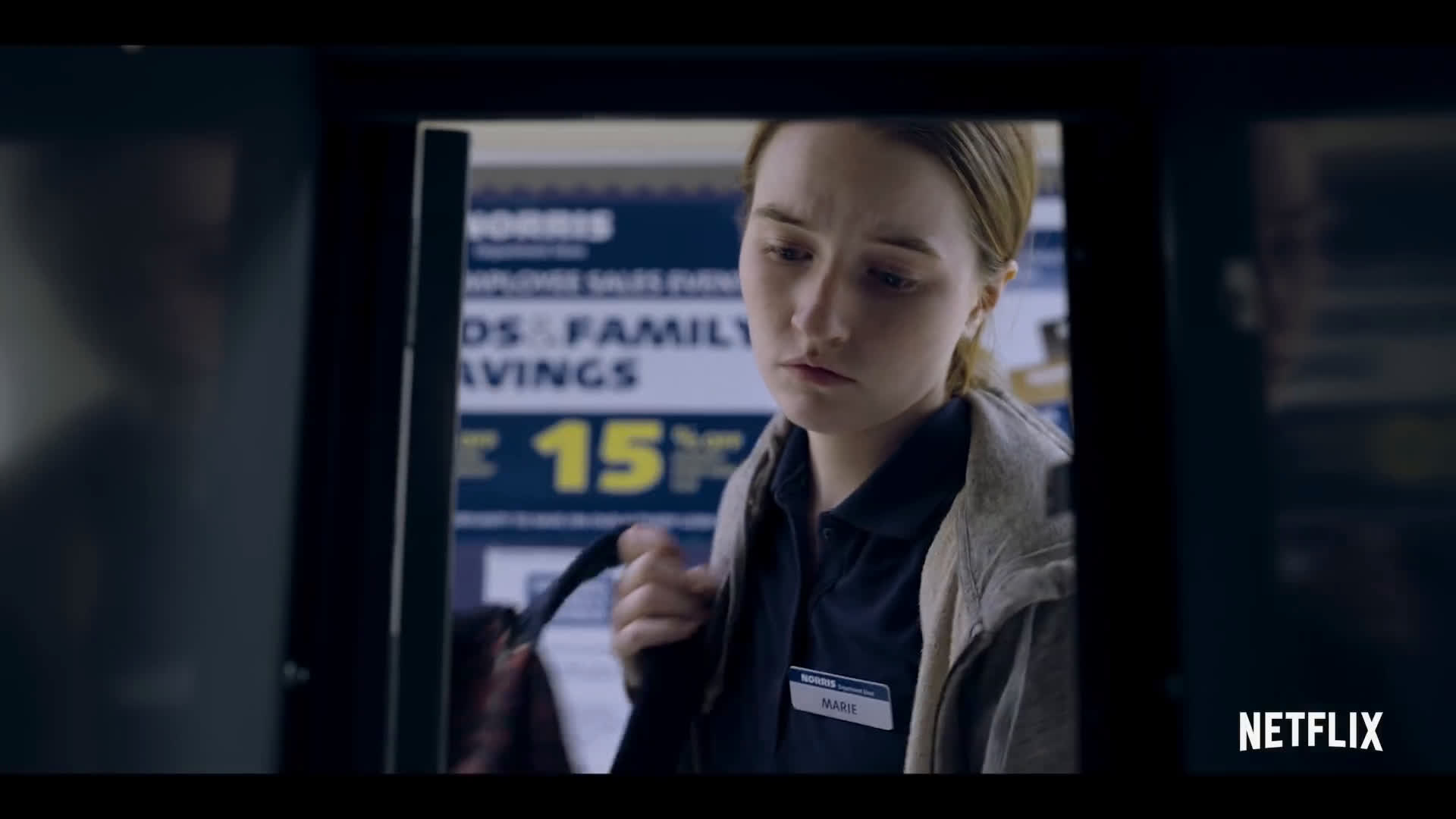
A traumatized survivor, a cold system, and a truth no one chose to believe. On NETFLIX, Kaitlyn Dever delivers a devastating performance as Marie, a young woman forced to recant her assault report under intense police pressure. But the shocking discovery made by two female detectives years later proves… that she had been telling the truth all along.
In the quiet suburb of Lynnwood, Washington, in August 2008, 18-year-old Marie Adler (a pseudonym; her middle name) was living what she hoped would be a fresh start. Aging out of the foster care system, she had moved into an apartment through a transitional housing program. One night, a masked stranger broke in, bound her, threatened her with a knife, and raped her. She immediately reported the crime. What followed was not justice—it was a second violation, this time by the very system meant to protect her.

Marie’s demeanor after the attack—quiet, sometimes flat, occasionally inconsistent in small details—raised doubts among those closest to her, including former foster parents. Those doubts reached the Lynnwood police. Detectives Jeffrey Mason and Jerry Rittgarn subjected her to relentless questioning. They challenged her story, suggested she was lying, and pressed until the exhausted, traumatized teenager began to doubt herself. Under that pressure, she recanted. She first said she might have dreamed it. Then she wrote that she had made the whole thing up.
The consequences were immediate and brutal. Marie was charged with filing a false police report, a gross misdemeanor. She accepted a plea deal that included probation and a $500 fine. Local media and online attacks branded her a liar. She lost her job at Costco, faced public humiliation, and spiraled into despair. Friends distanced themselves. The housing program that had given her a foothold threatened to pull support. At one of the lowest points of her young life, she contemplated suicide. The system that failed to believe her had effectively punished her for surviving.
What no one in Lynnwood knew was that the same predator was still free—and still hunting.
Years later and more than a thousand miles away, in the Denver suburbs of Colorado, a different kind of investigation was unfolding. In early 2011, Detective Stacy Galbraith of the Golden Police Department took a report from a young woman who had been raped at gunpoint in her home. The details—masked intruder, careful planning, specific methods of control—struck her as unusually precise. When she mentioned the case to her husband, also a police officer, he noted similarities to a case in nearby Westminster. Galbraith reached out to Detective Edna Hendershot. The two women began comparing notes.
:max_bytes(150000):strip_icc()/unbelievable_103_unit_00946r-2000-a261752578f041b5be524e4f008b116f.jpg)
What they found was chilling. Multiple women, ranging from their twenties to their sixties, had been attacked in nearly identical ways across different Colorado suburbs. The perpetrator went to extraordinary lengths to avoid leaving DNA: he wore gloves, used condoms, and cleaned scenes meticulously. Yet touch DNA and other subtle links began to emerge. Galbraith and Hendershot—played with quiet intensity and fierce determination by Merritt Wever and Toni Collette in the Netflix series—refused to treat these as isolated incidents. They treated the victims with care, listened carefully, and followed every thread.
Their persistence paid off. A suspicious vehicle linked to U.S. Army veteran Marc Patrick O’Leary, then living in the Denver area, became a focus. DNA from a relative pointed to him. When investigators searched his home, they found a mask, a gun, stolen personal items from victims, and digital evidence. On O’Leary’s hard drive were photographs of Marie—taken during the 2008 attack in Washington that police had dismissed as a fabrication.
O’Leary had been a methodical, sadistic serial rapist. He stalked victims for days or weeks, sometimes breaking into their homes multiple times before the assaults. He attacked women in Washington and Colorado between 2008 and 2011. Marie had been one of his earliest known victims. Because her report was discredited, he remained free to attack again.
In 2011, O’Leary pleaded guilty to multiple counts of sexual assault in Colorado and was sentenced to 327½ years in prison. Additional time was added for the Washington cases. He remains incarcerated. For Marie, the discovery brought a form of delayed vindication. Her false-reporting charge was eventually cleared. She sued the city of Lynnwood and reached a $150,000 settlement. The real Marie later watched the Netflix series and called it “excellent,” though emotionally difficult. She has since built a private life far from the public eye.
:max_bytes(150000):strip_icc()/unbelievable_101_unit_01125r-2000-9fff637ff3804201841ec3337fa4d870.jpg)
Netflix’s limited series Unbelievable (2019), based on the Pulitzer Prize-winning 2015 ProPublica/Marshall Project investigation “An Unbelievable Story of Rape” by T. Christian Miller and Ken Armstrong, does not sensationalize the violence. It focuses instead on the human cost of disbelief. Kaitlyn Dever’s performance as Marie is the emotional core of the show. With minimal dialogue in many scenes, she conveys the crushing weight of trauma, the confusion of being disbelieved, the slow erosion of self-trust, and the quiet resilience that somehow survives. Critics and viewers alike have called it one of the most authentic and devastating portrayals of a sexual-assault survivor on screen. Dever has spoken about the responsibility she felt to honor the real woman’s experience.
The series also celebrates the two detectives whose patient, victim-centered approach finally stopped the predator. Their partnership stands in stark contrast to the coercive interrogation Marie endured. The show forces viewers to confront an uncomfortable truth: when institutions decide a victim is “unbelievable,” the real danger continues unchecked.
More than a decade after Marie’s assault and years after the series premiered, Unbelievable remains one of Netflix’s most powerful true-crime dramas precisely because it refuses easy catharsis. It shows how a single failed investigation can cascade into further trauma for the survivor and further victims for the perpetrator. It also shows that careful listening, cross-jurisdictional cooperation, and treating survivors with dignity can still lead to justice—even years later.
Kaitlyn Dever’s Marie is not a triumphant Hollywood heroine. She is a young woman who was failed, who suffered, and who somehow kept going. That quiet, unflinching truth is what makes the performance unforgettable—and what makes the real story behind it so necessary to remember.