THE HIGH-STAKES PSYCHOLOGICAL THRILLER ON NETFLIX THAT HAS SAM WORTHINGTON IN A MIND-BENDING NIGHTMARE
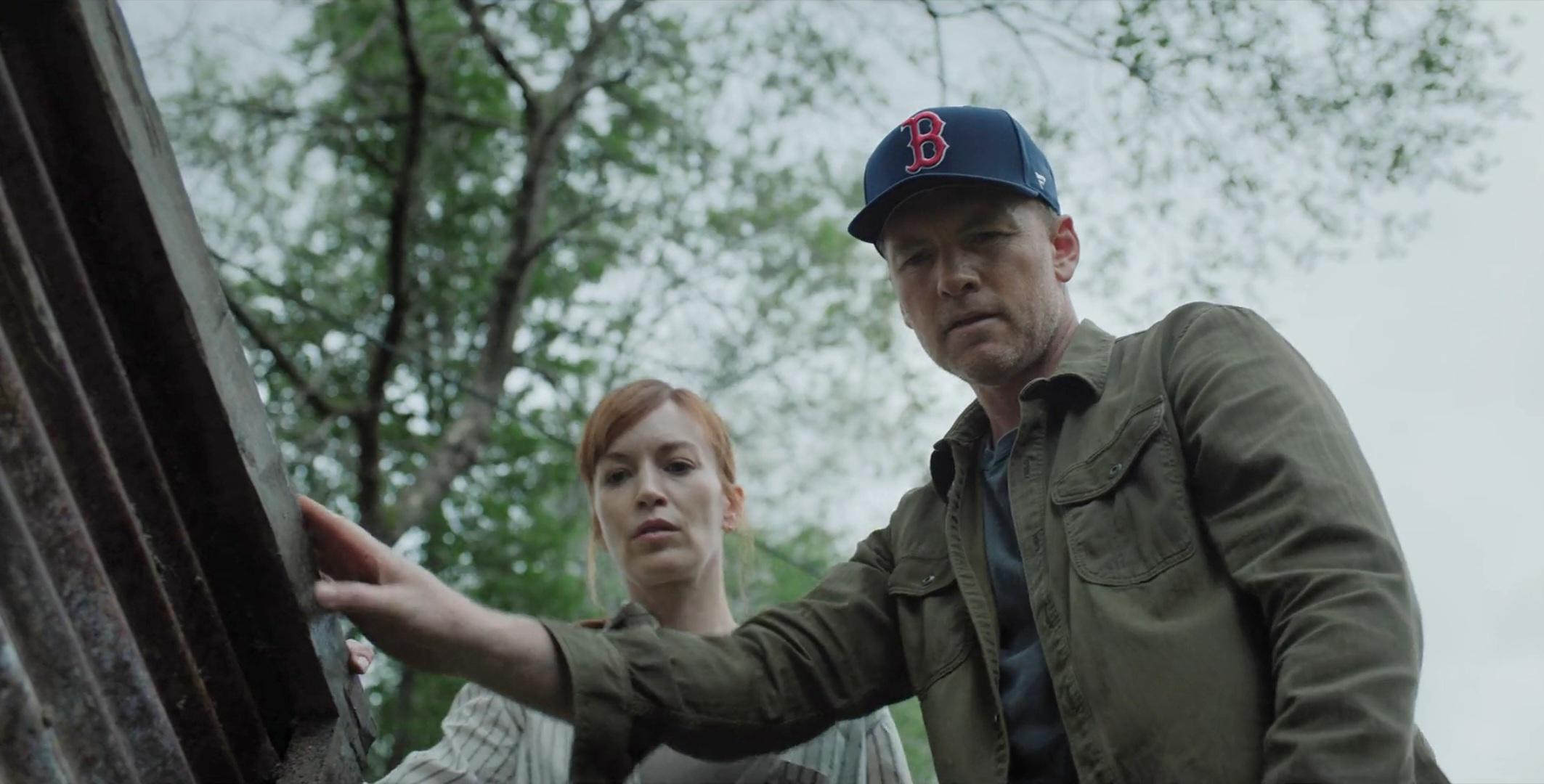
Looking down into the dark abyss where their daughter vanished. On Netflix, Sam Worthington stars as Ray alongside Lily Rabe in a heart-pounding nightmare. Prying open a rusted drainage grate after an unsettling hospital visit, the terrifying discovery that…
That single, gut-wrenching image captures the relentless dread of Fractured, the 2019 psychological thriller that continues to grip audiences years after its arrival. Directed by Brad Anderson—the same filmmaker behind unsettling classics like Session 9 and The Machinist—the film dropped globally on Netflix on October 11, 2019, and remains available to stream for anyone ready to question everything they think they know about reality, family, and the fragile line between truth and delusion.
The story opens on a deceptively ordinary note. Ray Monroe (Worthington), a man already carrying the weight of past failures and a fraying marriage, is driving home with his wife Joanne (Lily Rabe) and young daughter Peri after a tense Thanksgiving visit. The road is long, the conversation sharp, the air thick with unspoken grievances. What should have been a simple rest-stop detour spirals into chaos when a moment of distraction and a sudden accident leave Peri injured. The family races to a nearby hospital that feels less like a place of healing and more like a labyrinth of fluorescent lights, cold efficiency, and quiet suspicion.
Ray waits. Exhausted, anxious, desperate to prove he can still protect the people he loves. When he finally goes looking for Joanne and Peri, the hospital staff look at him with polite confusion. There is no record of his wife. No record of his daughter. No evidence they were ever there at all. What follows is a high-stakes spiral of paranoia, denial, and mounting terror as Ray refuses to accept the official story. Every corridor feels longer. Every nurse’s smile seems a little too fixed. Every locked door raises the same unanswerable question: Is the hospital hiding something unspeakable, or is Ray’s mind fracturing under the pressure of trauma he cannot face?
Worthington delivers one of his most committed performances in years. Gone is the stoic action-hero armor of Avatar. Here he is raw, frantic, and deeply human—a father unraveling in real time. His Ray is not a polished detective or a cool-headed survivor. He is sweaty, angry, terrified, and increasingly isolated. Rabe matches him beat for beat as Joanne, bringing both warmth and steel to a role that demands emotional authenticity even as the ground shifts beneath the characters’ feet. Young Lucy Capri as Peri grounds the early scenes with an innocence that makes every later moment of uncertainty hit harder.
Anderson builds tension the old-fashioned way: through atmosphere, performance, and carefully controlled information. The hospital itself becomes a character—sterile, echoing, and strangely empty in the wrong places. The cinematography leans into cold blues and harsh whites, turning ordinary medical spaces into something quietly nightmarish. There are no cheap jump scares. The horror is psychological, cumulative, and rooted in the most primal of fears: the possibility that the people you love most can simply vanish, and that the world will insist they were never real.
What makes Fractured linger is its refusal to offer easy comfort. The film toys with conspiracy theories—organ harvesting, institutional cover-ups, medical gaslighting—without ever fully committing to them. Viewers are left in the same uneasy position as Ray: searching for proof, questioning every memory, wondering whether the truth is more terrible than the nightmare. The title itself works on multiple levels. A physical injury. A broken family. A mind that can no longer trust its own perceptions.
The screenplay, written by Alan B. McElroy, understands that the most effective thrillers do not simply withhold information; they make the act of seeking it feel dangerous. Every time Ray digs deeper—whether confronting doctors, searching restricted areas, or returning to the site of the original accident—the film tightens the screws. Moments that might seem small in another movie (a missing toy, a discarded object, a glance exchanged between staff members) accumulate into something oppressive. The audience is never quite sure whether they are watching a conspiracy thriller, a study of grief and guilt, or a portrait of a man whose reality has split in two.
Critical response upon release was mixed, as is often the case with films that prioritize mood and ambiguity over neat resolution. Some praised the tight direction and Worthington’s intensity. Others found the twists telegraphed or the social commentary on American healthcare systems a touch heavy-handed. Yet the film has found a durable second life on streaming. In an era of endless content, Fractured continues to surface in recommendation algorithms and late-night viewing sessions precisely because it delivers that rare combination of accessibility and genuine unease. It is the kind of movie that makes people text friends at 1 a.m. with a simple warning: “Do not start this if you have to get up early.”
The production itself was efficient and focused. Shot largely in Winnipeg, the film benefits from a sense of isolated, wintry emptiness that mirrors Ray’s growing isolation. Supporting performances from Stephen Tobolowsky and Adjoa Andoh add layers of institutional authority that feel both professional and slightly off-kilter. The score, understated and tense, never overwhelms the images. Anderson trusts the power of silence and the sound of a man’s increasingly ragged breathing.
More than six years after its October 11, 2019 Netflix premiere, Fractured still works. It works because it understands that the most terrifying place is not a haunted house or a remote cabin—it is the ordinary world when the ordinary world stops making sense. A hospital waiting room. A rest-stop parking lot. The space between what a father remembers and what everyone else insists is true.
For anyone who has ever felt the ground shift under their feet after a sudden crisis, the film lands with uncomfortable precision. For everyone else, it offers a sleek, 100-minute exercise in controlled paranoia. Worthington’s Ray refuses to stop looking. He pries open every locked door, questions every official statement, and stares into the dark places where answers might hide. Whether those answers bring clarity or only deeper horror is something the film forces each viewer to confront alone.
Fractured is currently streaming on Netflix. Press play only if you are prepared to spend the rest of the night second-guessing the reliability of memory, the motives of institutions, and the fragile stories we tell ourselves in order to keep going. The abyss is waiting. And once you look down, it is remarkably difficult to look away.