THE ARCHITECTURE OF ALGORITHMIC DECEPTION: DECONSTRUCTING THE ‘SECRET CHEMICAL IN HER BLOOD’ HOAX
Deconstructing the Sensationalist Teaser
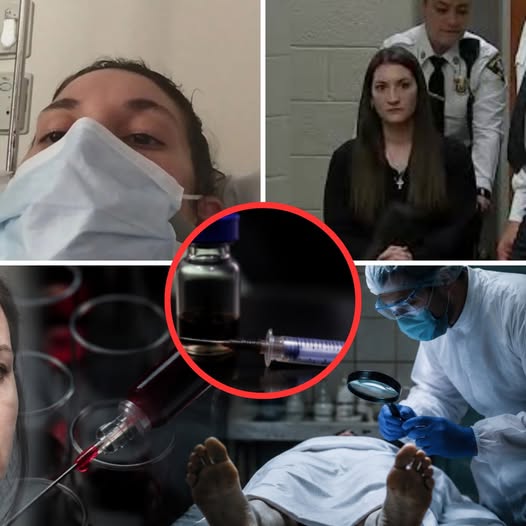
A hyper-dramatic, pseudo-scientific post recently began proliferating across automated social media groups, suspicious True-Crime portals, and digital content aggregator pages, proclaiming with alarmist punctuation: “FORENSIC BREAKTHROUGH: SECRET C.H.E.M.I.C.A.L UNCOVERED IN HER B.L.O.O.D! Top forensic e.x.p.e.r.t.s have just made a terrifying discovery during a routine autopsy. Shocking toxicology reports confirm an unidentified, synthetic c.h.e.m.i.c.a.l was injected directly into her b.l.o.o.d stream moments before her sudden c.o.l.l.a.p.s.e. Investigators reveal the lethal compound is completely invisible on standard hospital tests. The case took a dark turn when a confidential lab report proved the rare substance was ordered from an illegal facility by… See more below”
Packed with cinematic tropes—promising “invisible synthetic toxins,” “confidential lab leaks,” and a cliffhanger ending—the post presents itself as an urgent, real-time investigative breakthrough in a high-profile death case. However, despite its sensational tone and pseudo-medical jargon, every element of this teaser is an artificial creation. There is no specific victim identified, no genuine forensic breakthrough cited, and no legitimate toxicology report attached. Instead, this post represents an advanced iteration of digital engagement fraud—a modular, automated template engineered to evade platform moderation algorithms, exploit true-crime curiosity, and funnel unsuspecting users into predatory ad-arbitrage networks.
The Mechanics of Algorithmic Evasion: Why ‘P.E.R.I.O.D.S’ Are Inserted
One of the most revealing characteristics of this specific clickbait template is the unnatural formatting of key terms: C.H.E.M.I.C.A.L, B.L.O.O.D, E.X.P.E.R.T.S, and C.O.L.L.A.P.S.E. To a human reader, these inserted periods look like stylistic quirks or formatting errors, but in the realm of digital content manipulation, they serve a calculated technical function: Algorithmic Filter Evasion.
Major social media platforms (such as Facebook, TikTok, Instagram, and YouTube) utilize automated Natural Language Processing (NLP) models to scan text posts for restricted, sensitive, or high-risk keywords. Terms associated with violence, bodily harm, illegal substances, and sudden medical emergencies are automatically flagged, demonetized, or shadowbanned to maintain advertiser safety and prevent the spread of harmful medical misinformation.
Content farms bypass these automated safety filters by inserting periods, spaces, or special characters between individual letters. By obfuscating the text into b.l.o.o.d or c.h.e.m.i.c.a.l, the automated moderation system fails to match the string against its prohibited keyword database, allowing the post to pass through unimpeded while remaining fully legible to human scrollers.
Psychological Triggers: Anonymous Subjects and Conspiracy Tropes
The structural design of the “Secret Chemical” post relies on sophisticated cognitive manipulation techniques tailored to exploit modern media consumption habits.
Digital content mills deploy specific psychological hooks when crafting synthetic medical mysteries:
1. The Anonymized ‘Blank Canvas’ Subject (“HER”)
Noticeably, the post refers repeatedly to “her” without ever naming a specific individual. This modular vagueness allows content farms to deploy the exact same text across hundreds of different niche pages—ranging from celebrity gossip groups to true-crime fan hubs. Depending on where it is posted, readers automatically project the story onto recently deceased public figures, missing persons, or viral internet personalities.
2. Exploiting Pseudo-Scientific Paranoia
Phrases like “completely invisible on standard hospital tests” and “synthetic chemical injected directly” tap into deep-seated anxieties regarding medical vulnerability, poisonings, and secret cover-ups. By framing the substance as undetectable by standard medicine, the post builds a conspiracy narrative where mainstream authorities are portrayed as incompetent or complicit.
3. The Truncated Curiosity Gap (“ordered from an illegal facility by…”)
By severing the sentence immediately before identifying who ordered the substance, the headline creates an acute psychological open loop. Human cognition naturally demands narrative closure; leaving the perpetrator unnamed creates an information vacuum that readers attempt to fill by clicking the “See more below” link or searching the comment section.
4. Algorithmic Amplification
When confused or curious users enter the comment section asking “Who is this about?” or “Is this about [Celebrity Name]?”, platform algorithms interpret that activity as high user engagement. Consequently, the system pushes the fake post into thousands of additional user feeds.
The Monetization Funnel: Ad Arbitrage and Security Threats
Behind these dramatic medical headlines lies a lucrative and deceptive business model known as traffic arbitrage and programmatic ad farming.
When scrollers click the “See more below” link expecting to read the rest of the toxicology report, they are never taken to accredited scientific journals, police department press releases, or recognized news outlets. Instead, the user journey follows a deceptive web funnel:
-
Redirects to Ad-Dense Scraper Sites: Users are routed through URL shorteners and redirect chains to low-quality scraper blogs loaded with intrusive display banner ads, pop-under windows, and auto-playing video commercials.
-
AI-Generated Text Loops: The destination page almost never resolves the cliffhanger. Instead, it displays generic, AI-spun text endlessly summarizing basic definitions of forensic science, historical poison cases, or unrelated true-crime summaries, forcing visitors to scroll past dozens of ad impressions in search of non-existent evidence.
-
Malicious Pop-ups and Phishing: In predatory cases, these destination sites trigger deceptive browser pop-ups promoting fake system security scans, unverified dietary supplements, push-notification subscription traps, or phishing forms designed to capture personal user data.
Digital Media Literacy: Identifying Synthetic Clickbait Templates
The widespread proliferation of obfuscated, automated scandal posts highlights the ongoing necessity of digital media literacy when navigating social media feeds.
To protect themselves from falling victim to manufactured medical hoaxes and predatory link traps, readers should adopt key verification habits:
-
Recognize Obfuscated Text as an Immediate Red Flag: Any post that uses inserted periods, spaces, or special characters in standard words (
b.l.o.o.d,d.e.a.t.h,p.o.i.s.o.n) is deliberately attempting to bypass platform moderation filters and should be treated as untrustworthy. -
Demand Specific Sourcing: Authentic news reports regarding criminal investigations or forensic breakthroughs identify the victim, the investigating law enforcement agency, and the official spokesperson. Vague references to unnamed “experts” or “her” indicate a fabricated template.
-
Avoid Clicking Unverified External Links: Do not click on “See more below” links placed in social media comments or suspicious captions. If a major forensic breakthrough actually occurred, it will be covered by reputable, mainstream news organizations.
-
Refrain from Engaging with Mystery Posts: Avoid commenting to ask for names or clarification. Every interaction provides engagement metrics that help clickbait creators profit from manufacturing synthetic drama.
Recognizing how automated content networks use obfuscated language and pseudo-scientific tropes to bypass platform filters ensures that audiences can navigate modern digital spaces critically, avoiding algorithmic traps and predatory click schemes.