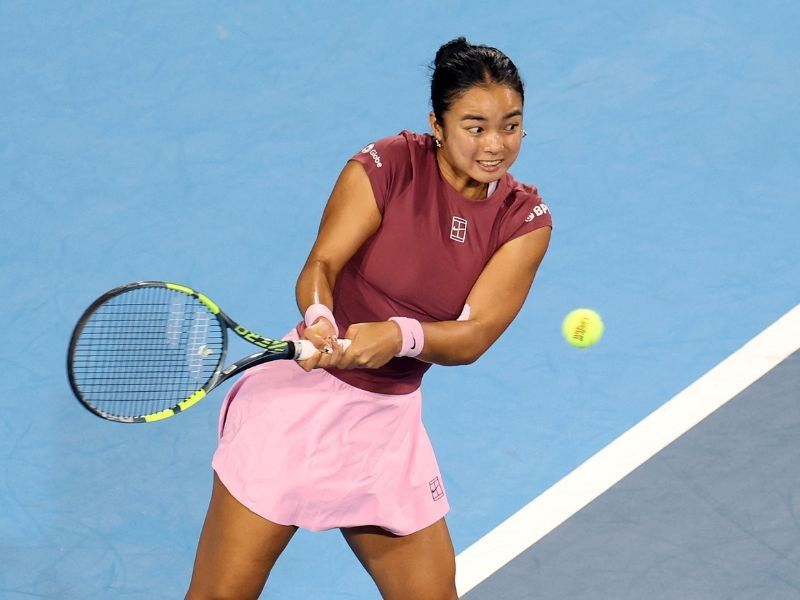
THE TRUTH ABOUT ALEX EALA’S “SECRET TOWEL CONFESSION” IN WASHINGTON: WHEN A PHILIPPINE TENNIS PRODIGY’S HARD-FOUGHT JOURNEY IS EXPLOITED BY TRASH MEDIA
Behind sensationalized headlines alleging “courtside audio leaks” and “towel whispering incidents” lies Alexandra Eala’s genuine resilience, the unrelenting pressure of the WTA Tour, and a predatory clickbait scheme targeting Southeast Asian national pride.
Over the past few days, the tennis fan community across Southeast Asia—particularly in the Philippines—was caught in a frenzy over a viral post circulating at breakneck speed across social media platforms. The sensational advertisement claimed that tennis prodigy Alex Eala staged a “miraculous Washington escape” at the Washington Open, clawing her way back from the brink of total defeat. The drama peaked with the audacious assertion that courtside audio equipment caught a moment where Eala “whispered a shocking confession into her towel,” supposedly revealing a secret illness or harrowing struggle she had been hiding.
However, much like the fabricated narratives previously targeting sports icons such as Roger Federer, Elena Rybakina, and Iga Swiatek, this story of Alex Eala’s “secret towel confession” is 100% fiction. It represents a textbook media scam designed to exploit the name of the most accomplished female tennis player in Philippine history to drive traffic and ad revenue from unsuspecting fans.
1. “The Towel Confession” — Deconstructing the Content Farm Playbook
To recognize the deceptive nature of this information, one must examine the specific media manipulation techniques deployed by online “content farms.”
The trope of an “athlete whispering a secret into a towel or jersey” has emerged as one of the most widespread fake news templates on social media over the last two years. This narrative consistently follows a rigid, highly calculated formula:
-
Setting the High-Stakes Crisis: The story always begins by depicting the athlete facing imminent disaster, overwhelming pressure, or total collapse.
-
Sensationalizing the Comeback: The athlete is portrayed as fighting back “fearlessly,” battling through intense tension to reach a dramatic match point amid an roaring crowd.
-
Inserting the Fake “Audio Leak”: Fabricated technical details—such as “courtside audio captured” or “directional microphones picked up”—are introduced to create a false sense of authenticity and trigger human curiosity.
-
The Cliffhanger Trap: The post abruptly stops right before revealing what the “secret” actually is, concluding with a pointing-finger emoji or a link formatted like
👉 READ FULL MATCH BREAKDOWN HERE:.
When curious users click the provided link, they receive no match analysis, no courtside audio, and no video clip. Instead, they are endlessly redirected through ad-heavy websites, survey traps collecting personal data, or potentially malicious links designed to compromise device security.
There is no audio recording, there was no secret confession, and Alex Eala made no unusual statements into her towel during her matches in Washington.
2. Real-World Events at the Washington Open: Alex Eala’s Sweat-Earned Resilience
Setting aside the fiction spun by social media accounts, the actual journey of Alexandra “Alex” Eala across professional tournaments—including the Washington Open (Mubadala Citi DC Open)—is a genuine story of grit and perseverance.
Born in 2005 in Manila, Alex Eala stands as the premier trailblazer for Philippine tennis. A star alumna of the Rafa Nadal Academy in Spain, she etched her name into sports history by winning the Girls’ Singles title at the 2022 US Open, alongside securing multiple medals for her country at the SEA Games and Asian Games.
Upon transitioning to the professional WTA Tour, Eala was no longer competing against peers of her own age group. Instead, she found herself facing Top 50 and Top 100 players worldwide—veterans possessing years of high-level experience, supreme physical conditioning, and tactical versatility.
At the Washington Open, qualifying and main-draw matches demand immense mental and physical fortitude. The oppressive summer heat and humidity of Washington, D.C., combined with high-pace rallies, routinely push players to their physical limits. Throughout her career, Eala has engaged in three-hour battles, saving match points through tactical adjustments and sheer competitive spirit.
That resilience is the product of thousands of hours of rigorous training in Mallorca—not the result of “magic” or “hidden secrets” as tabloid headlines claim.
3. Why Are Southeast Asian Prodigies Targeted by Disinformation?
Alex Eala becoming a target for sensationalized clickbait is no coincidence. The operators behind content farms carefully study social media behavior in Southeast Asia to select their subjects.
National Pride and High Engagement
The Philippines boasts one of the most active social media user bases globally, characterized by intense national pride and support for homegrown athletes (Laban Filipinas). Any post containing the name of Alex Eala, EJ Obiena (pole vault), or Carlos Yulo (gymnastics) generates thousands of likes, comments, and shares within minutes. Exploiting national pride is the fastest route for clickbait operators to achieve massive engagement rates without ad spend.
Exploiting the Information Vacuum
Professional tennis is a global sport operating across wildly different time zones. A match played late at night in Washington D.C. corresponds to early morning in Southeast Asia. Fans waking up often check social media quickly for score updates. This haste makes them vulnerable to accepting dramatic summaries at face value without cross-referencing official sports outlets.
Capitalizing on Media Distrust
By inventing details like “leaked audio” or “organizers hiding information,” fake news creates the illusion that the reader is accessing an “exclusive truth” hidden by mainstream media. This appeals directly to public fascination with insider secrets.
4. The Psychology of Towel Usage in Professional Tennis
A notable element in this fake news story is the exploitation of the image of a player “covering her head with a towel and whispering.” In professional tennis, placing a towel over one’s head during changeovers is a standard, scientifically backed psychological routine.
Sensory Deprivation
On major stadium courts like those in Washington, players confront thousands of spectators, camera lights, flashing LED boards, and the watchful gaze of opponents. By draping a towel over their head, a player creates a temporary private micro-space, minimizing visual and auditory stimulation from the outside environment.
Positive Self-Talk
Many world-class players, including Iga Swiatek, Rafael Nadal, and Novak Djokovic, frequently murmur to themselves under a towel. This is not a confession of a secret, but a process of positive self-talk—reminding themselves of tactical plans, managing breathing, and resetting after unforced errors.
Thermoregulation
Ice-cooled towels placed around the neck and head help lower core body temperature and cool major blood vessels, helping the brain maintain clarity in extreme heat.
Reframing a standard athletic routine into a “secret whispering scandal” highlights a complete lack of sports knowledge—or a deliberate effort to distort reality—by clickbait creators.
5. The Transition Pressure from Juniors to the WTA Tour
If there is a real, ongoing battle Alex Eala faces, it is the demanding transition from junior tennis to the senior WTA Tour.
This represents the most challenging hurdle for any rising talent in global tennis:
-
The Physicality and Power Gap: In junior ranks, Eala could dominate through technical fundamentals and agility. On the WTA Tour, she faces heavy groundstrokes exceeding 120 km/h, disguise-heavy serves, and physical endurance required for grueling three-set matches.
-
Tactical Maturity: Experienced tour veterans know how to exploit the emotional rhythms of younger players. They vary tempo, adjust ball trajectories, and use subtle gamesmanship to disrupt momentum.
-
The Weight of National Expectations: As the sole torchbearer for her country at this level, every match Eala plays is followed by millions. Losses are dissected intensely, while every victory is hailed as a national milestone.
Navigating these pressures requires patience, structured physical development, and measured fan support—not exaggerated hype or fabricated internet drama.
6. How Fans Can Protect Sports Talent from Digital Exploitation
The proliferation of clickbait not only misleads the public but can also create unnecessary distractions for young athletes like Alex Eala. To foster a healthy sports culture, fans should adopt the following practices:
1. Upgrade Information Filters
Approach headlines containing ALL-CAPS text, sensational phrasing, or promises of “shocking secrets” with skepticism. If a major event or statement occurs, verified outlets like the WTA, ATP, BBC Sport, or Rappler will cover it directly.
2. Avoid Clicking Unverified Links
Links formatted as 👉 READ HERE or CLICK TO WATCH FULL VIDEO inside sensational posts carry security risks. Clicking them inflates metrics for scam operations and exposes devices to potential adware or malware.
3. Respect the Athlete’s Development Journey
Recognize that young players will experience both breakthrough wins and tough losses. Elite sports development is a multi-year process. Celebrating genuine victories and offering constructive empathy during setbacks is far more valuable than pursuing manufactured internet drama.
Conclusion
Alex Eala does not need an AI-generated miracle escape or a fake towel confession to prove her worth. Her work on the hard courts of Washington, her forehands, and her competitive drive against the world’s best represent her true statement as an athlete.
Clickbait posts may gather temporary clicks, but the lasting value of sports lies in truth. By filtering out online misinformation, fans can offer authentic, meaningful support to Alex Eala as she continues to elevate Southeast Asian tennis on the global stage.