PART 3 — The Promise Hidden in Steel
The owner, Richard Halston, arrived just before sunset.
He stepped from a black SUV wearing an expensive suit and a practiced smile.
He insisted there had been “administrative misunderstandings.”
He blamed paperwork.
Supply shortages.
Former employees.
Anyone but himself.
The investigators listened quietly.
Then placed copies of the invoices on the table.
Each purchase order bore Richard’s signature.
Each serial number matched equipment that should have been scrapped years earlier.
There was nothing left to explain.
Only consequences.
Within weeks, state regulators suspended Willow Creek’s operating license pending major reforms.
The fraudulent billing investigation expanded.
Families whose loved ones had been injured were contacted.
Several former employees came forward with stories they had been too afraid to tell.
One maintenance worker admitted he had been ordered to repaint cracked equipment instead of replacing it.
“If I refused,” he said, “I was told I’d lose my job.”
Every resident received brand-new mobility equipment.
Not repaired.
Not repainted.
Factory new.
The first delivery truck arrived on a bright Monday morning.
Mason stood beside Eleanor as therapists adjusted her new walker.
She gripped the handles.
Took one careful step.
Then another.
The walker stayed perfectly steady.
She smiled.
“I forgot walking could feel this quiet.”
Mason smiled back.
“It was always supposed to.”
Months later, Willow Creek reopened under new management.
The first change wasn’t cosmetic.
It wasn’t new paint or new furniture.
It was a simple policy posted beside the entrance:
Every resident has the right to question their equipment. Every concern must be inspected before being dismissed.
No complaint was considered “confusion” without being physically checked first.
That rule soon spread to several other care facilities in the region.
It became known informally among therapists as “The Mason Rule.”
One Sunday afternoon, I watched Mason bring Eleanor her usual bag of butterscotch candies.
He loosened every wrapper before placing them in her favorite bowl.
Then he checked the rubber tips on her new walker.
Not because he distrusted the staff anymore.
Because caring for her had become part of who he was.
Eleanor laughed.
“You still inspect everything.”
Mason shrugged.
“I inspect what carries the people I love.”
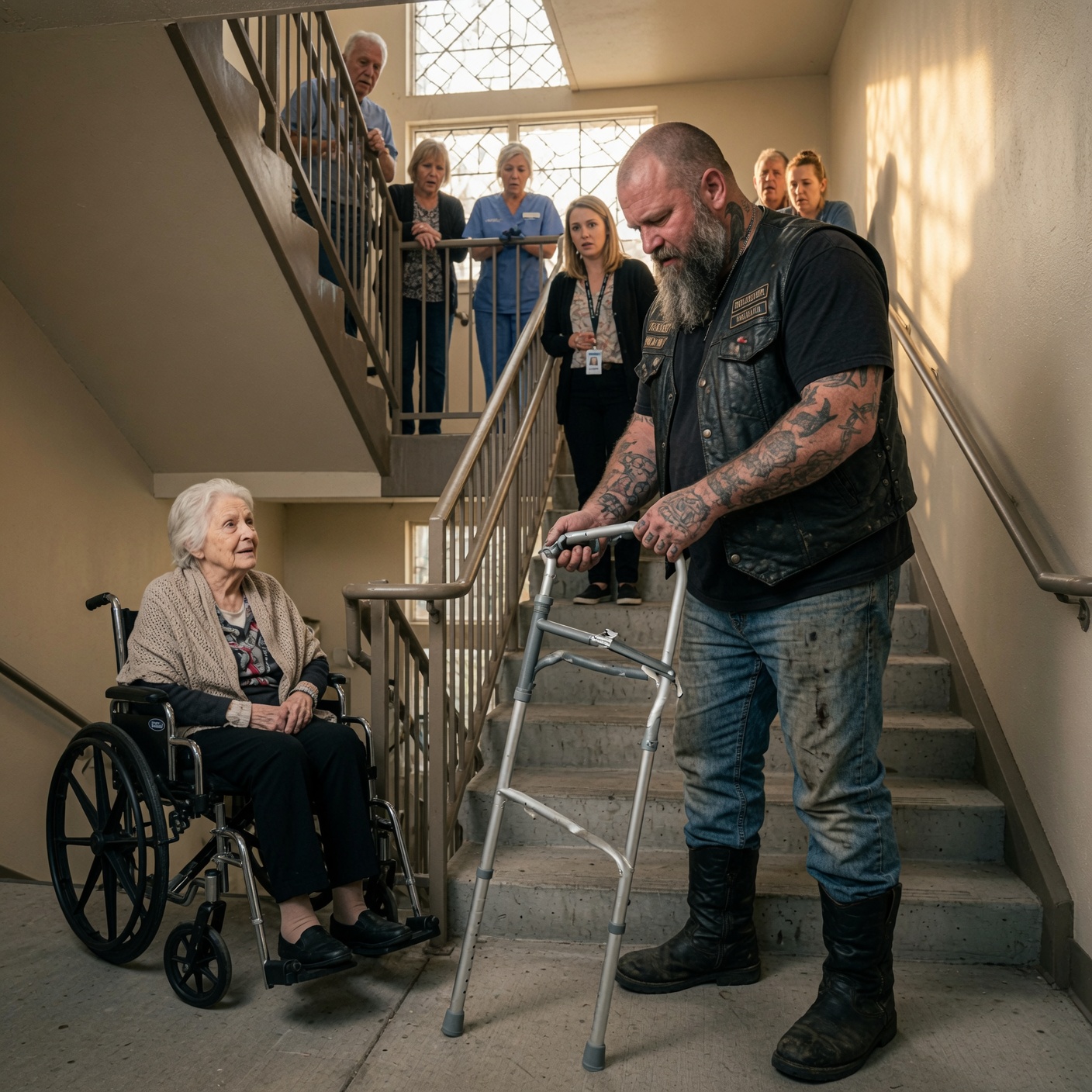
Before leaving, he reached into his truck and carried inside the broken rear leg from her old walker.
He had cleaned it.
Mounted it on a small wooden plaque.
Beneath it was a brass plate engraved with six words:
She wasn’t confused. She was right.
The plaque now hangs in the therapy department.
Every new employee sees it during orientation.
Not as a reminder of failure.
But as a promise.
That age should never silence someone’s voice.
That experience should never replace evidence.
And that sometimes the loudest act of love isn’t shouting…
It’s refusing to let someone explain away the truth.
Because Mason hadn’t thrown a walker out of anger.
He had broken a lie that had been holding together for years.
And once it shattered…
dozens of vulnerable lives became safer because one grandson chose to believe his grandmother when no one else would.
— THE END —