PART 2 — The Records They Tried to Bury
Nobody spoke.
Not even Karen.
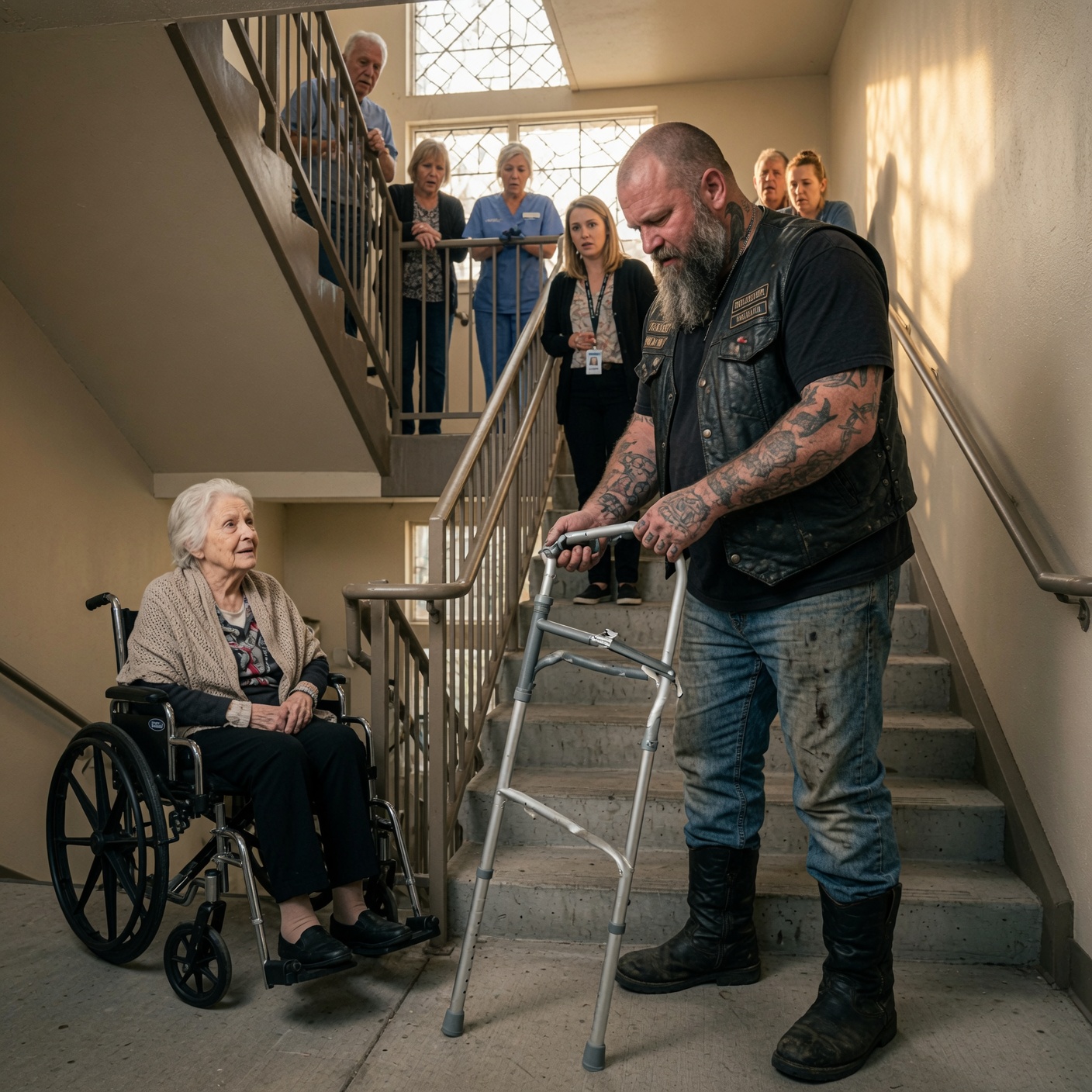
The fractured walker rested on the concrete landing between us like a witness that could no longer be ignored.
Mason carefully slipped the broken leg into a plastic evidence bag he had taken from his truck.
He didn’t hand it to anyone.
He simply looked at Karen.
“I’m not taking this.”
“I’m making sure nobody else does.”
Within an hour, investigators from the state’s long-term care division arrived.
The police came with them.
Not because Mason had thrown the walker.
Because several employees had quietly called after seeing the crack inside the metal.
One of those calls came from me.
Karen insisted the damage had happened when Mason threw the walker.
But the lead investigator shook his head after examining the fracture.
“This crack has oxidation.”
“It wasn’t created today.”
He looked directly at Karen.
“Someone painted over structural damage.”
While investigators photographed the broken frame, Mason asked a simple question.
“Can I see the maintenance logs?”
Karen refused.
“Those are confidential.”
The investigator answered for her.
“Not anymore.”
The maintenance office sat in the basement.
It smelled of old paint and machine oil.
Cabinets lined one wall.
Maintenance supervisor Greg Nolan unlocked them with trembling hands.
The records looked perfect.
Too perfect.
Every walker.
Every wheelchair.
Every shower chair.
All inspected.
All marked safe.
Every single month.
Without exception.
Mason flipped through the paperwork.
Then stopped.
He held two pages side by side.
“These signatures are identical.”
Greg frowned.
“So?”
“They’re dated six months apart.”
Mason had spent twenty years signing repair certifications for industrial cranes.
He knew something most of us didn’t.
No human signs their name exactly the same way twice.
The signatures had been photocopied.
Again.
And again.
And again.
The investigator immediately ordered every mobility device checked against its serial number.
Employees wheeled walkers into the therapy gym.
Residents watched quietly.
Some looked confused.
Others looked afraid.
Then another therapist gasped.
“This one moves.”
A second walker wobbled.
Then a third.
One by one, hidden cracks began appearing beneath fresh gray paint.
Some had been welded.
Others wrapped with matching tape.
One had a bolt holding together a section that should never have been repaired at all.
Seven walkers.
Three shower chairs.
Two transport wheelchairs.
Every one of them had been listed as “new” in the purchasing records.
None actually were.
The purchasing invoices revealed something even worse.
Willow Creek had billed insurance companies and families for brand-new equipment.
Instead…
old damaged devices had been cosmetically repaired.
The difference amounted to hundreds of thousands of dollars over several years.
Residents had unknowingly trusted equipment that should have been discarded long ago.
That evening, I found Mason sitting beside Eleanor in the garden.
She was eating butterscotch candy.
He had already loosened the wrapper for her.
“I’m sorry they didn’t believe you,” he said softly.
She smiled.
“You did.”
He looked down.
“I almost didn’t.”
“What changed?”
Mason held up his scarred hands.
“I repair steel.”
“When steel whispers…”
“…I listen.”
Just then, the lead investigator approached.
“We’ve identified who ordered the inspection stickers replaced.”
Mason looked up.
“It wasn’t Karen.”
“It was someone higher.”
The owner of Willow Creek had approved every purchase himself.
And he was already driving toward the facility.
— END OF PART 2 —