PRESERVING TRUTH FROM THE DARKNESS: THE HEROIC REALITY BEHIND NETFLIX’S ‘THE PHOTOGRAPHER OF MAUTHAUSEN’
The Viral Teaser vs. The Historical Reality
A high-energy promotional caption has circulated widely across social media timelines, proclaiming that Netflix viewers have been captivated by “one of the most heartbreaking war dramas they’ve ever seen.” Formatted with siren emojis and dramatic suspense framing, the post describes a prisoner inside the walls of Mauthausen concentration camp who “risked everything to secretly preserve evidence of the atrocities unfolding around him.” It teases a narrative of courage and sacrifice where “one hidden piece of evidence could change everything,” concluding with a call to “Watch below and discover the story that refuses to be forgotten.”
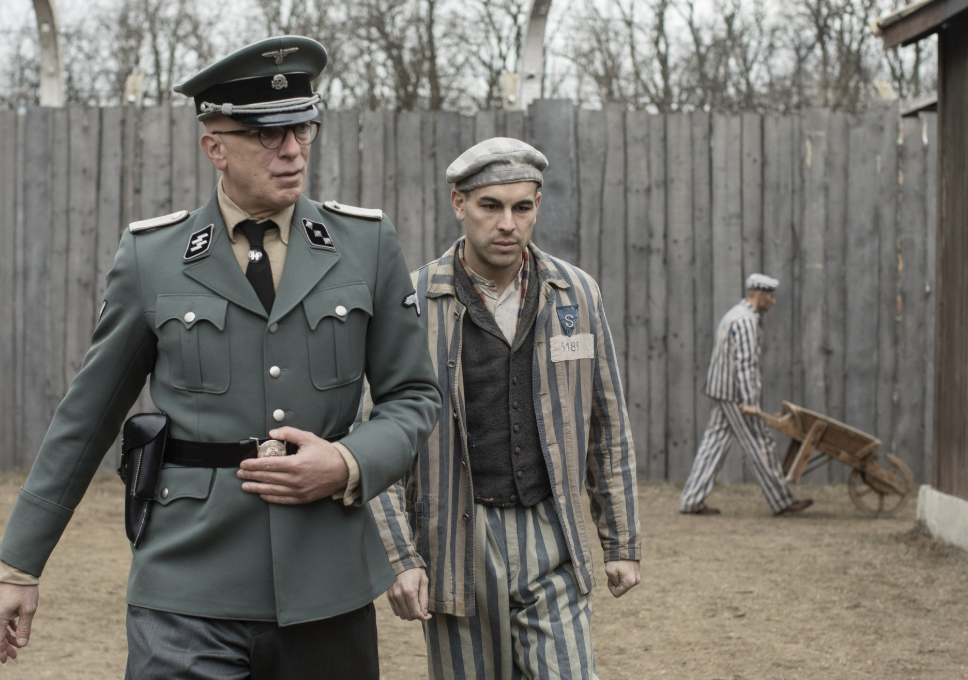
While online promotional campaigns frequently utilize clickbait language to drive video plays and engagement, the historical event behind this specific film is profoundly real. The movie being referenced is The Photographer of Mauthausen (El fotógrafo de Mauthausen), a Spanish historical biographical drama directed by Mar Targarona and starring Mario Casas.
Far from being a Hollywood fabrication, the film recounts the extraordinary true story of Francisco Boix—a young Spanish Republican soldier and photographer who managed to steal and hide thousands of photographic negatives from the SS inside one of Nazi Germany’s most notorious death camps. His bravery provided undisputed photographic evidence during the Nuremberg Trials, ensuring that the perpetrators of industrial mass murder could not deny their crimes.
Inside the Granite Quarry: The Brutal World of Mauthausen
To appreciate the gravity of the film’s narrative, one must understand the specific horrors of Mauthausen concentration camp, located in Upper Austria.
Established in 1938 shortly after the Anschluss, Mauthausen was designated as a Category III camp—a “Grade III” facility reserved for what the Nazi regime classified as “Incorrigible Political Enemies of the Reich.” It was intended to be a camp of extermination through labor (Vernichtung durch Arbeit). Prisoners were worked to death in the nearby granite quarry, forced to carry 100-pound granite slabs up the notorious “Stairs of Death” (186 steep steps) under the whips and rifle butts of SS guards.
Among the camp’s population was a distinct group of over 7,000 Spanish Republicans. Having fled Spain following the defeat of the Second Spanish Republic in the Spanish Civil War, these men were captured in France by the Wehrmacht during the 1940 invasion and stripped of their nationality by Franco’s regime. Labeled with the blue inverted triangle of stateless political prisoners, the Spanish inmates suffered staggering mortality rates, with over 4,400 perishing in the camp.
Francisco Boix and the Erkennungsdienst
Born in Barcelona in 1920, Francisco Boix was a skilled photographer who had worked for Republican newspapers during his youth. Because of his technical expertise, Boix was assigned to the camp’s Erkennungsdienst (Identification Service), a specialized administrative unit overseen by SS-Hauptscharführer Paul Ricken.
The Erkennungsdienst was responsible for taking identification photographs of incoming prisoners, official portraits of SS personnel, and documenting administrative events. Crucially, Ricken and his team were also instructed to photograph prisoners who were killed—recording suicides, fatal shootings on the perimeter fences, and alleged escape attempts.
Ricken, an amateur photographer with a macabre aesthetic obsession, often staged these gruesome crime scenes, capturing detailed images of dead and dying inmates. In doing so, the SS inadvertently created an undeniable visual catalog of their own atrocities, documenting systemic executions, medical experiments, and torture.
Recognizing the immense value of these images, Boix realized that if the Allied forces liberated the camp, the SS would destroy all photographic records to eliminate evidence. In 1943, as the tide of World War II began to turn, Boix and a covert network of Spanish communist prisoners formulated a dangerous plan: they would systematically steal glass plates and film negatives from the photo lab and smuggle them out of the camp.
The Resistance Network and the Smuggling of Negatives
The theft of the negatives was an operation carried out at the constant risk of public execution. Over two years, Boix and his fellow inmates—including Antoni Garcia and José Cereceda—stole roughly 2,000 to 20,000 film negatives from the Erkennungsdienst files.
Safely concealing thousands of delicate film strips inside a heavily guarded concentration camp required an intricate, multi-tiered underground logistics network:
-
Internal Hiding Places: Initially, prisoners hid the stolen negatives inside woodwork gaps, floorboards, and electrical fittings within the administration barracks.
-
The Poschacher Cadets: The breakthrough occurred when a group of young Spanish teenage prisoners—known as the Poschacher group—were assigned to daily forced labor outside the camp perimeter at a local stone quarry.
-
The Austrian Civilian Connection: The young couriers managed to smuggle the negatives outside the gates inside their clothing. They delivered the film strips to Anna Pointner, a courageous local Austrian communist woman living in the nearby village of Mauthausen. Pointner hid the bundle of negatives inside a hollowed-out section of her garden wall, keeping them safe until the end of the war.
When American troops from the 11th Armored Division liberated Mauthausen on May 5, 1945, Boix retrieved the hidden negatives from Anna Pointner’s garden. He immediately acquired a camera and began taking photographs of the newly liberated camp, capturing the skeletal survivors, the piles of unburied bodies, and the joy of liberation.
The Nuremberg Impact: Photography as Unassailable Proof
The ultimate climax of Francisco Boix’s mission did not occur behind barbed wire, but in a courtroom in Germany. In 1946, Boix was called as a witness during the International Military Tribunal at Nuremberg—the only Spanish citizen to give official testimony at the primary war crimes trials.
During his testimony on January 28 and 29, 1946, Boix presented the smuggled photographs before the international tribunal. The visual evidence was devastating to the defense strategies of top Nazi leaders:
-
Exposing Ernst Kaltenbrunner: SS-Obergruppenführer Ernst Kaltenbrunner, chief of the Reich Main Security Office (RSHA), had claimed under oath that he had never visited Mauthausen and had no knowledge of its extermination practices. Boix produced clear photographs showing Kaltenbrunner smiling alongside SS chief Heinrich Himmler while inspecting the Mauthausen granite quarry.
-
Refuting Albert Speer: The photos similarly disproved claims made by Armaments Minister Albert Speer regarding his ignorance of camp conditions, showing senior officials casually touring the facility alongside working prisoners.
The photographic evidence secured by Boix proved beyond a shadow of a doubt that the highest echelons of the Nazi government were fully aware of and actively participated in the horrors of the concentration camp system.
Beyond the Binge: Viewing Historical Cinema Critically
The success of The Photographer of Mauthausen on streaming platforms demonstrates how cinematic storytelling can rescue forgotten historical heroes from obscurity. Mario Casas’s committed performance—for which he lost over 25 pounds to accurately portray an inmate—captures the psychological tension of a man navigating the daily threat of death while fighting to preserve history.
While social media clickbait often packages these stories as thrilling suspense dramas designed for rapid consumption, audiences are encouraged to engage with the actual historical scholarship behind the film. Francisco Boix passed away in Paris in 1951 at the young age of 30, his health permanently damaged by his time in Mauthausen. His legacy lives on in the archives of history—a testament to the power of truth recorded through a camera lens.