DECONSTRUCTING THE ‘DOLLY PARTON FINAL SALUTE’ DISINFORMATION HOAX
THE ANATOMY OF NASHVILLE CLICKBAIT: DECONSTRUCTING THE ‘DOLLY PARTON FINAL SALUTE’ DISINFORMATION HOAX
Deconstructing the Sensationalist Teaser
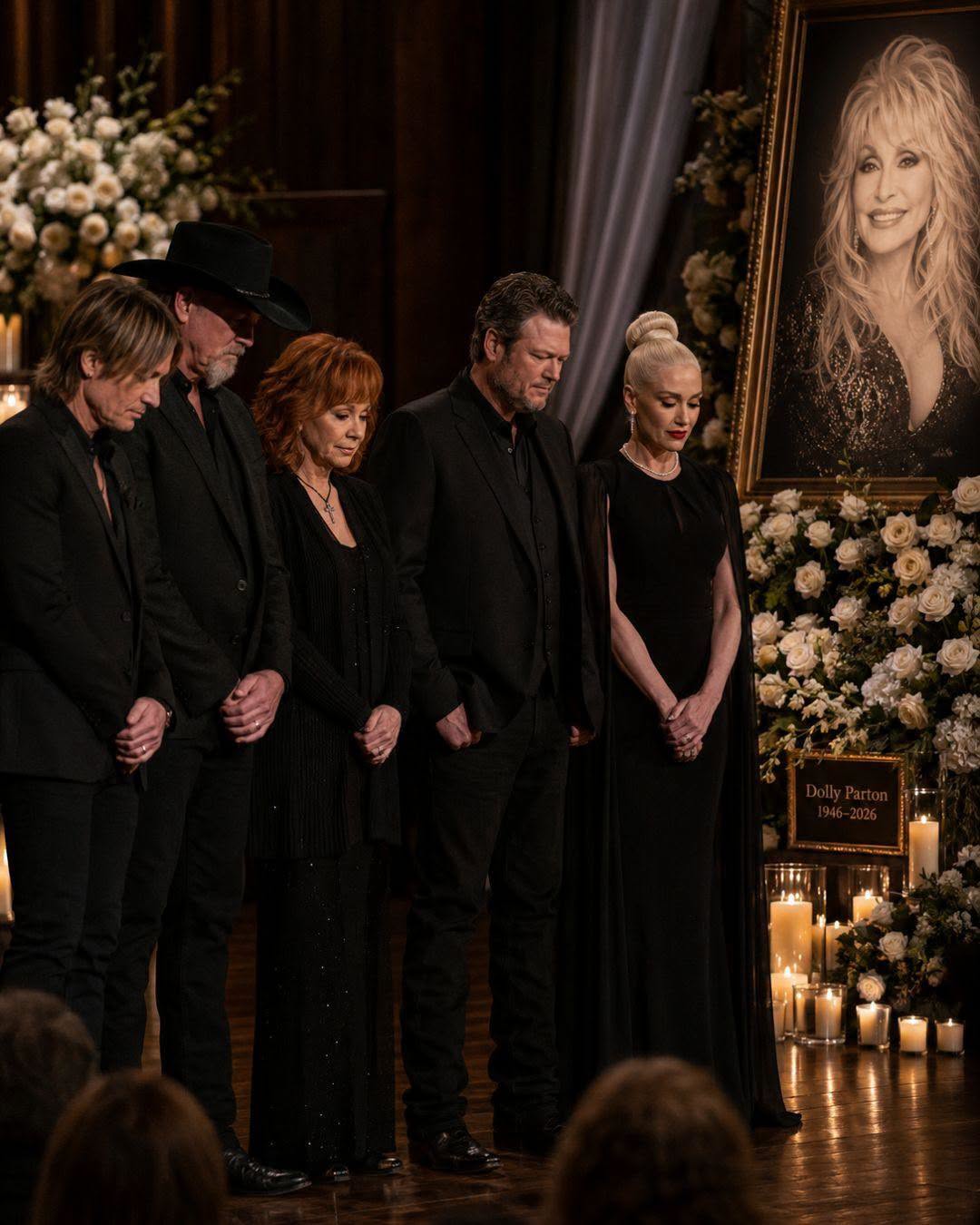
A hyper-dramatic advertisement recently began proliferating across automated entertainment channels, country music fan forums, and social media feeds, declaring in alarmist headlines: “🚨 THE FINAL SALUTE TO DOLLY PARTON: A SILENCE THAT SHOOK NASHVILLE! In an unforgettable tribute, Keith Urban, Trace Adkins, Reba McEntire, Blake Shelton, and Gwen Stefani stood side by side beneath the heavy weight of Dolly Parton’s memory. Representing every generation and musical style she influenced, the five icons stood completely motionless. No microphones were lifted, no applause echoed, and no encore was performed. But just as the room fell into absolute silence, Blake Shelton unexpectedly reached into his jacket and pulled out a sealed, secret envelope… 👉 Click to watch the full unedited footage now”
Packed with emergency siren emojis, somber language evoking a funeral or solemn memorial, a stacked ensemble of country music megastars, and a dramatic “secret envelope” cliffhanger, the post presents itself as an extraordinary historical moment in Grand Ole Opry or Nashville history. However, despite its atmospheric framing and emotionally charged narrative claims, every element of this teaser represents a complete digital fabrication. Country music legend Dolly Parton is alive and active, no such silent vigil took place among her peers, and Blake Shelton never pulled a mystery envelope from his jacket before a silent auditorium. Instead, this post represents a sophisticated form of digital entertainment fraud: an automated, narrative-driven clickbait template engineered to exploit fan reverence for living icons, generate morbid curiosity, and harvest web traffic for predatory ad-arbitrage networks.
Fact-Checking Country Music Reality vs. Synthetic Memorial Hoaxes
To understand the deceptive mechanics of this clickbait campaign, one must contrast its dramatic assertions with the factual reality of country music history, celebrity news reporting, and public publicist records.
The post relies on deliberate star-aggregation, soft death-hoaxing, and cinematic mystery tropes to trick casual fans:
-
Soft Death-Hoaxing via Ceremonial Imagery: Phrases like “THE FINAL SALUTE,” “stood side by side beneath the heavy weight of Dolly Parton’s memory,” and “the room fell into absolute silence” are carefully crafted to mimic the solemnity of a memorial service or posthumous tribute. While avoiding a direct, actionable libel claim of stating “Dolly Parton has died,” the post intentionally tricks scrollers into believing a beloved legend has passed away. In reality, Parton remains an active cultural figure, philanthropist, and recording artist.
-
The Multi-Star Keyword Aggregation Strategy: By assembling a fake cast featuring Keith Urban, Trace Adkins, Reba McEntire, Blake Shelton, and Gwen Stefani, the content mill optimizes its post for social media algorithms. Combining six of the biggest names in modern country music into a single narrative allows the spam network to capture search traffic and user feeds across multiple overlapping fan demographics simultaneously.
-
The ‘Sealed Envelope’ MacGuffin: Introducing a physical mystery object—a “sealed, secret envelope”—is a classic narrative technique borrowed from melodrama and screenwriting. It creates an artificial “MacGuffin” that compels curious readers to click the link to find out what was inside, even though no such envelope or ceremony ever existed.
The Psychological Hooks of Celebrity Tribute Hoaxes
The structural design of the “Final Salute to Dolly Parton” teaser relies on refined cognitive manipulation techniques engineered to bypass critical skepticism and provoke immediate online action.
Digital content mills deploy specific psychological triggers when crafting fake celebrity memorial announcements:
1. Cultural Icon Reverence and Emotional Shock
Dolly Parton is widely considered an irreplaceable cultural institution whose influence spans generations. By framing a scene around her “memory” and the grief of her peers, the post induces an immediate emotional jolt, lowering the audience’s logical skepticism and priming them for impulsive clicking.
2. Cinematic Imagery and Atmosphere Building
The text deliberately paints a vivid, theatrical picture: icons standing “completely motionless,” “no microphones lifted,” and “no applause.” This atmospheric storytelling makes the scene feel like an iconic, unscripted moment of television history, convincing scrollers that they missed an historic broadcast.
3. Visual Urgency and Directional Priming (🚨 / 👉 Emojis)
The inclusion of high-contrast emergency emojis—red flashing beacons (🚨) and pointing fingers (👉)—activates visual urgency. These elements pull the reader’s focus away from evaluating the logical plausibility of the headline and direct physical attention toward the external link trap.
4. Algorithmic Engagement Feedback Loops
When anxious fans enter the comment section asking “Did Dolly pass away?” or “What was in Blake’s envelope?”, social media recommendation engines interpret the surge of comments as high user engagement. Consequently, the platform’s algorithm promotes the fake post into thousands of additional feeds.
The Monetization Funnel: Ad Arbitrage and Link Traps
Behind these sensationalized music headlines lies a lucrative business model known as traffic arbitrage, digital impression farming, and click-fraud networking.
When scrollers tap the “👉 Click to watch” link expecting to view unedited video footage, they are never directed to an official video broadcast or accredited music news outlet like Billboard, CMT, or The Grand Ole Opry. Instead, the user journey follows a deceptive web funnel:
-
Redirect Chains to Scraper Sites: Users are routed through multiple URL shorteners to low-quality scraper blogs packed with pay-per-click display banner advertisements, auto-playing video commercials, and pop-unders.
-
Endless Slideshow Traps: Destination pages often force readers to click through dozens of slideshow pages repeating generic biographical facts about Reba McEntire or Blake Shelton before revealing—at the very end—that no secret envelope exists and Dolly Parton is fine.
-
Cybersecurity Hazards: In predatory cases, destination sites push invasive push-notification subscription traps, deceptive scareware pop-ups claiming device infection, or phishing forms designed to harvest personal information.
Digital Media Literacy: Navigating Music Industry News
The widespread proliferation of manufactured celebrity memorial posts highlights the ongoing necessity of digital media literacy when following music and entertainment news online.
To protect themselves from falling victim to fake celebrity updates and digital ad schemes, audiences should adopt key verification habits:
-
Cross-Reference with Major Music Outlets: Major events in Nashville, especially tribute concerts or announcements involving major stars, are instantly covered by mainstream trade publications like Billboard, CMT, Rolling Stone, or official venue accounts.
-
Recognize Dramatic Clickbait Patterns: Be skeptical of posts using vague, cinematic phrasing like “final salute,” “absolute silence,” or “secret envelope” without citing specific dates, broadcast networks, or verified venues.
-
Avoid Unverified External Links: Refrain from clicking “watch footage” links in suspicious social media comments, non-verified pages, or sponsored clickbait widgets.
-
Refrain from Engaging with Fake Posts: Avoid commenting on, liking, or sharing unverified celebrity posts. Every interaction provides engagement metrics that allow clickbait creators to profit from digital spam.
Understanding how automated content networks capitalize on fan devotion and celebrity news allows music lovers to navigate the digital media landscape critically without being manipulated by algorithmic click schemes.