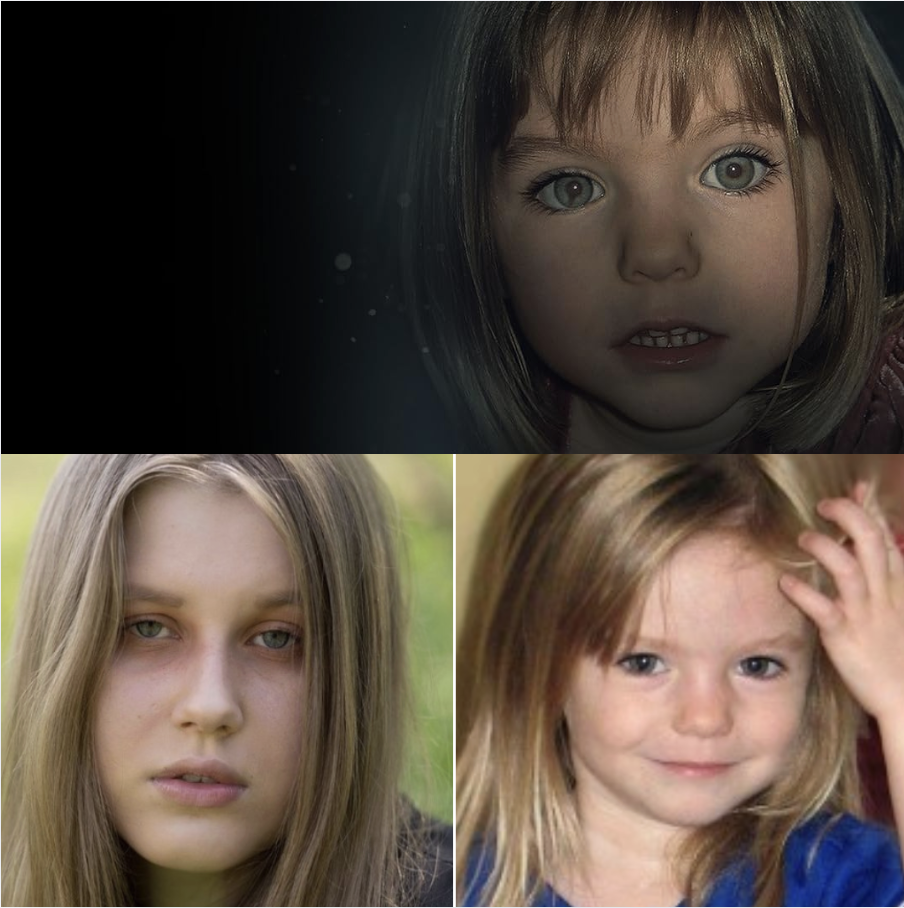
NEW DEBATE SURROUNDING THE Madeleine McCann CASE REIGNITES QUESTIONS ABOUT HOW Kate McCann WAS TREATED DURING THE INVESTIGATION 🕵️♂️
Nearly two decades after the disappearance of Madeleine McCann shocked the world, renewed discussion surrounding the investigation has once again placed intense focus on the treatment of her parents — particularly her mother, Kate McCann.
The case, which began after Madeleine vanished from a holiday apartment in Praia da Luz, Portugal, in 2007, remains one of the most widely followed missing-child investigations in modern history.
But despite years of international media coverage, documentaries, books, and police inquiries across multiple countries, fierce public debate still surrounds how the investigation unfolded during its most chaotic early stages.
Now, fresh commentary from legal analysts, former investigators, and forensic specialists has reignited questions about whether the intense pressure placed on Kate McCann during the investigation may have shaped public perception in ways that continue lasting today.
At the center of the renewed discussion are longstanding controversies involving the handling of evidence, media leaks, and the interpretation of cadaver-dog alerts used during the Portuguese investigation.
At one stage in 2007, Kate and Gerry McCann were formally named “arguidos” — a Portuguese legal status roughly translating to official suspects or persons of interest. That development triggered a global media frenzy and immediately shifted public attention toward the parents themselves.
For many observers at the time, the move dramatically altered the narrative surrounding the case.
Supporters of the McCanns have long argued that investigators became overly focused on the parents without obtaining conclusive evidence linking them to Madeleine’s disappearance.
Critics of the investigation also point to the enormous media pressure surrounding the case, suggesting authorities faced intense public demand to produce answers quickly amid worldwide scrutiny.
Now, recent commentary from independent forensic analysts examining historical reports related to the K9 searches has revived debate over how some of the evidence was interpreted publicly.
Importantly, experts continue emphasizing a crucial legal distinction often misunderstood by the public:
Cadaver-dog alerts alone are not considered definitive proof of a crime.
Specialist dogs may identify scents associated with decomposition or biological traces, but their alerts generally require corroborating forensic evidence to support criminal conclusions.
Several legal analysts reviewing the case have argued that public understanding of those alerts became distorted over time through sensational media coverage.
That issue remains deeply emotional because public suspicion surrounding Kate McCann intensified dramatically after reports about the dogs emerged during the original investigation.
Supporters of the family say the resulting speculation created years of devastating scrutiny that permanently reshaped the McCanns’ lives despite the absence of charges against them.
Meanwhile, critics of the original investigation argue that certain investigative decisions may have unintentionally amplified conspiracy theories rather than resolving uncertainty.
The broader issue now being debated is not whether police should investigate parents in missing-child cases — experts agree that family members are routinely examined during major investigations — but whether the public framing of the McCanns created lasting assumptions unsupported by final evidence.
Some analysts believe the enormous international attention surrounding the case transformed normal investigative procedures into worldwide spectacle.
Every facial expression.
Every interview.
Every inconsistency.
Every rumor.
All of it became subject to intense global analysis in real time.
That media environment, experts say, may have blurred the line between investigative scrutiny and public presumption of guilt.
The emotional toll on the McCann family has remained a recurring topic in documentaries and interviews over the years.
Kate McCann has spoken publicly about the psychological trauma of not only losing a child, but also enduring relentless suspicion while continuing to search for answers herself.
Meanwhile, official investigations into Madeleine’s disappearance have evolved repeatedly over time.
German authorities later identified convicted sex offender Christian Brückner as a key suspect in the case, though no final resolution has yet been reached and he denies involvement.
That development shifted investigative focus significantly away from earlier speculation surrounding the parents.
Still, debate over the original handling of the case refuses to disappear.
Partly because the Madeleine McCann investigation became more than a criminal inquiry.
It became a global media phenomenon that shaped how modern missing-person cases are consumed publicly.
And partly because unresolved mysteries naturally generate competing narratives when definitive answers remain absent.
Now, renewed examination of the investigative process itself is causing many observers to reconsider how quickly public suspicion can harden during emotionally overwhelming cases.
Especially when incomplete forensic evidence, media pressure, and global attention collide all at once.
Whether future developments will finally bring clarity to the disappearance of Madeleine McCann remains uncertain.
But one thing continues haunting the case after all these years:
The search for truth became inseparable from the struggle over perception itself — and for many people following the investigation, that distinction may have changed everything.