MODERN CINEMA HAS FORGOTTEN HOW TO PORTRAY TRUE MASCULINITY AND UNYIELDING LOYALTY
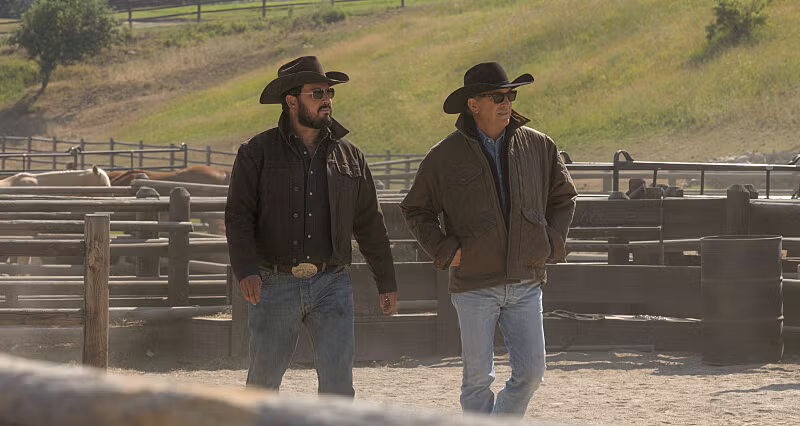
Created by Taylor Sheridan, Yellowstone (2018–2024) follows the Dutton family as they defend their sprawling cattle ranch bordering Yellowstone National Park. At its helm is John Dutton III (Costner), a man whose life revolves around preserving his family’s legacy amid political intrigue, corporate greed, and personal betrayals. Rip Wheeler (Hauser), the ranch foreman and John’s chosen “good son” in spirit if not blood, embodies the enforcer role with quiet ferocity—loyal to the core, protective of the weak within his circle, and unflinching in the face of violence when necessary.
The series thrives on high-stakes family drama intertwined with the visceral realities of ranch life: branding cattle, mending fences, and confronting existential threats to a way of life. It is not mere escapism; it mirrors real tensions in the American West, where generational ranchers battle rising costs, development pressures, and cultural shifts. Themes of land stewardship, familial duty, and self-reliance run through every episode, offering a counter-narrative to urban-centric stories that prioritize individualism over communal bonds or deconstruct heritage as oppressive.
John Dutton represents the stoic patriarch archetype, a figure reminiscent of classic Western icons like those played by John Wayne. His moral dilemmas—balancing ruthlessness with paternal love—humanize him without softening his resolve. Rip, meanwhile, is the epitome of earned loyalty. Orphaned young and taken in by the Duttons, he repays that debt through unwavering service. Fans often describe him as the ideal of “old-school manhood”: fiercely protective, respectful, and unapologetically masculine. His relationship with Beth Dutton (Kelly Reilly) further underscores this—passionate, codependent in its intensity, yet grounded in mutual respect and shared warrior spirit.
What sets Yellowstone apart is its refusal to pathologize these traits. In many modern productions, stoicism is labeled repression, protectiveness toxic, and physical competence archaic. Here, they are virtues essential for survival. The show’s popularity—drawing millions per episode and spawning spin-offs—suggests a cultural hunger for stories that affirm rather than undermine traditional roles.
The Erosion of Masculinity in Modern Cinema
Contrast this with the broader landscape of contemporary Hollywood. Superhero franchises dominate, yet even there, male leads often grapple with irony, emotional fragility as a primary arc, or subversion of heroic norms. Films frequently portray traditional masculinity as problematic—aggression as unchecked rage, authority as patriarchal oppression, and loyalty as blind obedience. Think of the proliferation of “deconstructed” heroes: men defined by their flaws, neuroses, or failures to meet outdated (read: traditional) standards.
This shift did not happen in isolation. Post-war cinema once celebrated stoic loners and honorable protectors. The 1970s–90s introduced nuance with characters like those in The Godfather or Unforgiven, exploring the costs of violence and duty. Today, however, many narratives seem intent on rewriting masculinity altogether—favoring vulnerability as strength while sidelining competence, resilience, and protective instinct. Critics point to ideological influences: a cultural push to dismantle “hegemonic” gender norms, often at the expense of compelling storytelling.
The result? A glut of forgettable blockbusters where male characters lack gravitas. Flashy CGI and quippy dialogue substitute for depth. Audiences, particularly men seeking models of purpose and brotherhood, turn elsewhere—to Yellowstone, classic Westerns, or even video games that allow agency and moral clarity. The show’s success proves that character-driven tales honoring “traditional grit” are not relics; they are vital.
Loyalty as the Ultimate Currency
At the heart of the image—and the series—is loyalty. In the corral, John and Rip walk side by side not as equals in title, but as allies in purpose. Rip’s devotion stems from choice, not obligation; he has internalized the Dutton brand as his own. This mirrors historical realities of ranching communities, where survival depended on tight-knit bonds and mutual defense. A man’s word meant something because reputation was currency in isolated frontiers.
Modern society often treats loyalty as negotiable—transactional relationships, fluid allegiances, and “self-care” above communal duty. Yellowstone challenges this. Betrayal carries severe consequences; fidelity elevates. Rip’s arc, from troubled youth to steadfast guardian, illustrates redemption through loyalty. It is not blind; it is discerning. He protects the innocent within his circle while confronting threats without mercy when required. This duality—tender with loved ones, formidable with adversaries—captures a fuller spectrum of manhood than sanitized portrayals allow.
Such dynamics echo older literature and film: the brotherly codes in Lonesome Dove, the frontier justice of Shane. They resonate because they tap into evolutionary and cultural truths—men as providers and protectors have shaped societies for millennia. Dismissing this as outdated ignores why audiences crave it amid economic uncertainty, family breakdown, and cultural atomization.
Broader Cultural Resonance and Critiques
Yellowstone has faced accusations of glorifying vigilantism or appealing narrowly to conservative audiences. Yet its viewership spans demographics, with strong female support for characters like Rip and the complex Beth. It is not propaganda but a drama that takes rural perspectives seriously, highlighting clashes between tradition and progress, preservation and development.
Real ranchers note the show’s dramatization—life on actual operations involves more mundane labor than dramatic showdowns—but affirm its capture of core struggles: legacy, land ethics, and resilience. In an era of remote work and digital disconnection, the tactile authenticity of horseback rides, cattle drives, and dusty confrontations offers grounding.
The editorial’s prompt rings true: this dynamic reminds us of a time when boundaries were guarded, not blurred. In Yellowstone, masculinity is not performative but functional—earned through action, tempered by consequence. It honors the “profound, character-driven storytelling” that built cinema’s golden eras.
Why It Matters Now
As sequels and expansions continue the Dutton saga, the image of Costner and Hauser endures as a cultural touchstone. In a fragmented world, it models brotherhood without irony: two men aligned in defense of something greater than themselves. Young viewers, adrift in narratives that question inherent value or purpose, find inspiration in Rip’s transformation and John’s stewardship.
Modern cinema’s forgetfulness stems partly from commercial risk-aversion and cultural gatekeeping, but audiences vote with their time. Hits like Yellowstone signal a demand for balance—stories that explore vulnerability without emasculation, strength without caricature.
Ultimately, true masculinity and unyielding loyalty are not forgotten relics but timeless necessities. They build families, defend homes, and sustain communities. As John and Rip walk that corral, they invite us to remember: in protecting what we love, we define ourselves. Hollywood would do well to recapture this spirit, lest it lose its audience entirely to the dust of more authentic tales.