STEPHEN GRAHAM’S DARKEST THRILLER YET: THE CHILLING REASON NO ONE SAW THIS COMING!
Netflix viewers and cinema audiences alike are buzzing with warnings about Good Boy (also known as Heel), the latest British psychological masterpiece that plunges into territory few crime dramas dare to explore. Directed by Jan Komasa, this 2025 black comedy-thriller stars Stephen Graham as a grieving father who kidnaps a ruthless teenage gang leader, setting off a chain of events that transforms a straightforward revenge tale into a deeply unsettling psychological nightmare.
The Setup: Justice or Something Far Darker?
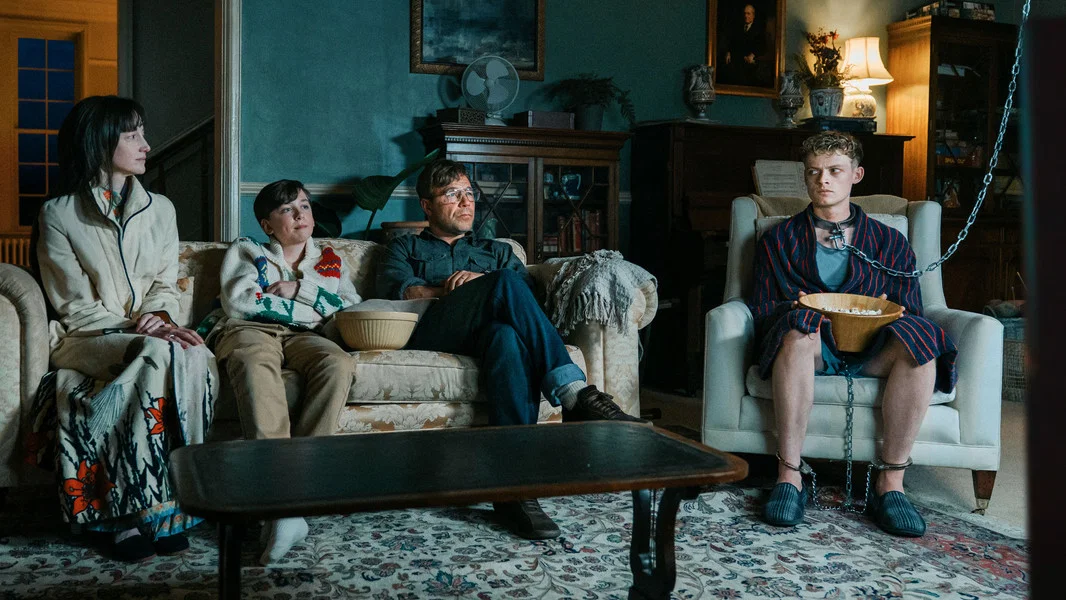
In the film’s opening moments, we meet Tommy (Anson Boon), a 19-year-old whirlwind of chaos. He’s a foul-mouthed, drug-fueled delinquent who thrives on violence, parties, and posting his antisocial exploits online. One night, after a particularly reckless bender with his girlfriend Gabby, Tommy is separated from his crew and snatched off the street. He awakens chained in the basement of a seemingly idyllic, isolated suburban home in Yorkshire, belonging to Chris (Stephen Graham) and his wife Kathryn (Andrea Riseborough).

Good Boy’ review: Stephen Graham and Andrea Riseborough reveal a twisted tale of parenting gone wrong
Chris is no ordinary vigilante. He’s a family man on a mission—not just to punish, but to reform. He forces Tommy to confront footage of his own depravity alongside wholesome family videos. Lectures, motivational talks, controlled beatings, and even a custom ceiling-track system that allows limited movement around the house become tools in this twisted rehabilitation program.

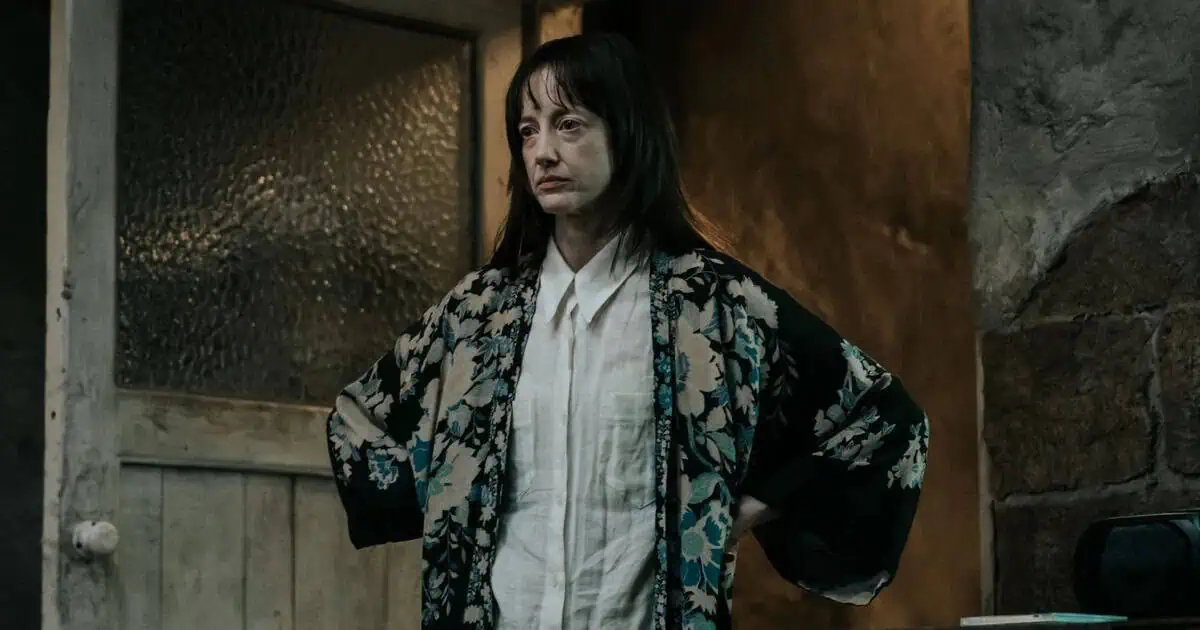
On the surface, Good Boy echoes classic captivity thrillers, but Komasa subverts expectations at every turn. Graham delivers a masterclass in quiet intensity. His Chris is soft-spoken yet terrifyingly resolute, blending paternal warmth with chilling control. Riseborough brings Kathryn to life as a near-spectral figure, while Boon starts as an abrasive force but gradually reveals vulnerability.
Descent into Psychological Terror
As the days turn into weeks, the power dynamics shift in unpredictable ways. Tommy’s aggression clashes with the family’s relentless “kindness.” Slowly, almost against his will, Tommy softens. He bonds with the young son Jonathan, helps with household tasks, and begins to see the appeal of this structured environment.
Yet the film never lets viewers forget the horror of the premise. Tommy is literally collared like a dog, confined, and manipulated. The psychological games escalate through long takes, claustrophobic basement shots, and the eerie normalcy of upstairs domestic life.

The Horrifying Secret: When Victim and Monster Blur
The caption teases a “disturbing reason why the line between victim and monster completely disappears,” and Good Boy delivers on that promise. The film reveals the family’s backstory: a devastating loss that motivated Chris’s radical actions. As Kathryn’s character closes in on the emotional truth, the narrative flips. Tommy’s transformation feels genuine at times, yet the methods remain monstrous.
In the ending, Tommy makes a choice that cements the film’s thesis: trauma begets trauma, and the impulse to “fix” others often reveals our own brokenness. The cycle continues. Victim becomes perpetrator; monster finds a new home.
Themes That Cut Deep & Why It’s Resonating
Good Boy asks provocative questions about rehabilitation, grief, and moral ambiguity. The black comedy elements provide levity, while strong performances anchor the emotional weight. Viewers report it leaves a lasting impact, sparking heated discussions about justice and humanity.
Final Verdict: A must-watch psychological tour de force that earns its place among the year’s most talked-about thrillers. The chilling reason no one saw this coming? Because it forces us to confront the monster within.