THE HEARTBREAKING NETFLIX TRUE-CRIME DRAMA THAT FEATURES KAITLYN DEVER IN A CRITICALLY ACCLAIMED MINISERIES
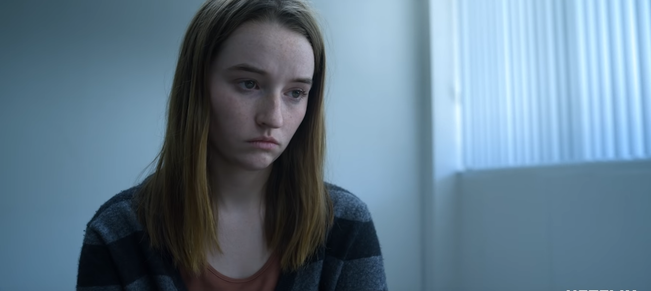
She built up the courage to report her assault, only to be treated like the criminal. On Netflix, Kaitlyn Dever delivers an unforgettable, devastating performance as Marie Adler, a young woman sitting in a cold interrogation room facing intense police disbelief. Forced into a corner by those meant to protect her, the shocking reality behind why she finally walked back her story proves more harrowing than fiction.
In 2019, Netflix released the eight-episode limited series Unbelievable, a true-crime drama that refuses the usual genre tropes of graphic reenactments or sensationalized chases. Instead, it lingers on the quiet, crushing aftermath of violence and institutional failure. At its center is Kaitlyn Dever’s extraordinary turn as Marie, an 18-year-old former foster child living independently for the first time in Lynnwood, Washington. What begins as a straightforward report of a home invasion rape quickly spirals into a second trauma inflicted by the very system designed to help her.
The series opens in the immediate hours after the attack. A masked man breaks into Marie’s apartment, threatens her with a knife, binds and gags her with her own belongings, assaults her, and photographs her while warning of further consequences if she speaks. She does the right thing: she calls the police. What follows is a masterclass in how trauma is misunderstood. Forced to recount the same details again and again to different officers, minor inconsistencies emerge—the natural product of shock, fear, and a fragmented memory. Detectives seize on them. Doubt hardens into suspicion. Marie, already navigating a difficult past in the foster system, finds herself under interrogation rather than protection.
Dever’s performance is the emotional core that makes the series impossible to shake. She plays Marie with a quiet, almost closed-off intensity—eyes that flicker between numbness and panic, a body language that conveys someone who has learned early that vulnerability can be dangerous. In the interrogation scenes, the camera holds on her as officers press, imply, and ultimately coerce. The moment she begins to recant is not presented as weakness but as the desperate calculation of a young woman who sees no other way out. The pressure is relentless. The adults around her, including figures from her foster history, begin to question her too. The system that should have believed her instead brands her a liar.
What makes Unbelievable especially powerful is its dual structure. While Marie’s life unravels in Washington—losing housing stability, facing charges for filing a false report, accepting a plea that includes a fine and counseling—the narrative shifts years forward and states away to Colorado. There, two determined female detectives (played with sharp, grounded skill by Toni Collette and Merritt Wever) begin investigating a string of strikingly similar attacks. Their methodical, empathetic approach stands in stark contrast to the earlier investigation. They listen. They connect patterns others missed. They treat survivors as credible sources rather than suspects.
The series is based on the real 2008–2011 Washington and Colorado serial rape cases, documented in the Pulitzer Prize-winning ProPublica and Marshall Project investigation “An Unbelievable Story of Rape” by journalists T. Christian Miller and Ken Armstrong. That reporting, later expanded into a book and a This American Life episode, carefully reconstructed how one young woman’s report was dismissed while a predator continued to operate across state lines. In real life, the woman known by her middle name, Marie, was charged after police concluded her account was fabricated. Only years later, when evidence recovered from the serial offender’s possessions included photographs matching her description of the assault, was the truth undeniable. She received a formal apology and later settled a lawsuit against the city.
Unbelievable does not dwell on the perpetrator. The focus remains on the survivors and the investigators who eventually got it right. This choice elevates the series beyond standard true-crime fare. It becomes a study of how belief—or the refusal to believe—shapes lives. Trauma does not produce perfect, consistent testimony. Memory under extreme stress is imperfect. Yet the expectation of flawless recall has long been used to discredit those who come forward. The show makes that systemic failure visceral.
Critics recognized the achievement immediately. The series earned a 98% score on Rotten Tomatoes and widespread praise for its restraint, writing, and performances. Dever’s work, in particular, was singled out as career-defining—raw without being showy, precise in its depiction of someone both shattered and resilient. Collette and Wever received equal acclaim for portraying detectives who combine professional competence with genuine humanity. The production collected a Peabody Award and multiple nominations at the Emmys, Golden Globes, and Critics’ Choice Awards.
What lingers after the final episode is not only the resolution of the case but the cost of the years in between. Marie’s vindication arrives long after the damage has been done—to her sense of safety, her trust in institutions, and her relationships. The series refuses easy catharsis. Justice arrives, but it cannot erase the original betrayal by those sworn to protect.
Years later, Unbelievable remains one of the most effective true-crime dramas of the streaming era precisely because it prioritizes the survivor’s perspective over procedural thrills. Dever’s Marie is not a symbol or a plot device. She is a specific young woman navigating an impossible situation with limited power and even less support. The interrogation room scenes feel almost unbearable because they capture something real: the moment when speaking the truth becomes more dangerous than silence.
The series stands as both a gripping investigation and a quiet indictment. It asks viewers to sit with the discomfort of watching someone be systematically disbelieved, then to recognize how often that pattern has played out beyond the screen. Kaitlyn Dever’s performance ensures that the question is not easily forgotten. In a cold room under fluorescent lights, a young woman tries to make herself heard. The tragedy is how long it took for anyone to truly listen.