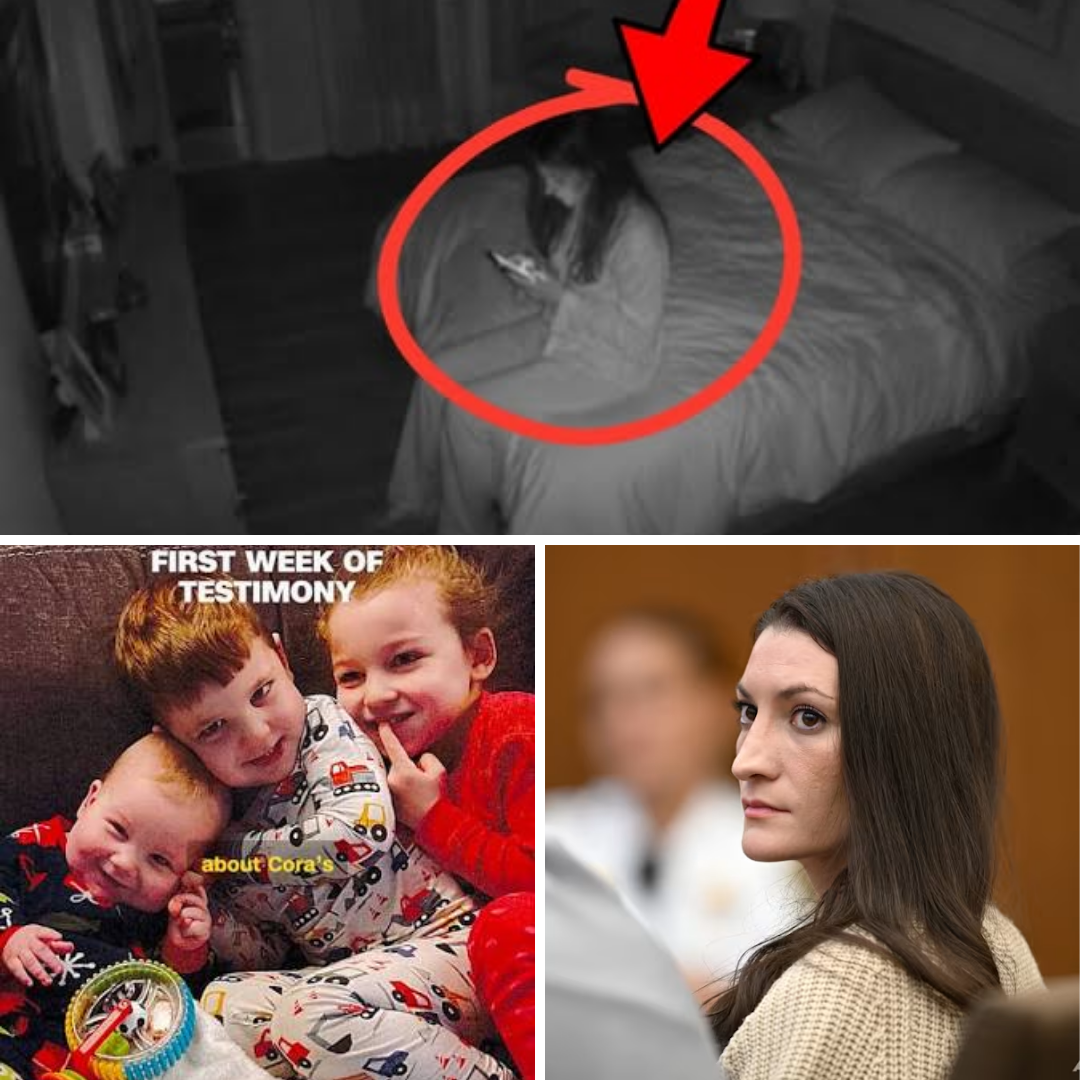
CALCULATED TIMELINE OR PSYCHOTIC DISSOCIATION: DECONSTRUCTING THE DIGITAL FORENSICS IN THE LINDSAY CLANCY TRIAL
Deconstructing the Sensational Clickbait Teaser
A breathless headline recently exploded across true-crime channels and social media feeds, claiming that prosecutors had unveiled “chilling digital breadcrumbs” in the murder trial of Lindsay Clancy. Embellished with alarm emojis and dramatic phrasing, the viral post asserted that data extraction reports revealed how the 35-year-old former labor and delivery nurse actively calculated a precise “25-minute window of complete isolation” by searching restaurant delivery times and mapping routes. It teased a dramatic courtroom moment where the lead prosecutor projected her final phone search onto the wall, alleging it proved a hidden motive just before her husband drove away.
While social media content aggregators routinely embellish real courtroom proceedings with dramatic tropes to farm clicks and capitalize on true-crime fascination, this viral hook stems from actual forensic testimony delivered in Plymouth Superior Court in Massachusetts. State police digital investigators indeed analyzed Lindsay Clancy’s iPhone, Microsoft Surface Pro, and Apple Watch data to reconstruct a minute-by-minute timeline of January 24, 2023—the night her three young children, Cora, Dawson, and Callan, were killed. However, stripping away the hyperbole of internet sensationalism exposes a far more complex legal battle between prosecution claims of premeditated control and defense evidence of a devastating postpartum mental health crisis.
The Digital Trail: Apple Maps, Takeout, and the 25-Minute Window
The factual foundation of the prosecution’s digital evidence relies on cell phone extractions and internet browsing history recovered from the Clancy household. During court proceedings, Massachusetts State Police cybercrime experts detailed the exact digital sequence of events during the late afternoon of January 24, 2023:
-
4:02 PM: Lindsay performed a Google search on her phone for “kids Miralax” and subsequently utilized Apple Maps to check the driving time between her Duxbury residence and ThreeV, a restaurant located in Plymouth.
-
4:47 PM: She accessed the CVS website and placed a phone call to a local pharmacy in Kingston to confirm whether they stocked children’s laxatives. The store manager later testified that Lindsay’s tone of voice was completely routine and calm.
-
4:53 PM: Lindsay sent a text message to her husband, Patrick, asking if he would pick up takeout dinner from ThreeV. When Patrick suggested a closer dining option, she requested ThreeV specifically and asked him to review the online menu.
-
5:10 PM: She called ThreeV directly to place the food order. Surveillance video later confirmed Patrick entering CVS at 5:32 PM and arriving at ThreeV at 5:54 PM, creating a physical absence from the home that lasted approximately 25 to 30 minutes.
The Prosecution Case: Proving Premeditation and Rational Control
In Massachusetts criminal law, establishing first-degree murder requires proving deliberate premeditation and that the defendant was criminally responsible—meaning they understood the wrongfulness of their conduct and possessed the capacity to conform their behavior to the law.
Assistant District Attorneys Jennifer Sprague and Shanan Buckingham pointed to these digital interactions as the cornerstone of their argument. The state contended that Lindsay’s deliberate selection of a restaurant further away from their home was a calculated strategy to guarantee an uninterrupted window of solitude. Prosecutors argued that searching drive times on Apple Maps demonstrated spatial awareness, logical foresight, and executive functioning inconsistent with a person undergoing an acute psychotic break.
Furthermore, prosecutors highlighted broader digital extractions from her devices spanning the months prior to the tragedy. These records revealed internet searches for suicide methods, psychiatric side effects, and queries such as “can you treat a sociopath?” made four days before the deaths. The state framed Lindsay as a methodical, detail-oriented mother who felt overwhelmed by domestic life and executed a planned act of violence before attempting to fake a suicide jump from her second-story window.
The Defense Rebuttal: Postpartum Psychosis, Intrusive Thoughts, and Overmedication
Representing Lindsay Clancy, defense attorney Kevin Reddington offered a radically different interpretation of the exact same digital footprint. The defense maintained that Lindsay was experiencing severe postpartum depression, undiagnosed bipolar disorder, and postpartum psychosis—a rare, acute psychiatric emergency characterized by severe delusions, mood shifts, and command hallucinations.
Cross-examination of state police witnesses emphasized that her digital searches reflected a mother desperately trying to manage routine household obligations while battling debilitating mental illness:
-
Motherly Routine vs. Malice: The defense argued that searching for children’s medication, organizing meals, and sending photos of her children playing in the snow to her husband were normal parental actions, not signs of a criminal mastermind.
-
Documented Mental Distress: Forensic analysis of her phone notes revealed personal entries detailing severe exhaustion, anxiety over parenting, and feelings of detachment. In a note modified shortly before the tragedy, she wrote that “prescription medication stole me from my own body”.
-
Medical Over-Prescription: Medical records established that Lindsay had been prescribed a rapid cocktail of over a dozen different psychiatric drugs within a short timeframe. Searches for terms like “hallucinations” and “psychosis” on her phone demonstrated that she was actively experiencing terrifying psychological symptoms rather than plotting a crime.
Defense medical experts testified that Lindsay suffered a sudden psychotic break accompanied by auditory hallucinations that commanded her to harm her children, rendering her incapable of understanding right from wrong during those critical minutes.
The Impact of “Forensic Fandom” on High-Profile Trials
The viral spread of exaggerated headlines surrounding Lindsay Clancy’s digital search history underscores the growing phenomenon of “forensic fandom” on social media platforms. Online true-crime communities frequently isolate individual data points—such as an Apple Maps search or a brief phone call—and transform them into sensational narrative twists.
This speculative environment often distorts the public understanding of perinatal mental health. While internet commentators frame routine smartphone usage as definitive proof of cold calculation, medical and legal experts emphasize that individuals suffering from severe psychiatric disorders, including postpartum psychosis, often retain the ability to perform habitual tasks—like placing phone calls or ordering food—even as their internal reality fractures.
The trial of Lindsay Clancy ultimately highlights the profound challenges modern courtrooms face when evaluating digital forensics within the context of severe mental illness. Beyond the sensationalized social media commentary lies a tragic legal proceeding where jurors must weigh meticulous digital timelines against the complex science of maternal mental health to determine criminal responsibility.
Forensic Experts Reveal Lindsay Clancy’s iPhone Texts & Digital Evidence
This video provides direct courtroom footage of forensic experts testifying about the digital extractions, text messages, and search histories retrieved from Lindsay Clancy’s devices.