DECONSTRUCTING THE FORENSIC EVIDENCE AND LEGAL REALITIES IN THE LINDSAY CLANCY TRIAL
Deconstructing the Sensational Clickbait Teaser
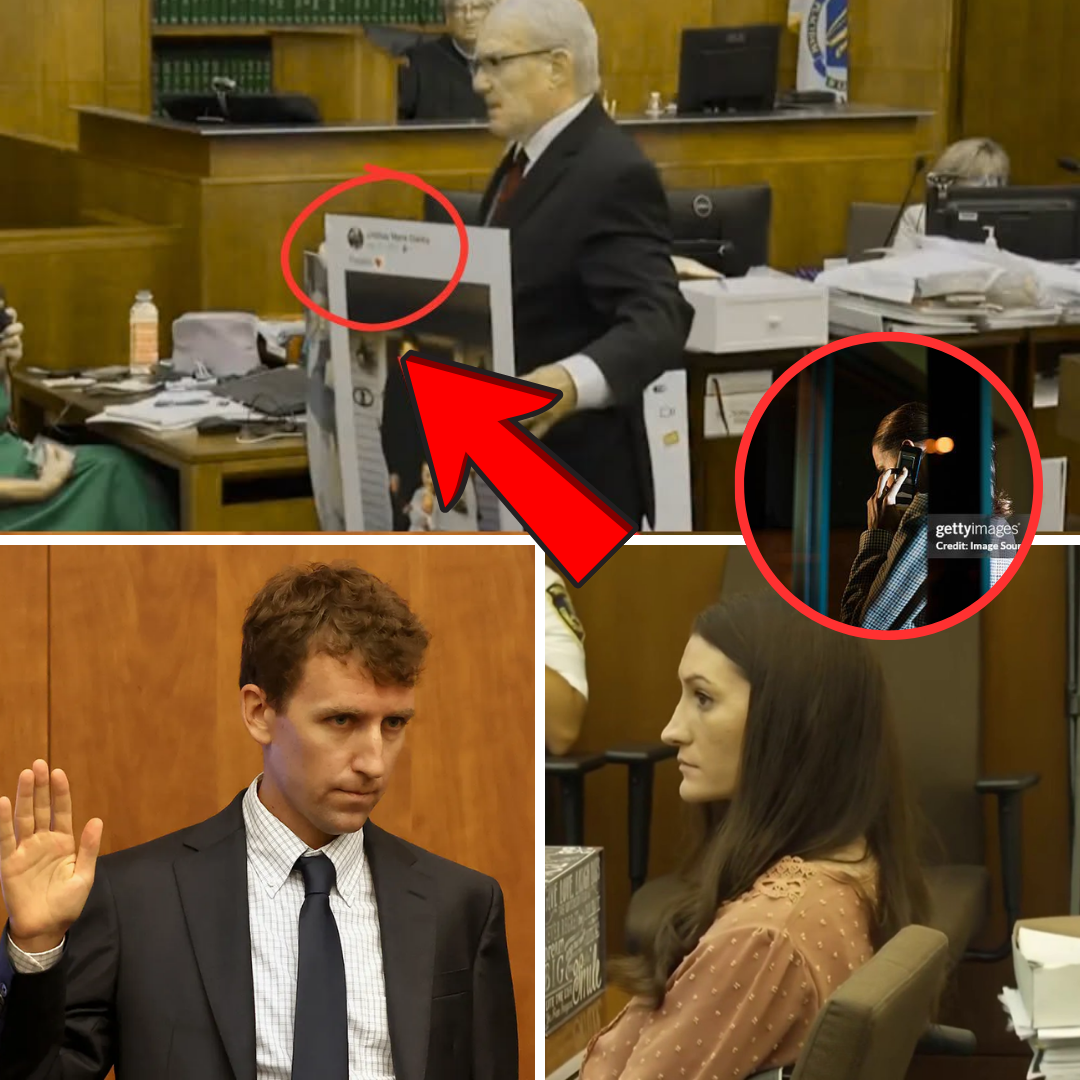
A sensational social media teaser recently swept through true-crime forums and digital feeds, declaring that prosecutors had dropped a “smoking gun” in the Lindsay Clancy murder trial. Featuring red alarm emojis and breathless prose, the post alleged that a brief 14-second phone call between Lindsay and her former husband, Patrick Clancy—made while he ran an errand at CVS—exposed a “dark secret.” The teaser claimed that state attorneys used the call to prove she answered with “chilling composure,” shattering defense claims that she was a helpless victim of psychotic hallucinations. It concluded with a classic cliffhanger, asserting that digital forensic experts replayed audio revealing a “faint background sound” that exposed a hidden truth, urging readers to click a link to read a full transcript.
While digital content aggregators routinely invent dramatic flourishes like “microscopic background sounds” to farm clicks and monetize public curiosity, this viral hook is built around a real, highly consequential moment in one of the most agonizing criminal trials in recent American history. In Plymouth Superior Court in Massachusetts, prosecutors indeed leaned heavily on digital forensics—including phone records, Apple Watch data, and pharmacy errands—to challenge Lindsay Clancy’s insanity defense. However, separating sensationalized internet headlines from sworn courtroom testimony reveals a far more complex legal and psychiatric battle.
The Timeline of January 24, 2023: Takeout, CVS, and Digital Forensics
The factual backdrop of the case remains heartbreaking. Lindsay Clancy, a 35-year-old former labor and delivery nurse from Duxbury, Massachusetts, was charged with first-degree murder in the deaths of her three young children—5-year-old Cora, 3-year-old Dawson, and 8-month-old Callan. After strangling the children inside the family home on the evening of January 24, 2023, Lindsay jumped from a second-story window in an attempted suicide that left her paralyzed from the waist down.
During the trial, prosecutors meticulously reconstructed the final hours preceding the tragedy using testimony from Patrick Clancy and digital forensics expert Ian Whiffin:
-
The Takeout and Pharmacy Request: Lindsay researched pediatric medication online and placed an order for dinner at ThreeV, a nearby restaurant. She texted Patrick asking him to pick up the food and stop at a local CVS pharmacy to purchase stool softener for their daughter.
-
The 14-Second Phone Call: Phone logs revealed that while Patrick was inside CVS examining medication options, he attempted to call Lindsay at 5:33 PM. Lindsay returned the call at 5:34 PM, engaging in a brief, 14-second conversation. Patrick testified that she sounded calm, quiet, and coherent, leading him to assume she was simply busy bathing or tending to the children.
-
The Discovery: Upon returning home roughly twenty minutes later to an “unusually quiet” house, Patrick discovered blood in the master bedroom, found Lindsay severely injured on the lawn outside, and subsequently made the horrifying discovery of his children in the basement.
Postpartum Psychosis vs. Premeditation: The Core Legal Battle
The 14-second phone call became a central pillar in the prosecution’s effort to prove criminal responsibility. In Massachusetts law, an insanity defense requires establishing that a defendant suffered from a mental disease or defect that rendered them unable to appreciate the wrongfulness of their conduct or conform their behavior to the law.
The Prosecution’s Case: Lucidity and Premeditation
Assistant District Attorney Jennifer Sprague argued that Lindsay’s actions on the night of the killings were deliberate, planned, and methodical. The state contended that Lindsay intentionally dispatched Patrick on a multi-stop errand to create an uninterrupted 25-minute window away from the house. Prosecutors highlighted her ability to look up restaurant menus, calculate driving distances, and maintain a composed, normal tone during the 14-second phone call as proof that she was lucid, rational, and fully aware of her actions.
The Defense’s Case: Postpartum Psychosis and Overmedication
Defense attorney Kevin Reddington painted a radically different picture, arguing that Lindsay was in the grips of severe postpartum psychosis, post-pregnancy depression, and profound sleep deprivation. The defense presented medical records showing that Lindsay had been prescribed a rapid succession of over a dozen powerful psychiatric medications in the months leading up to the tragedy. Defense experts and clinical psychologists testified that Lindsay reported hearing a distinct male voice—a “command hallucination”—telling her that it was her “last chance” to kill the children and herself. According to the defense, her calm voice on the phone was not evidence of cold calculation, but rather a manifestation of profound psychiatric dissociation.
The Anatomy of Sensationalism: How Digital Media Exploits Tragic Trials
The contrast between the real courtroom proceedings and the viral teaser illustrates how true-crime content aggregators monetize high-profile legal battles. Rather than reporting on complex psychiatric evaluations or expert digital forensic methodologies, online channels manufacture sensational subplots.
By inventing claims of “faint background sounds” or “secret coded audio,” clickbait producers transform solemn murder trials into dramatic entertainment. They strip away the nuanced legal standards governing legal sanity and mental health, reducing a deeply tragic case into cheap, cliffhanger-driven melodrama designed solely to generate ad impressions and social media engagement.
The Gravity of the Verdict: A Tragedy Beyond Social Media Hype
As jury deliberations draw to a close, the trial of Lindsay Clancy remains a painful exploration of extreme mental health crisis, domestic tragedy, and accountability. Beyond the speculative claims circulating on social media lies a devastating reality: three young children lost their lives, a family was irreversibly shattered, and a mother faces either life imprisonment or long-term commitment to a state psychiatric facility.
The case serves as a stark reminder that true justice is weighed in courtrooms through rigorous evidence, medical expert testimony, and the careful application of the law—not through sensationalized headlines engineered for viral clicks.