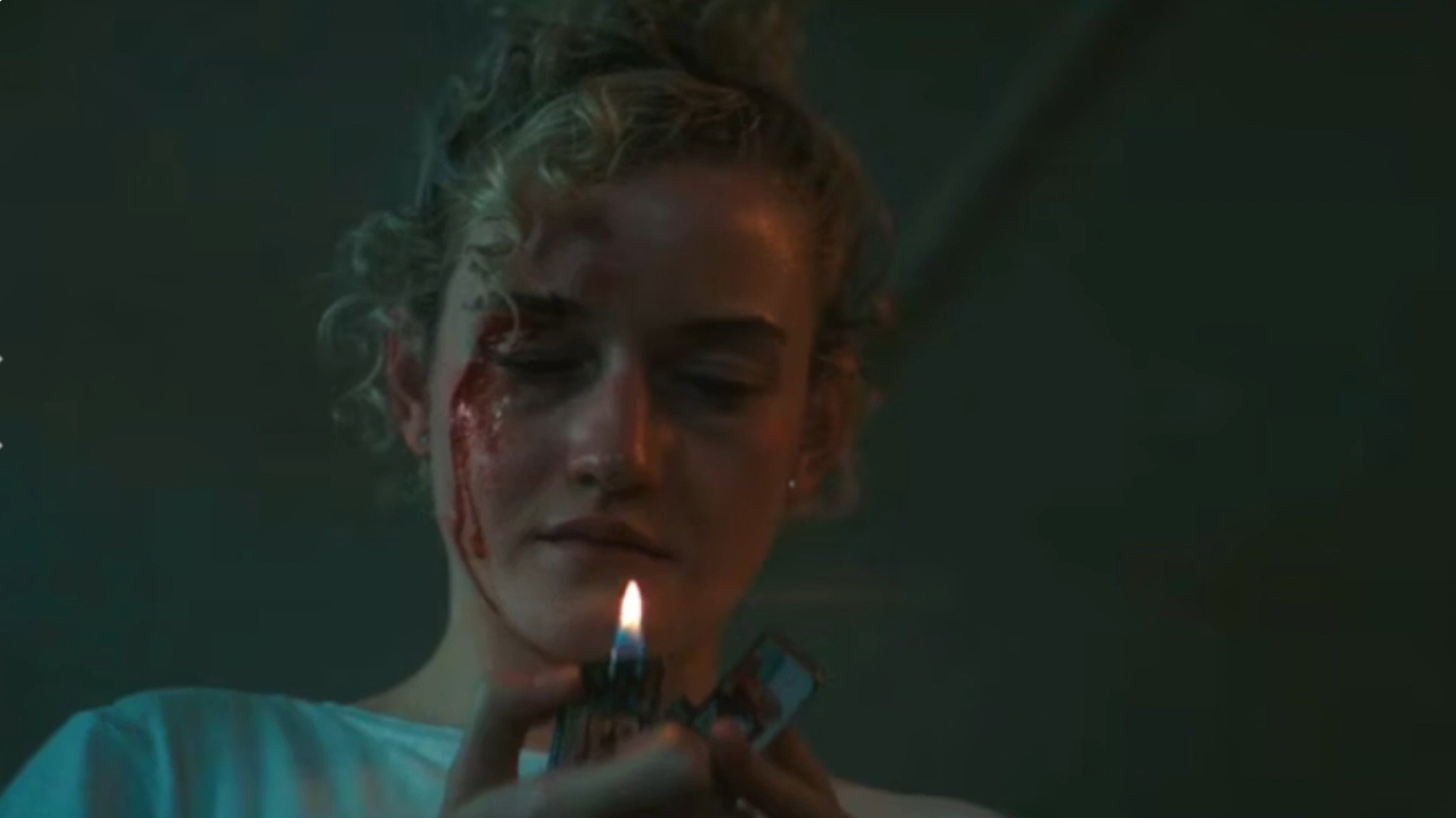
Anatomy of Isolation: Kitty Green’s ‘The Royal Hotel’ Deconstructs Outback Tension and the Realities of Female Survival
In her gripping psychological thriller The Royal Hotel, acclaimed Australian director Kitty Green delivers an uncompromising examination of gender dynamics, isolation, and social vulnerability. Starring Emmy and Golden Globe winner Julia Garner alongside Jessica Henwick and Hugo Weaving, the film has captured widespread attention following its streaming debut on Netflix. Rather than relying on supernatural tropes or explicit slasher violence, the narrative derives its terrifying momentum from a far more familiar source: the persistent, escalating boundary-pushing experienced by women in hyper-masculine, isolated environments.
Inspired by true events documented in Pete Gleeson’s 2014 documentary Hotel Coolgardie, The Royal Hotel translates the lived experiences of working holiday tourists into a claustrophobic study of social pressure. The result is a sharp, atmospheric film that subverts traditional Australian “Outback Gothic” tropes to highlight the unsettling reality of everyday threat calculation.
Grounded in Reality: The Legacy of ‘Hotel Coolgardie’
To understand the unsettling impact of The Royal Hotel, one must examine its non-fiction origins. In 2014, filmmaker Pete Gleeson released Hotel Coolgardie, a documentary following two young Finnish backpackers who took a live-in bartending job at a remote hotel in a Western Australian mining town. What the film captured was a stark, unvarnished portrait of casual misogyny, intense isolation, and institutional apathy, as the young women were subjected to relentless verbal degradation and intrusive behavior from local patrons.
Director Kitty Green, who previously gained critical acclaim for The Assistant—her clinical exploration of workplace abuse within the entertainment industry—saw in Gleeson’s documentary a powerful foundation for a broader narrative feature. Co-writing the screenplay with Oscar-nominated writer Oscar Redding, Green adapted the core setting and emotional landscape while shifting the protagonists to two American travelers.
By retaining the real-world mechanics of the documentary, Green ensures that every interaction in The Royal Hotel feels authentically plausible. The film does not invent monsters in the desert; instead, it examines how volatile social norms, heavy alcohol consumption, and physical isolation create an environment where boundary violations become normalized and dangerous.
Navigating Vulnerability in the Australian Outback
The narrative follows Hanna (Julia Garner) and Liv (Jessica Henwick), two best friends backpacking through Australia who find themselves completely out of money after a night of partying in Sydney. Desperate to fund the remainder of their trip, they contact a working holiday agency, which places them as live-in bartenders at a remote pub in a dusty, sun-baked mining outpost in the South Australian Outback.
Upon arrival, the young women are greeted by the pub’s owner, Billy (Hugo Weaving), an abrasive, heavily drinking man whose gruff demeanor masks a deep dependency on the revenue generated by the local mining workforce. Surrounded by miles of desolate terrain and equipped with limited communication infrastructure, Hanna and Liv are thrust into a closed ecosystem where the pub serves as the sole social hub for dozens of male workers.
From their very first shift, the friends are forced to navigate a complex spectrum of male attention. Green structures the narrative around the contrasting coping mechanisms of the two leads:
-
Hanna’s Hyper-Vigilance: Cautious and observant, Hanna immediately recognizes the underlying volatility of the patrons. She remains on high alert, constantly monitoring exits, tracking drink levels, and attempting to enforce personal boundaries despite pushback from both patrons and her employer.
-
Liv’s Conflict Avoidance: Free-spirited and eager to maintain a positive experience, Liv attempts to brush off inappropriate comments as harmless regional banter. Her desire to blend in and avoid confrontation creates a delicate friction with Hanna, illustrating how individuals within the same environment process threat levels differently.
Subverting Horror Conventions Through Psychological Realism
For decades, Australian cinema has utilized the vast, unforgiving interior of the continent as a backdrop for cinematic dread, from Ted Kotcheff’s 1971 masterpiece Wake in Fright to modern horror films like Wolf Creek. However, The Royal Hotel deliberately subverts these genre conventions by shifting the source of horror away from physical gore and toward psychological claustrophobia.
The tension in the film builds through a steady accumulation of micro-aggressions rather than sudden violent outbursts. Green meticulously constructs scenes where the line between crude friendliness and genuine threat remains terrifyingly ambiguous. A patron’s insistence on buying a drink, a late-night knock on a bedroom door, or an overly possessive compliment from a regular customer—such as the volatile Matty (Toby Wallace) or the intensely quiet Norman (Daniel Henshall)—are presented with agonizing tension.
The horror of The Royal Hotel lies in the constant emotional labor forced upon the protagonists. Hanna and Liv must continuously manage the fragile egos of intoxicated men, calculating exactly how much resistance they can offer without triggering a explosive reaction. The film captures the exhausting reality of hyper-vigilance, where every social interaction requires a split-second safety assessment.
Hugo Weaving and the Institutional Failure of Protection
Central to the film’s systemic commentary is Hugo Weaving’s nuanced performance as Billy. Far from a straightforward antagonist, Billy is portrayed as a tragic, deeply compromised figure who embodies the institutional failures of the environment. While he occasionally offers rough advice to the women, his primary loyalty remains tied to the economic survival of his business and his own addiction.
Billy routinely dismisses Hanna’s safety concerns, framing predatory behavior as “harmless fun” or “just how the locals are.” His unwillingness to set firm boundaries for his patrons reflects a broader societal pattern wherein institutions prioritize commercial continuity and social comfort over the safety of vulnerable individuals.
Weaving’s portrayal highlights how institutional compliance enables predatory environments to persist. By refusing to intervene during early signs of misconduct, those in positions of authority gradually cede control to the most volatile elements of the community.
Critical Reception and Cultural Impact
Since its premiere at the Telluride Film Festival and its subsequent distribution across international markets and streaming platforms, The Royal Hotel has earned widespread critical praise for its atmospheric direction, razor-sharp screenplay, and exceptional performances. Critics have lauded Julia Garner’s ability to convey profound interiority and anxiety through subtle shifts in posture and expression, cementing her status as one of her generation’s most versatile actors.
Beyond its artistic achievements, the film has sparked significant discussion among viewers regarding female safety, workplace culture, and the subtle mechanics of intimidation. By presenting a story that avoids sensationalized caricature in favor of grounded emotional truth, Kitty Green has crafted a thriller that lingers long after the credits roll.
The Royal Hotel stands as a vital, compelling entry in modern Australian cinema. Through its rigorous focus on psychological realism, the film serves as both a masterclass in cinematic suspense and a sobering reflection on the courage required to navigate environments where safety is never guaranteed.