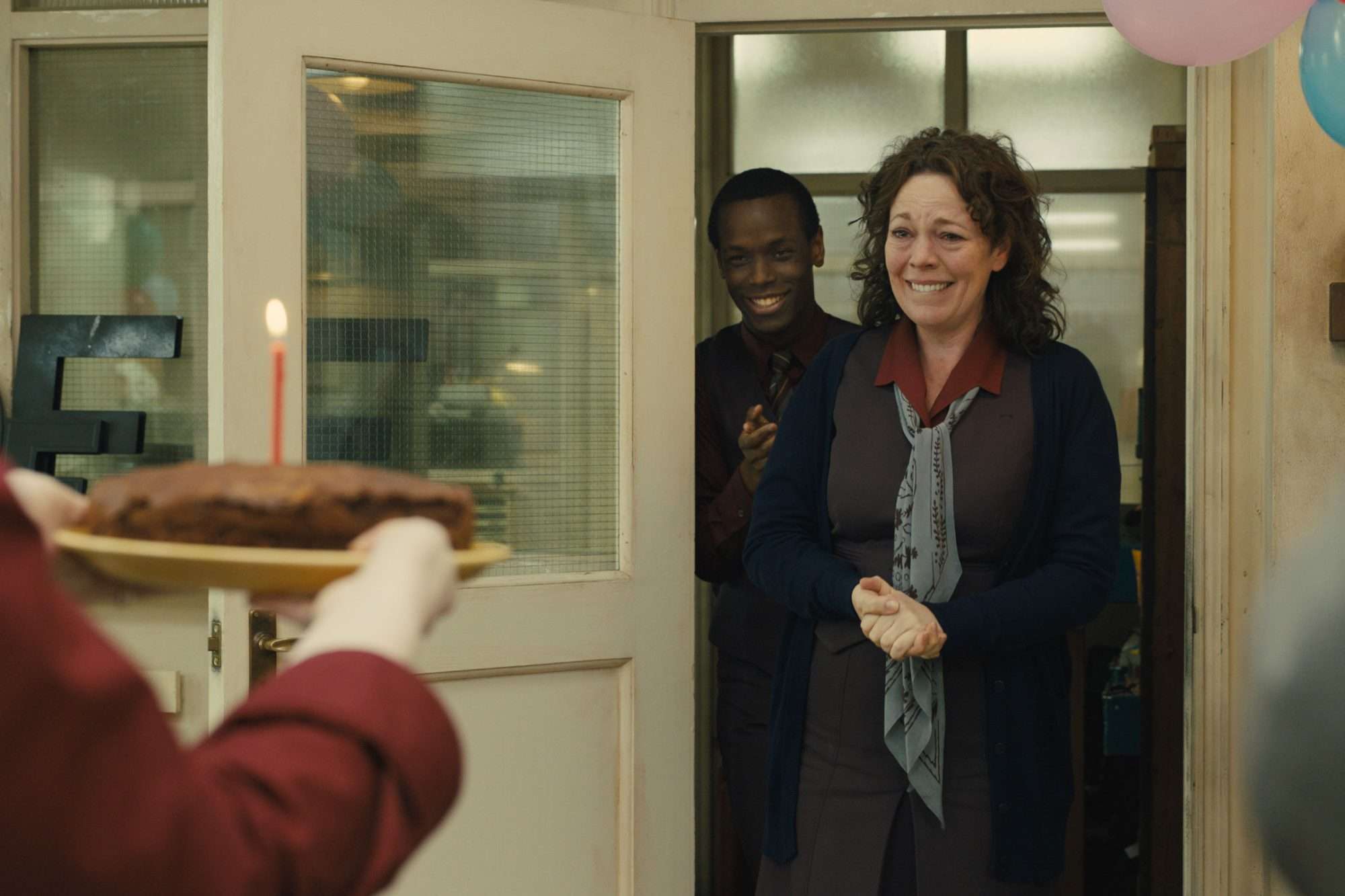
DECONSTRUCTING THE ‘COLMAN AND FIRTH NETFLIX DISINFORMATION’ HOAX
ANATOMY OF PERIOD-DRAMA CLICKBAIT: DECONSTRUCTING THE ‘COLMAN AND FIRTH NETFLIX DISINFORMATION’ HOAX
Deconstructing the Sensationalist Teaser
A hyper-dramatic advertisement recently began circulating across automated entertainment channels, period drama fan forums, and social media feeds, declaring in alarmist headlines: “🚨 NETFLIX’S NEW PERIOD DRAMA WILL BREAK YOUR HEART ONE SILENCE AT A TIME — AND OLIVIA COLMAN AND COLIN FIRTH MAKE EVERY MOMENT UNFORGETTABLE. In the fragile aftermath of war, two people discover that surviving was only the beginning. When they come face to face with a love that time never truly erased, every glance carries the weight of everything they lost. Then a buried regret resurfaces, threatening to destroy the little they have left… proving some love stories never truly end. 👀 WATCH BELOW 👇”
Packed with emergency beacon emojis, sweeping romantic promises of a long-lost post-war love story, generic tragic tropes, and an urgent call to action, the post presents itself as an official release announcement for a major streaming production. However, despite its polished framing and emotional narrative claims, every element of this teaser represents a digital fabrication. Academy Award winners Olivia Colman and Colin Firth are not starring as long-lost romantic leads in a newly released Netflix original period drama, nor does the described project exist within any major production studio’s distribution slate. Instead, this post represents a ubiquitous form of digital entertainment fraud: a modular, automated clickbait template engineered to exploit audience reverence for British prestige cinema, distort real filmography, and harvest web traffic for predatory ad-arbitrage networks.
Fact-Checking Filmography vs. Synthetic Narrative Distortion
To understand the deceptive mechanics of this clickbait campaign, one must contrast its dramatic assertions with the factual reality of British filmography, streaming distribution rights, and historical screen collaborations.
The post relies on deliberate platform misattribution, synthetic plot synthesis, and character distortion to trick casual viewers:
-
Distortion of Supporting Roles into Romantic Leads: Olivia Colman and Colin Firth have indeed shared the screen in notable British period projects—most prominently in Eva Husson’s 2021 film Mothering Sunday and Sam Mendes’s 2022 drama Empire of Light. However, their real-world screen pairings look nothing like the narrative described in the teaser. In Mothering Sunday, set in the aftermath of World War I, Colman and Firth played Mr. Godfrey Niven and Mrs. Clarrie Niven, an aristocratic, grief-stricken married couple mourning the tragic loss of their sons in the Great War. They were not estranged lovers reuniting after a lifetime apart; the film’s central romantic arc belonged to younger characters played by Odessa Young and Josh O’Connor.
-
Misattribution to Netflix Distribution: The clickbait post falsely labels the project as “Netflix’s New Period Drama.” Content mills routinely brand fake or licensed historical films as “Netflix Originals” because the streaming platform commands enormous global search volume and exceptionally high click-through rates across automated ad networks.
-
Interchangeable AI-Generated Synopses: The narrative description provided in the post—referencing “fragile aftermath of war,” “a love that time never truly erased,” and “buried regret”—contains zero concrete details such as character names, historical dates, director credits, or geographical settings. This vagueness is intentional; content farms utilize standardized, AI-spun synopses that can be pasted alongside any pair of famous British actors to generate viral engagement out of thin air.
The Psychological Hooks of Prestige-Drama Exploitation
The structural design of the “Colman and Firth Period Drama” teaser relies on refined cognitive manipulation techniques engineered to bypass critical skepticism and provoke immediate online action.
Digital content mills deploy specific psychological triggers when crafting fake cinema announcements:
1. Prestige Actor Bias
Olivia Colman and Colin Firth are globally celebrated icons of modern British acting, both holding Academy Awards and extensive track records in acclaimed period pieces such as The Crown, The King’s Speech, Pride and Prejudice, and The Favourite. By anchoring a manufactured story to performers associated with artistic quality, content mills leverage authority bias, convincing readers that the project must be real.
2. Emotional Melancholia and Genre Tropes
Period dramas centering on war, suppressed emotion, and tragic romance tap into deep audience nostalgia and emotional vulnerability. Phrases like “break your heart one silence at a time” prime scrollers for a deeply moving cinematic experience, making them far less likely to question the factual authenticity of the source post.
3. Visual Urgency and Directional Priming (🚨 / 👀 / 👇 Emojis)
The inclusion of high-contrast emergency emojis—flashing red sirens (🚨), wide eyes (👀), and pointing fingers (👇)—activates visual urgency. These elements pull the reader’s attention away from evaluating the logical plausibility of the headline and direct physical focus toward the external link trap.
4. Algorithmic Engagement Feedback Loops
When observant film enthusiasts enter the comment section to correct the post (“They played the Nivens in Mothering Sunday, this isn’t a new Netflix show!”), social media recommendation engines flag the post as having high interaction rates. Consequently, the platform’s algorithm pushes the fake announcement into thousands of additional feeds.
The Monetization Funnel: Ad Arbitrage and Link Traps
Behind these sensationalized movie announcements lies a lucrative business model known as traffic arbitrage, digital impression farming, and click-fraud networking.
When scrollers tap the “👀 WATCH BELOW 👇” link expecting to stream a brand-new romantic drama, they are never directed to Netflix or a legal streaming interface. Instead, the user journey follows a deceptive web funnel:
-
Redirect Chains to Scraper Sites: Users are routed through multiple URL shorteners to low-quality scraper blogs packed with pay-per-click display banner advertisements, auto-playing video commercials, and pop-unders. Every page load generates passive advertising revenue for the content mill.
-
Deceptive Media Player Interfaces: Many links lead to landing pages featuring a static image of Firth and Colman overlayed with a fake “Play” button. Clicking the button triggers aggressive ad pop-ups or redirects users to third-party subscription traps.
-
Malware and Cybersecurity Hazards: In predatory cases, destination sites attempt to push invasive push-notification subscriptions, deceptive scareware pop-ups claiming device infection, or phishing forms designed to harvest personal credit card details under the guise of a “free streaming trial.”
Digital Media Literacy: Navigating Streaming Announcements
The widespread distribution of manufactured movie releases highlights the ongoing necessity of digital media literacy when consuming film and television updates online.
To protect themselves from falling victim to fake streaming announcements and digital ad schemes, audiences should adopt key verification habits:
-
Verify Directly on Official Streaming Platforms: If a post claims a major star has a new show or movie on Netflix, search for the title or actor directly within the official Netflix app or website rather than clicking external links in social media captions.
-
Cross-Reference with Filmography Databases: Always check professional databases such as IMDb, Wikipedia, or the British Film Institute (BFI) catalog to verify whether a project actually exists in an actor’s official filmography.
-
Recognize Clickbait Signals: Be skeptical of posts featuring sensationalized ALL-CAPS phrasing (“BREAK YOUR HEART”), generic plot summaries without character names, and aggressive directional emojis (“👇”).
-
Refrain from Engaging with Fake Posts: Avoid commenting on, liking, or sharing unverified film posts. Every interaction provides engagement metrics that allow clickbait creators to profit from digital spam.
Understanding how automated content networks capitalize on celebrity star power and period-drama fandom allows audiences to navigate the digital entertainment landscape critically without being manipulated by algorithmic click schemes.