THE ANATOMY OF CLIFFHANGER SPAM: DECONSTRUCTING THE ‘VIRGIN RIVER’ JACK SURVIVAL HOAX
Deconstructing the Sensationalist Teaser
A hyper-dramatic advertisement recently began proliferating across online fan forums, television aggregator pages, and viral social media feeds, proclaiming in alarmist headlines: “🔥Mel’s Worst Nightmare Comes True — Virgin River Fans Fear Jack May Not Survive. Read More Information Below…👇👇👇”
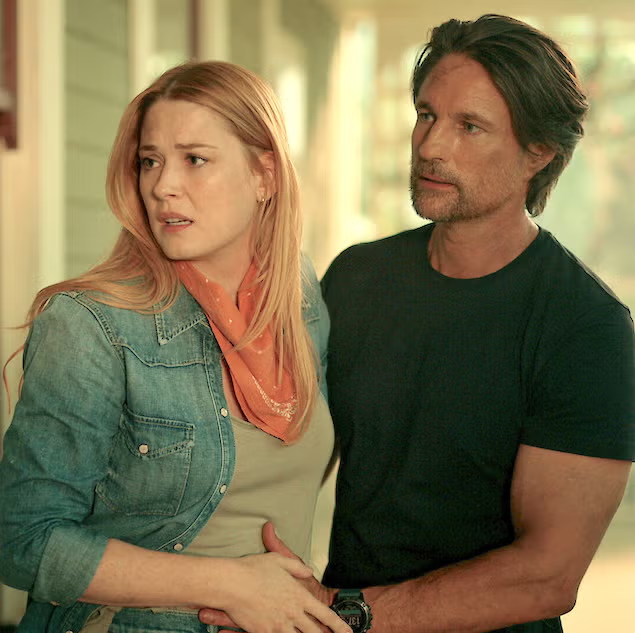
Packed with fire emojis, dramatic promises of a central character’s imminent demise, emotional triggers targeting long-running romantic leads, and a directional call to action, the post presents itself as an urgent, breaking plot update for Netflix’s hit drama Virgin River. However, despite its confident tone and claims of a catastrophic narrative twist, the assertion generated by this teaser is a complete digital fabrication. Jack Sheridan (played by Martin Henderson) has not been killed off, nor have showrunners or Netflix executives announced his death or departure from the series. Instead, this post represents a ubiquitous form of digital entertainment fraud: a modular, automated clickbait template engineered to exploit fan investment, weaponize historical cliffhangers, and harvest web traffic for predatory ad-arbitrage networks.
Streaming Reality vs. Automated Clickbait Re-Circulation
To understand why this clickbait narrative is fundamentally deceptive, one must contrast its dramatic assertions with the actual narrative status of Virgin River and the realities of television production.
The post relies on recycling past plot points and manufacturing artificial panic to trick dedicated viewers:
-
Weaponizing Historical Plot Points: The claim that “Jack May Not Survive” recycles audience trauma from the Season 2 finale cliffhanger, in which Jack Sheridan was shot in his bar. While that storyline generated genuine suspense years ago, Jack survived, recovered, and went on to navigate major life milestones with Mel Monroe (played by Alexandra Breckenridge). Content mills routinely take old, resolved cliffhangers and present them as brand-new, impending tragedies to confuse casual scrollers.
-
Core Franchise Mechanics: Virgin River is built upon the romantic drama tropes of Robyn Carr’s novel series. The core central arc of the entire franchise is the enduring relationship between Mel and Jack. Killing off the lead male character would dismantle the central premise of the show, making such a narrative choice highly improbable for a comforting, comfort-watch drama that thrives on romance and community resilience.
-
Verified Industry Channels: Authentic updates regarding major cast departures, series renewals, or production milestones are communicated strictly through official Netflix press channels or recognized entertainment trade publications like Variety, The Hollywood Reporter, and Deadline. Legitimate studios never disclose major narrative character deaths through anonymous social media captions terminating in “👇👇👇” link traps.
The Psychological Hooks of Fandom-Targeted Clickbait
The structural layout of the “Jack Sheridan Survival” post relies on sophisticated cognitive manipulation techniques tailored to exploit audience emotional investment in long-running television series.
Digital content mills deploy specific psychological triggers when crafting synthetic character crisis hoaxes:
1. Parasocial Investment Exploitation
Viewers who have followed Virgin River across multiple seasons develop strong parasocial attachments to Mel and Jack. By threatening the stability or survival of a beloved character, content mills evoke immediate emotional distress, causing readers to react impulsively rather than critically.
2. The Truncated Curiosity Gap (“Read More Information Below…”)
By declaring that “Mel’s worst nightmare comes true” without specifying what happened, the teaser creates a sharp psychological open loop. Fans seeking reassurance or context naturally demand narrative resolution, driving them to click the external link.
3. Visual Urgency and Directional Priming (🔥 / 👇👇👇 Emojis)
The inclusion of high-contrast fire emojis (🔥) and pointing fingers (👇👇👇) activates visual urgency. These design elements pull focus away from evaluating the logical plausibility of the headline and direct physical attention toward the external link trap.
4. Algorithmic Engagement Feedback Loops
When worried or skeptical fans enter the comment section asking “Wait, is Jack dying?” or “Is this real?”, social media recommendation engines flag that activity as high user engagement. Consequently, the platform’s algorithm promotes the fake post into thousands of additional user feeds, expanding its reach.
The Monetization Funnel: Ad Arbitrage and Traffic Harvesting
Behind these sensationalized television headlines lies a lucrative business model known as traffic arbitrage and programmatic display ad farming.
When scrollers tap the “👇👇👇” link expecting to read an official press release or plot summary, they are never directed to Netflix’s media center or accredited entertainment news outlets. Instead, the user journey follows a deceptive web funnel:
-
Redirect Chains to Ad-Dense Scraper Sites: Users are routed through multiple URL shorteners to low-quality scraper blogs loaded with pay-per-click display banner advertisements, pop-unders, and auto-playing video commercials.
-
AI-Generated Text Loops: The destination page almost never addresses the headline’s claims. Instead, it displays generic, AI-spun text endlessly summarizing old episodes, recounting character biographies, and repeating standard speculation without offering any actual news regarding Jack’s fate.
-
Cybersecurity Hazards: In predatory cases, these destination websites trigger deceptive browser pop-ups promoting fake system updates, push-notification subscription traps, or phishing forms designed to capture personal user data.
Digital Media Literacy: Navigating Entertainment News Responsibly
The widespread proliferation of manufactured character crisis posts highlights the ongoing necessity of digital media literacy when following television and film news online.
To protect themselves from falling victim to manufactured entertainment hoaxes and digital ad schemes, audiences should adopt key verification habits:
-
Cross-Reference with Verified Outlets: Always check major entertainment publications or official actor and show social media accounts before believing dramatic claims about character deaths or cast departures.
-
Recognize Formulaic Clickbait Red Flags: Be skeptical of headlines featuring dramatic ALL-CAPS phrasing, vague threats of character tragedy, and aggressive directional emojis (“👇👇👇”).
-
Avoid Unverified External Links: Refrain from clicking on “Read more below” links placed in suspicious social media comments or non-verified fan groups.
-
Refrain from Engaging with Exploitative Posts: Avoid liking, commenting on, or sharing unverified character speculation posts. Every interaction provides engagement metrics that allow clickbait creators to profit from digital spam.
Understanding how automated content networks exploit audience emotional investment allows viewers to follow their favorite television series critically without being manipulated by algorithmic click schemes.