The Night Three Voices Changed Rock Music Forever: The Birth of CSN at Joni Mitchell’s House
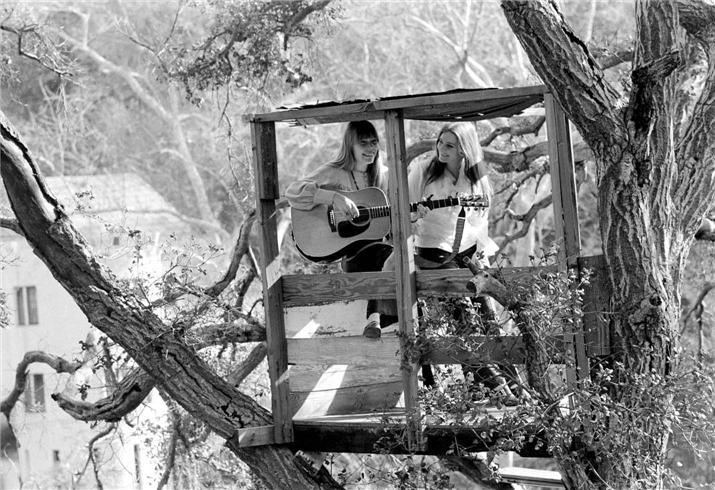
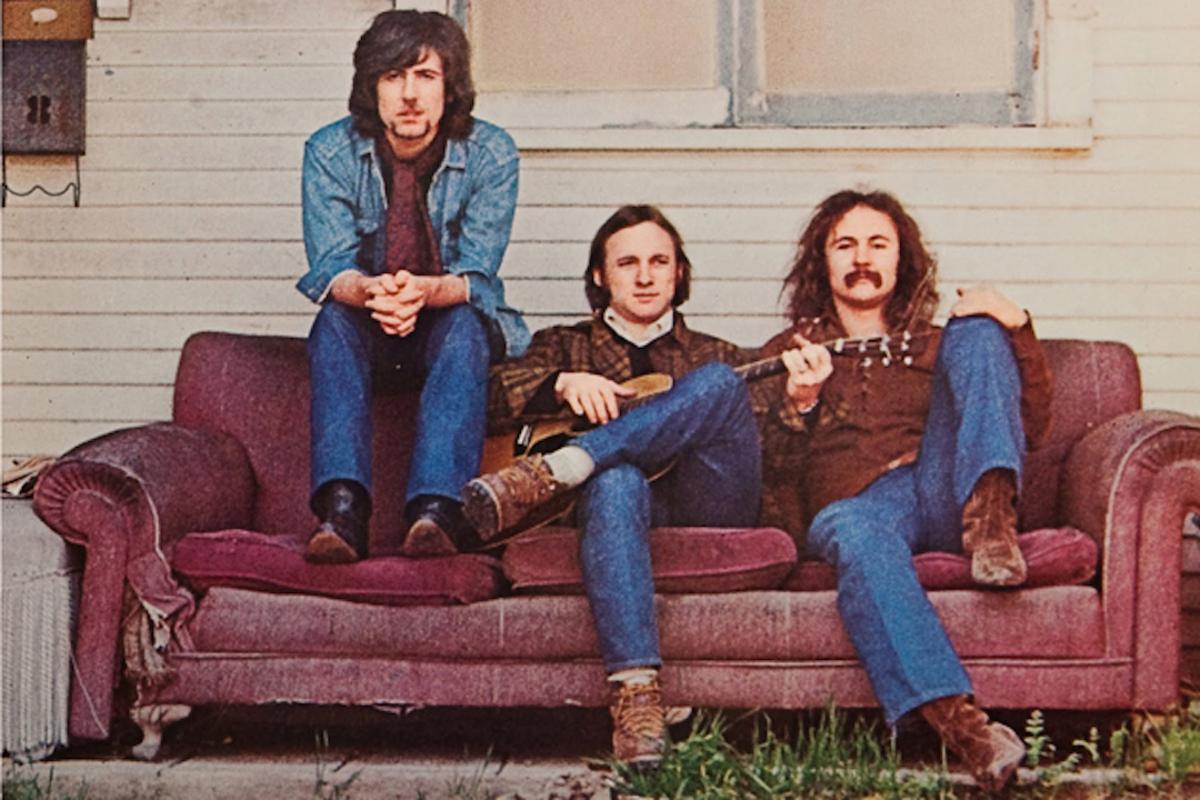
In the sun-dappled hills of Laurel Canyon, Los Angeles, during the summer of 1968, a quiet evening inside Joni Mitchell’s home on Lookout Mountain Drive became the unlikely birthplace of one of rock history’s most iconic sounds. There was no roaring crowd, no stage lights, and no formal rehearsal. Just three extraordinary musicians—David Crosby, Stephen Stills, and Graham Nash—whose voices intertwined in a moment of pure, spontaneous magic that would redefine vocal harmony in popular music.
The story begins with the remnants of three powerhouse bands. Crosby had recently been fired from The Byrds amid creative tensions. Stills was reeling from the breakup of Buffalo Springfield. Nash, fresh from The Hollies in England, had relocated to California seeking new inspiration. Their paths crossed in the vibrant, countercultural enclave of Laurel Canyon, a creative haven where artists like Mitchell, Cass Elliot, and others shaped the soundtrack of a generation.

Accounts vary slightly on the exact location—some say Joni Mitchell’s house, others point to Cass Elliot’s—but the essence remains the same. Crosby and Stills were already jamming together informally. On this particular night, Nash joined them. Stills played “You Don’t Have to Cry,” a song he had written. They performed it once. Then again. On the third rendition, Nash added a soaring high harmony that none of them had anticipated. The room fell silent for a beat before erupting in laughter and awe. In those thirty seconds, the legendary three-part vocal blend of Crosby, Stills & Nash was born.
Nash later recalled the instant transformation: the world “fucking changed” from that moment. They knew immediately they had something special—something greater than the sum of their individual talents from previous groups.
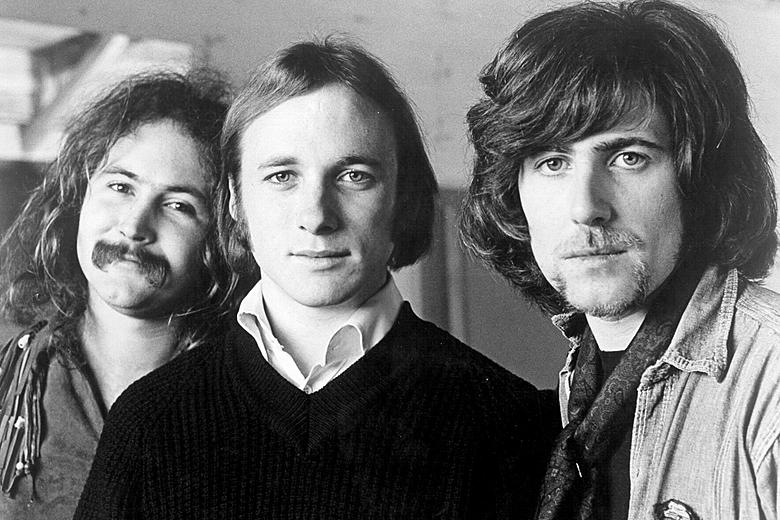
That intimate gathering set the stage for their rapid rise. They signed with Atlantic Records and released their self-titled debut album in 1969, featuring classics like “Suite: Judy Blue Eyes,” “Marrakesh Express,” and “Helplessly Hoping.” The album’s intricate, folk-rock-infused harmonies captivated audiences and critics alike, earning them immediate acclaim. Their performance at Woodstock that same year cemented their status as counterculture heroes.

But the story didn’t stop with three voices. Neil Young, another Buffalo Springfield alum and a brilliant, enigmatic songwriter in his own right, soon entered the picture. Invited to join for what became Crosby, Stills, Nash & Young (CSNY), Young brought a raw, distinctive edge that complemented the group’s sound. Their first album together, Déjà Vu (1970), became a massive hit, blending folk, rock, and introspective lyrics that captured the era’s turbulence.
David Crosby spoke glowingly of the expanded harmonies, particularly moments when Young’s voice joined the mix. He described experiencing profound beauty in their collective singing—harmonies so pure and emotionally resonant that they lingered in his memory for decades. Crosby, a master of vocal layering, chased that transcendent feeling throughout his career, often citing it as a pinnacle of musical connection that was difficult to recapture amid the band’s notorious interpersonal dynamics.
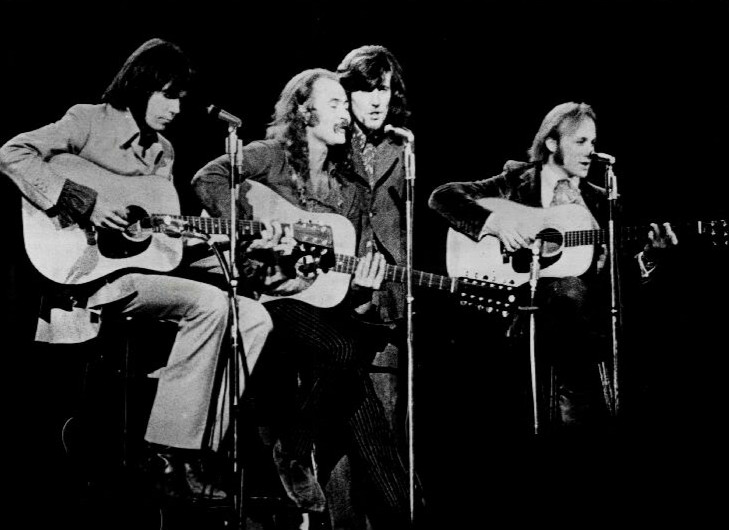
The chemistry, however, was as volatile as it was magical. Ego clashes, political differences, and personal struggles led to frequent breakups and reunions. Yet, their influence endured. CSNY’s music became anthems for peace, love, and social change, with songs like “Ohio” responding directly to the Kent State shootings. Their harmonies influenced generations of artists, from Eagles to modern folk-rock acts.
Joni Mitchell herself, whose home hosted that fateful night, remained intertwined with the scene. Her relationship with Nash inspired deeply personal songs like “Our House,” and her own innovative style enriched the Laurel Canyon sound. The canyon became synonymous with artistic freedom and collaborative genius in the late 1960s.
Today, decades later, that quiet night in Joni Mitchell’s house continues to give music fans chills. It reminds us that some of the greatest innovations in art happen not in grand arenas, but in living rooms among friends—where voices find each other unexpectedly and create something timeless. The legacy of Crosby, Stills, Nash & Young lives on through their recordings, reissues, and the enduring power of harmony to move the soul.
Their story is more than rock lore; it’s a testament to serendipity, talent, and the human need for connection through music. In an age of digital isolation, we can still look back and hear the echoes of three (and then four) voices discovering perfection in a single, unrehearsed moment.