PART 3 — When Someone Finally Believed Her
The investigation lasted six weeks.
Inspectors examined every maintenance record from the previous three years.
What they uncovered was worse than anyone expected.
Replacement budgets had been approved.
New walkers had even been ordered.
But many of them never reached the residents.
Instead, invoices showed the equipment as “delivered,” while damaged walkers were repeatedly repaired with makeshift internal sleeves, fresh paint, and undocumented fixes.
The cost savings looked good on paper.
The risk was borne by the people who depended on those walkers every day.
Richard Sloan was dismissed from his position while investigators continued reviewing financial records and safety procedures.
Cedar Pines’ ownership issued a public apology to residents and their families.
More importantly, every mobility aid in the building was replaced and independently inspected.
A new reporting system allowed staff to flag unsafe equipment without approval from administrators.
Carlos was asked to help oversee the transition.
“I just wanted people to stop getting hurt,” he said.
Margaret received a new walker the following week.
It was lighter.
Stronger.
And, most importantly, silent.
The first time she crossed the dining room without hearing that tiny metallic click, she stopped halfway and laughed.
Linda looked over.
“What is it?”
Margaret smiled.
“I forgot what safe sounded like.”
Later that afternoon, she found Caleb outside adjusting the height of her new walker.
“You know,” she said, “half this building thought you’d lost your temper.”
Caleb chuckled.
“I know.”
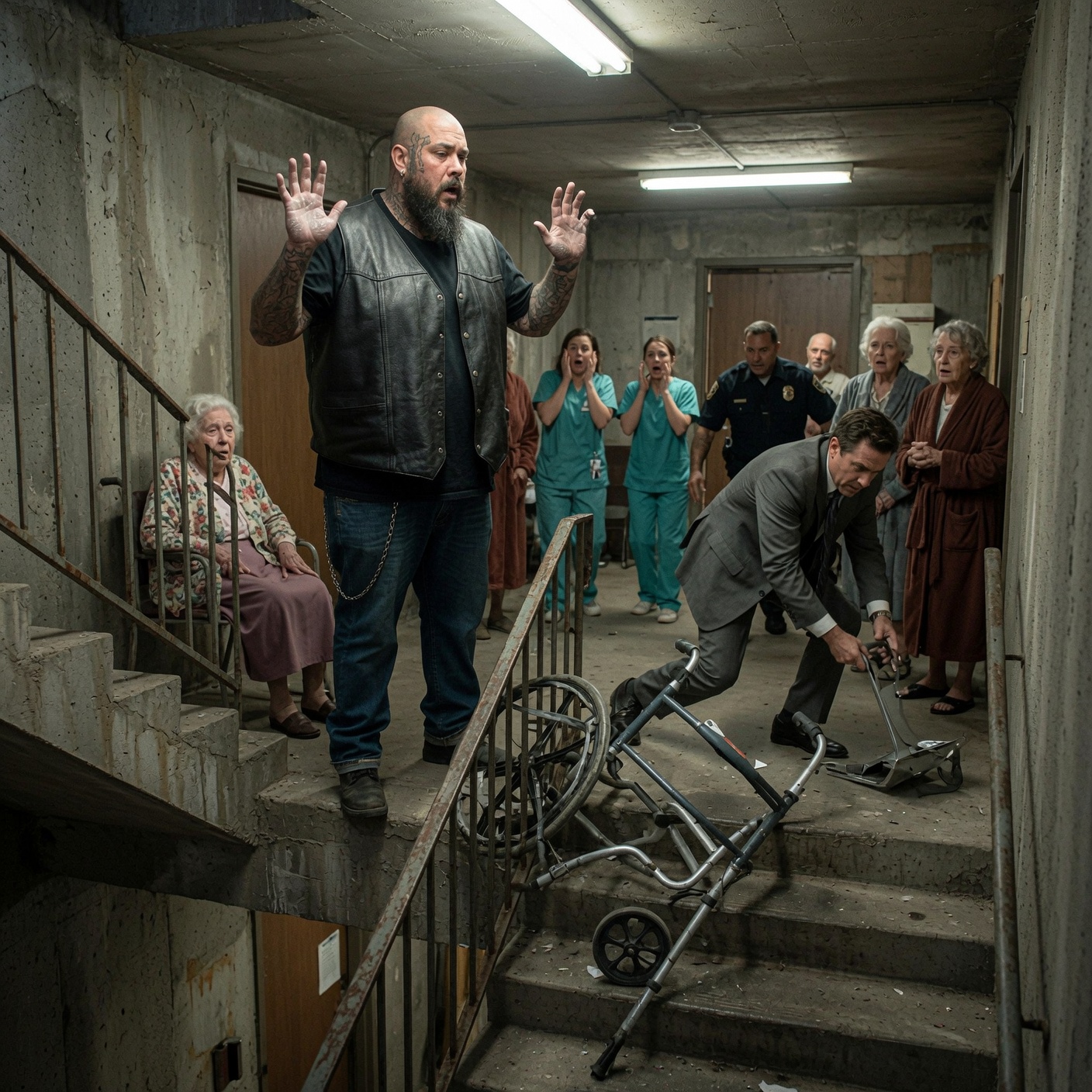
“They thought you were destroying my walker.”
“I was.”
He tightened one last bolt.
“So no one could pretend it wasn’t already broken.”
Margaret reached for his rough, grease-stained hand.
“You’ve always fixed things.”
He smiled.
“This time…”
“…it just happened to be bigger than a motorcycle.”
Several months later, Cedar Pines hosted its annual family picnic.
Residents moved easily across the courtyard with newly inspected equipment.
Laughter replaced the nervous conversations that had filled the halls after the falls.
Near the entrance stood a framed display containing the cracked aluminum tube and the hidden steel sleeve.
Beneath it was a simple plaque:
“Sometimes the smallest crack carries the biggest truth.
Listen when people say something isn’t right.”
Visitors often stopped to read it.
Many assumed it honored a maintenance improvement.
The residents knew it honored something far more important.
It reminded them that growing older did not mean their voices mattered less.
Before leaving the picnic, Margaret looked at Caleb.
“Do you know what hurt the most?”
He shook his head.
“Not falling.”
She glanced at the old display case.
“It was being told the falls were my fault.”
Caleb nodded quietly.
“I couldn’t stop the first three.”
“But I could make sure there wasn’t a fourth.”
Margaret slipped her arm through his.
Together, they walked toward the parking lot.
Slowly.
Steadily.
Every step supported by a walker that no longer clicked—and by the simple comfort of finally being believed.
— THE END —